 Xiamen Yuelei Sports Co., Ltd
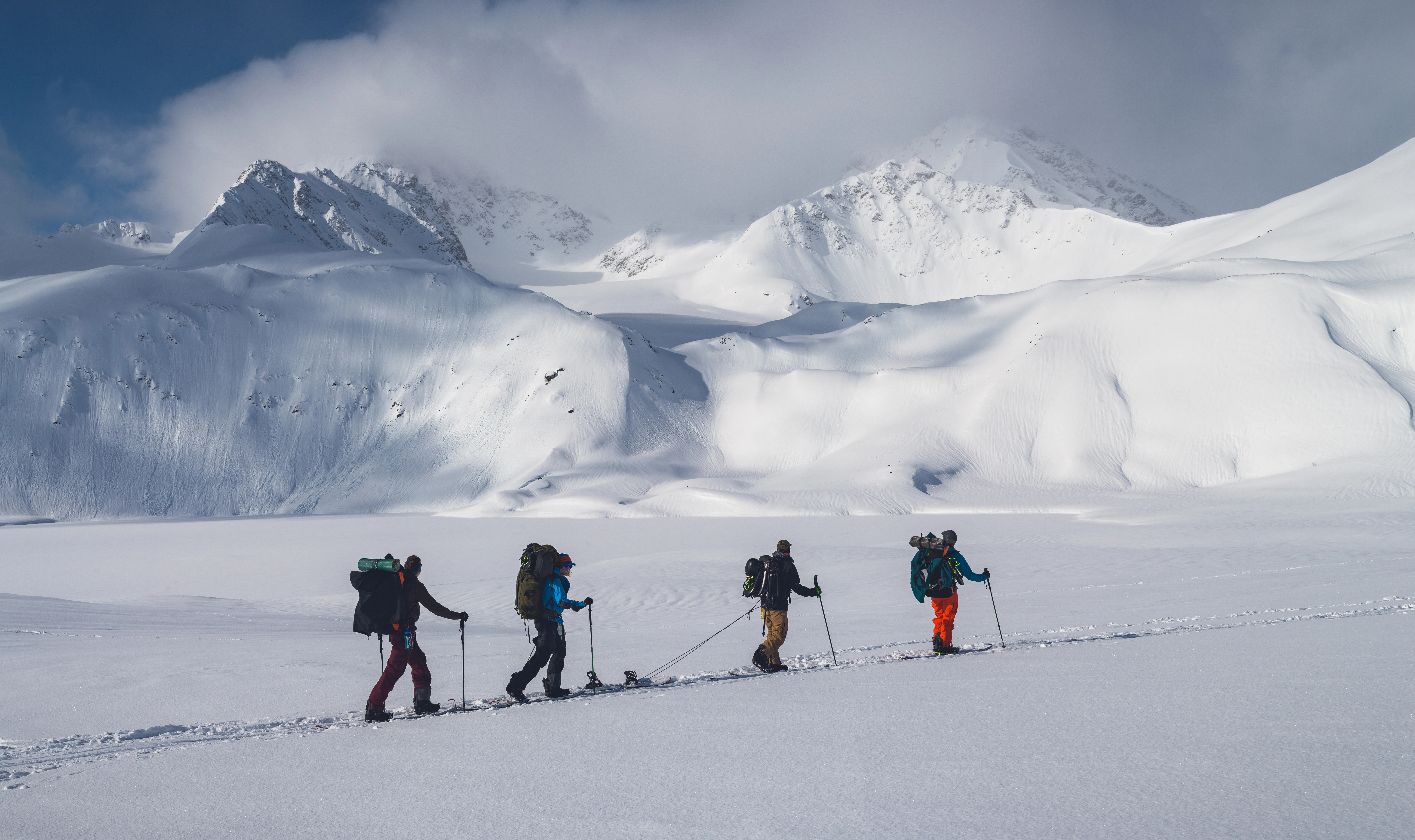
When a technical engineer in Denver encountered an urgent first-trip packing decision, he used a casual winter-jacket checklist to approve the kit. After one chairlift cycle, the wearer was cold at the lower back and restricted across the shoulders. The reversal was important: no single garment was obviously defective; the system specification had omitted movement fit, layer interfaces and low-activity exposure.
Summary: Treat mens skiing clothes as one moisture-and-heat-management system, not a jacket purchase. Specify a wicking base, adjustable insulation and weather-resistant shell; then validate the complete kit in at least two postures—an overhead reach and a deep ski stance. ISO 11092 and ASTM F1868 measure material thermal and evaporative resistance, while ISO 811 and ISO 4920 address different aspects of water protection. Request named test methods and actual reports, not a vague “certified” claim.
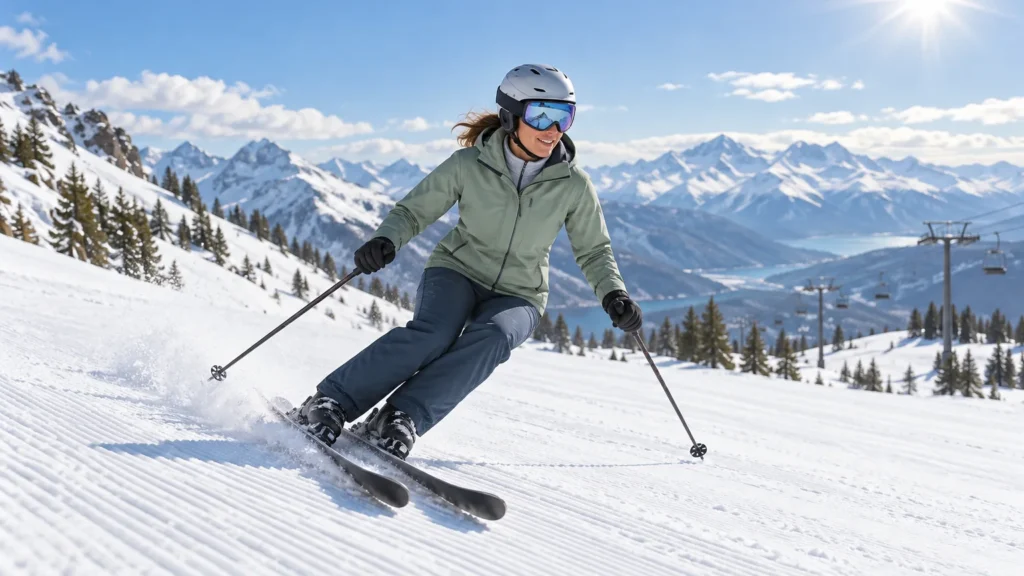
A first ski day alternates between active descents, exposed lift rides, queues and indoor breaks. That pattern makes skiing clothes for men a systems problem: the base layer moves moisture, insulation retains warmth, and the outer layer resists wind and snow while allowing movement. For procurement, mens skiing clothes must also cover socks, gloves, neckwear, layer interfaces and size grading.
First-trip systems fail when moisture and interfaces are overlooked
Moisture control matters more than simply adding bulk
The US National Institute for Occupational Safety and Health identifies wetness, wind and exhaustion among cold-stress factors; it warns that cold stress can occur even above freezing when a person is chilled by rain, sweat or cold water. Adding a thick midlayer can therefore backfire: sweat retained on the descent accelerates cooling on the next chairlift.
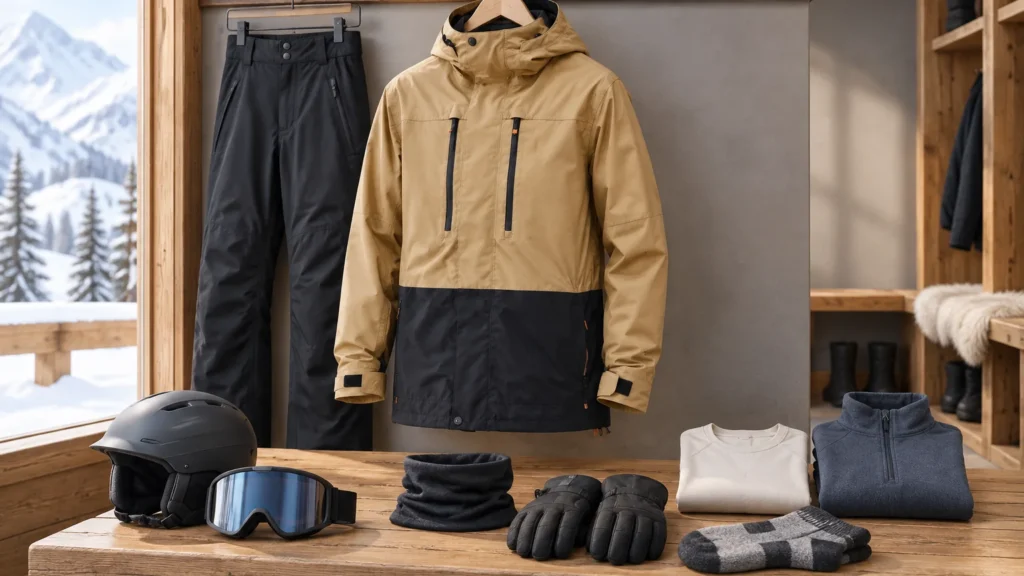
The practical control is a three-part system with ventilation. Use a close-fitting, quick-drying base layer; add insulation that can be removed or vented; and select a shell with accessible vents and closures. Cotton is a poor default for the skin layer because it absorbs and holds moisture. Polyester and merino-rich fabrics are common options, but buyers should compare drying behavior, next-to-skin comfort, odor expectations, care requirements and price rather than selecting by fiber name alone.
Hem overlap and layer allowance prevent local cold spots
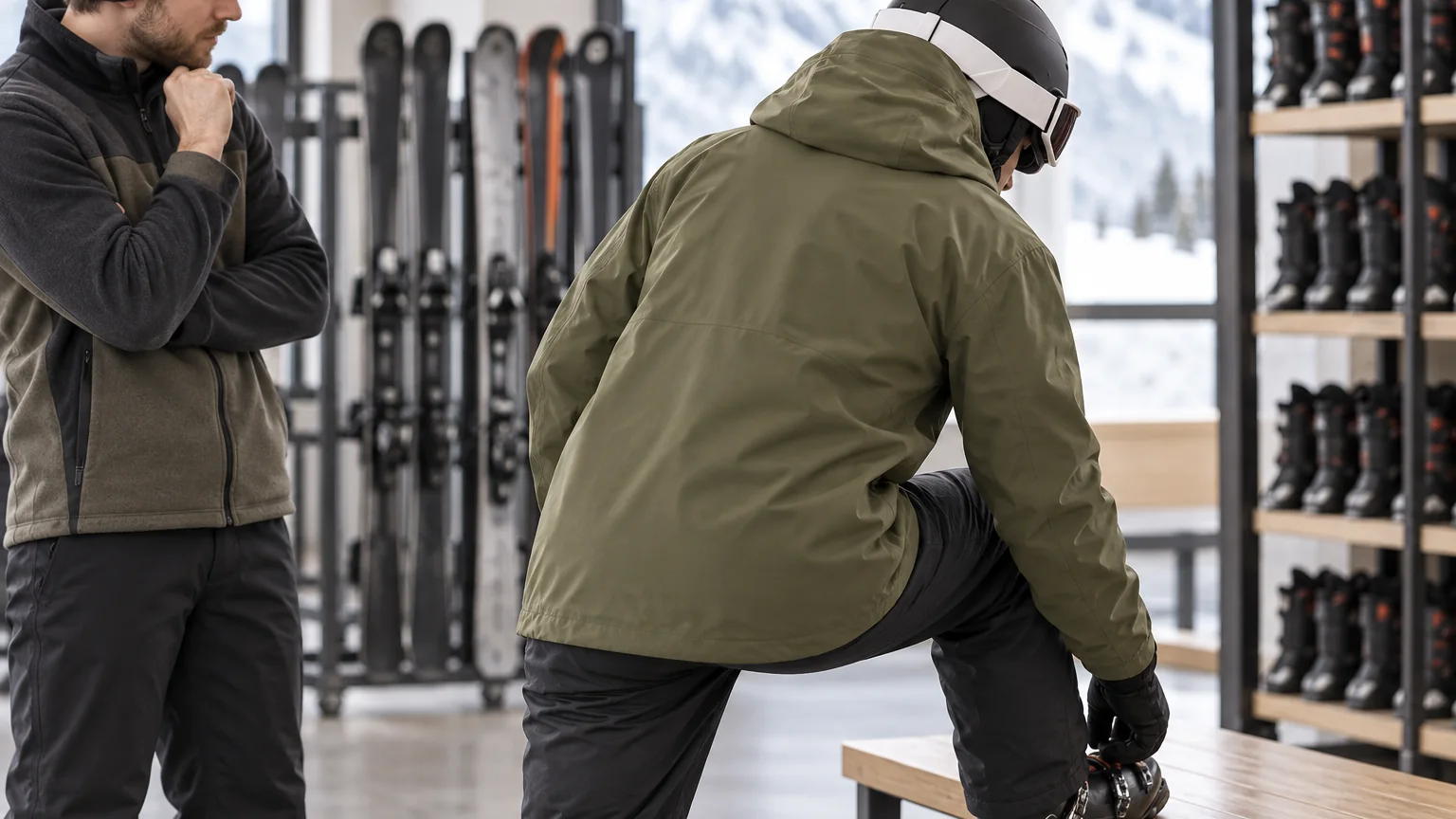
The Denver failure at the lower back points to hem-to-pant overlap, not just jacket length. Ask a wearer to bend, sit and raise both arms while wearing every intended layer. The jacket hem should remain overlapped by the pant or bib, and a powder skirt should close without pulling the jacket upward. At the shoulders, tight armholes or a narrow back can compress insulation and limit pole movement even when the chest circumference appears correct.
Procurement teams need body measurements, finished-garment measurements and an intended layering allowance. Sizing up to fix a narrow shoulder can create long sleeves, a loose waist and displaced articulation.
Keep skin-contact layers personal, dry and free of pressure points
Choose materials by measured resistance and skin comfort
ISO 11092 and ASTM F1868 use a sweating guarded hot plate to evaluate thermal and water-vapour resistance under steady-state conditions. They compare fabrics or multilayer assemblies; they do not recreate a ski day or certify warmth. Record the method, sample construction, conditioning, result and laboratory—not only “highly breathable.”
For the first layer, choose a close fit without folds under boots or pressure points under pack straps. Lightweight fabric suits high-output or mild conditions; a warmer base can serve colder, lower-output use. Because base tops, base bottoms and socks contact skin and retain each wearer’s moisture, they should normally be personal rather than shared rental items. A midlayer should add loft while preserving shoulder and elbow mobility. Zip-neck tops and full-zip fleece make on-hill adjustment easier than fixed, bulky insulation.
Protect extremities without reducing circulation or control
Use one pair of ski-specific socks, pulled smooth; doubling socks can crowd the boot and create pressure. Match glove insulation to conditions and dexterity needs, then test whether gauntlet and jacket cuff overlap as designed. Gloves are best treated as personal garments because fit, hygiene and dexterity vary; carry a dry spare liner or second pair when repeated days, wet snow or frequent falls are likely.
Neckwear should close the collar gap without obstructing breathing or vision. Check helmet, goggles and hood together: the hood should turn with the head, the collar should not push the goggles, and the helmet should follow its manufacturer’s fit guidance.
Choose outerwear by adjustability rather than by the jacket label
A shell separates weather protection from warmth, so insulation can change underneath; it requires users to manage the right midlayer. An insulated jacket is simpler for low-output periods but less adaptable when the skier heats up. Neither format is inherently superior for mens skiing clothes; temperature, precipitation, activity and trip duration should decide.
ISO 811 measures resistance to water penetration under hydrostatic pressure; ISO 4920 is a spray test for surface wetting. A fabric may shed droplets yet resist sustained pressure poorly, while seams make a garment differ from a swatch. Ask what component was tested and whether testing occurred before or after laundering.
Compare the complete system before selecting the jacket
| Decision factor | Shell plus separate midlayer | Insulated ski jacket |
|---|---|---|
| Warmth adjustment | Broad; insulation can be changed | Simple, but the fixed fill limits adjustment |
| Moisture management | Good when shell vents and layers are managed | Depends heavily on ventilation and fill level |
| Movement and bulk | Depends on compatibility of multiple garments | Integrated pattern can reduce layer conflict |
| Use beyond skiing | Components can serve more conditions | Convenient for consistently cold use |
| Unit-cost tendency | More separate items to source | Fewer pieces, though construction may be complex |
| Returns and TCO risk | Higher if layer allowances are unspecified | Higher if fixed warmth mismatches the trip |
Total cost of ownership includes missing accessories, emergency purchases, exchanges, freight and lost selling time. An inexpensive jacket is not a low-cost kit if it omits compatible pants, dry gloves or a usable size range. In an illustrative 100-kit order with 10 preventable exchanges, buyers incur outbound and return handling plus inspection and repacking; insert actual rates rather than assume universal savings.
Sort the checklist into wear, spare and rent-or-confirm decisions
| Decision | Items | Reason and acceptance check |
|---|---|---|
| Wear on the slope | Base top and bottom, one smooth ski-sock pair, midlayer, jacket, ski pants or bib, gloves, neck gaiter and eye protection | Skin-contact pieces stay personal; the assembled system must manage sweat on descents and close wind gaps on lifts |
| Pack a dry spare | Base top, socks, glove liners or second gloves; add a base bottom for a multi-day trip | Replace wet skin-contact layers rather than covering them with more insulation; store spares in a dry bag or indoor locker |
| Rent or confirm before travel | Skis, boots and poles; helmet where offered; jacket or pants only where the resort or outfitter explicitly lists apparel rental | Check inventory, size range, reservation, pickup time, hygiene policy and whether goggles, gloves or clothing are excluded; do not assume an equipment package includes garments |
| Keep for travel or après-ski | Casual winter coat, jeans or travel trousers, ordinary shoes, indoor top and social clothing | These pieces serve transit, meals and the village, not the slope kit; jeans and ordinary shoes do not replace ski pants and compatible boots |
This split also clarifies a common packing-list error. A one-week or family list multiplies personal, washable layers and dry spares, not helmets or jackets blindly; a school or operator list must assign who provides every item. Après-ski clothing belongs in a separate travel bag, so a casual coat does not displace the weather-protective shell needed on the mountain.
Run one concise interface check before departure: fasten the complete kit; reach overhead; rotate as if planting a pole; hold a deep ski stance; sit as on a lift; and turn the head with helmet, goggles and hood. Confirm jacket-to-pant overlap, glove-to-cuff overlap, sock-to-boot smoothness, goggle-to-helmet fit, hood rotation, vent access and reachable pockets. Record hem separation, cuff migration, shoulder tension, knee restriction or blocked vision, then correct the component causing the conflict rather than sizing up the whole kit.
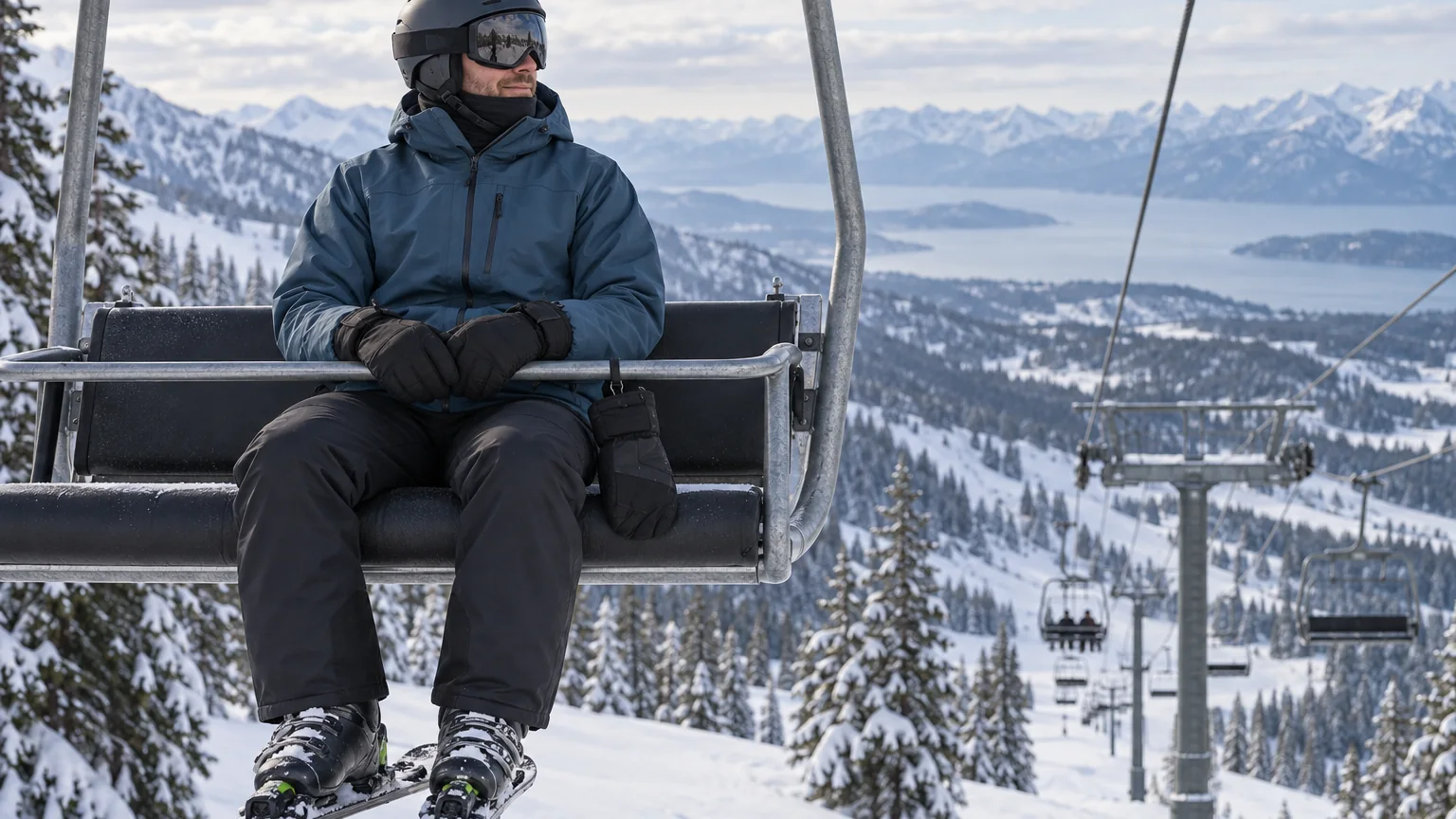
If the skier becomes chilled on a chairlift, the recovery sequence is practical: close shell vents and front zips; seal cuffs, collar and the lower-back gap; add or replace a dry insulating layer at the next safe stop; move fingers and toes without gripping or stamping hard enough to compromise control; and go indoors if shivering persists, dexterity declines, or clothing is wet. Do not wait for the next descent to “warm up” a system that is already losing heat. Supervisors should follow the resort’s emergency process when a skier shows confusion, slurred speech or poor coordination.
Apparel is only one control. Include the National Ski Areas Association’s Responsibility Code in the first-trip briefing so equipment preparation and on-slope conduct are addressed together.
Test methods support claims but do not certify the complete garment
- ISO 11092 and ASTM F1868: material or assembly tests for thermal and evaporative resistance under steady-state conditions using a sweating hot plate. They are comparison tools, not guarantees of comfort.
- ISO 811: a hydrostatic-pressure method for water penetration resistance. State the sample and result unit; do not translate one fabric result into an unsupported “waterproof garment” claim.
- ISO 4920: a spray method for surface wetting. It does not replace hydrostatic or seam-leakage evidence.
- ASTM F2732: a practice for estimating cold-weather clothing ensemble temperature ratings using thermal-manikin data from ASTM F1291 and a heat-loss model. The scope concerns ensemble guidance; it does not eliminate local cooling or frostbite risk.
These documents are test methods or practices, not automatic product certifications. Commercial consequences of loose claims include failed buyer audits, inconsistent comparison between suppliers, returns and misleading market language. Destination-market rules, intended use and the exact claim govern what documentation is needed; ordinary recreational ski apparel should not be marketed as occupational protective equipment without applicable evidence.
Approve ski programs only after use, sizing and interface checks
- Write a use profile. Record resort climate, precipitation, lift exposure, skier activity, trip length and whether users can change layers during the day.
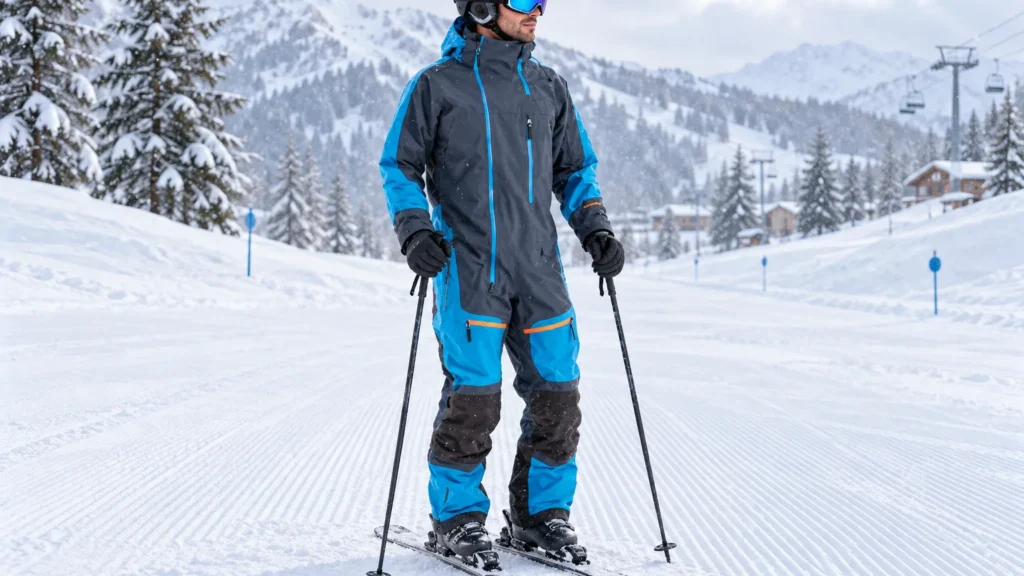
- Build a bill of kit. Treat mens skiing clothes as outerwear plus base, midlayer, socks, gloves and neck protection; assign responsibility for every item.
- Plan the size range from body data. Review chest, waist, hip, sleeve, inseam and stature distribution. Approve finished measurements with stated layer allowances instead of scaling every dimension mechanically.
- Test the assembled sample. Apply the movement and interface checks. Skiing clothes for men and mens skiing clothes for winter should be reviewed with the actual pants and layers.
- Control evidence and change. Match reports to materials and constructions, define retest triggers, and include return reasons in the next fit review.
Yuelei Sports, a China-based B2B outdoor sportswear solutions supplier, can support buyers evaluating configurable ski suits and jacket programs. The sourcing conversation starts with use conditions, interfaces, size architecture and requested test documentation—not a promise that one construction suits every mountain.
Six first-trip questions resolve the most common layering errors
What is the best layering system for men’s skiing clothes?
The strongest default is a moisture-managing base layer, an adjustable insulating layer and a weather-resistant outer shell. Tune each component to activity and weather, and verify that all three move together without compression or gaps. For a retail program, define the system in the specification rather than assuming the customer already owns compatible layers.
What should I wear under men’s skiing clothes in a first ski trip?
Wear a close-fitting synthetic or merino-rich base top and bottom, plus a light or medium midlayer selected for the forecast. Avoid cotton next to skin and avoid stacking socks inside the boot. Pack a dry spare base top when prolonged wetness or repeated days make changing difficult.
Do I need an insulated jacket or a shell for a first ski trip?
An insulated jacket is convenient for a predictable cold day; a shell plus midlayer gives more control across changing weather and exertion. The honest answer depends on the trip profile and the wearer’s tendency to run hot or cold. Either option must preserve ventilation, movement and hem coverage.
How can I avoid getting cold on chairlifts while skiing?
Reduce sweat before boarding by venting or easing effort, then close vents, cuffs, collar and hood for the ride. Keep base layers dry, seal the lower-back gap and protect hands, neck and face without restricting circulation. NIOSH guidance supports controlling wetness and wind exposure rather than relying on bulk alone.
Are ski clothes and snowboard clothes interchangeable?
They can be, if weather protection, mobility and equipment interfaces work for the user. Snowboard fits often allow different stance and seat/knee demands, while ski patterns may prioritize pole movement and closer boot-cuff integration. Evaluate actual motions instead of accepting a category label.
How should ski clothing fit so it is warm but still easy to move in?
It should allow the full intended base and midlayer without flattening insulation, pulling across the shoulders or opening a waist gap. Test reach, rotation, squat and seated postures with closures fastened. Search labels such as skiing men’s clothes are less useful than body measurements, garment measurements and a documented movement trial.
Use primary sources to verify cold-weather and test claims
- International Organization for Standardization: ISO 11092:2014, ISO 811:2018, and ISO 4920:2012.
- ASTM International: ASTM F1868-23 and ASTM F2732-23.
- CDC/NIOSH: Cold Stress: About.
- National Ski Areas Association: Your Responsibility Code.
The best first-trip kit is the one that remains dry enough, covered and mobile through every transition from warm descent to exposed lift.
For a B2B program built around a defined climate, layer plan and size range, review Yuelei Sports’ mens skiing clothes and ski-jacket options, then contact the team with your target use conditions and documentation requirements.