 Xiamen Yuelei Sports Co., Ltd
A wet-snow day exposes the difference between a garment’s marketing story and its usable specification. A ski suit can look warm on a hanger yet feel cold when moisture reaches a cuff, overheat when the skier climbs, or restrict movement over the thermal layers that the trip actually requires. That is why a search for a ski suit Helly Hansen should not be answered by a brand name alone. No model-specific Helly Hansen product sheet, test report or care label was verified for this draft, so this is an evidence-bounded review method rather than a claim that every Helly Hansen suit has the same construction or performance. The useful question is whether the named model can prove the right combination of insulation, fit, water protection, breathability and care for wet snow.
Summary: A Helly Hansen ski suit may be worth considering for wet-snow use only when the exact model’s construction and test evidence match the planned layer system and activity. A warm-feeling insulated suit and a flexible shell suit solve different problems; neither one is automatically waterproof, breathable or comfortable from its label. Compare the finished garment, not only the fabric headline: identify the insulation architecture, check seams and closures, test reach and squat over thermal layers, and ask what method produced every water or vapour result. ISO 811:2018 addresses resistance to water penetration, while ISO 11092:2026 addresses thermal and water-vapour resistance under stated laboratory conditions. A product page without the relevant model evidence should remain an open question.
How Was This Helly Hansen Ski Suit Review Compared?
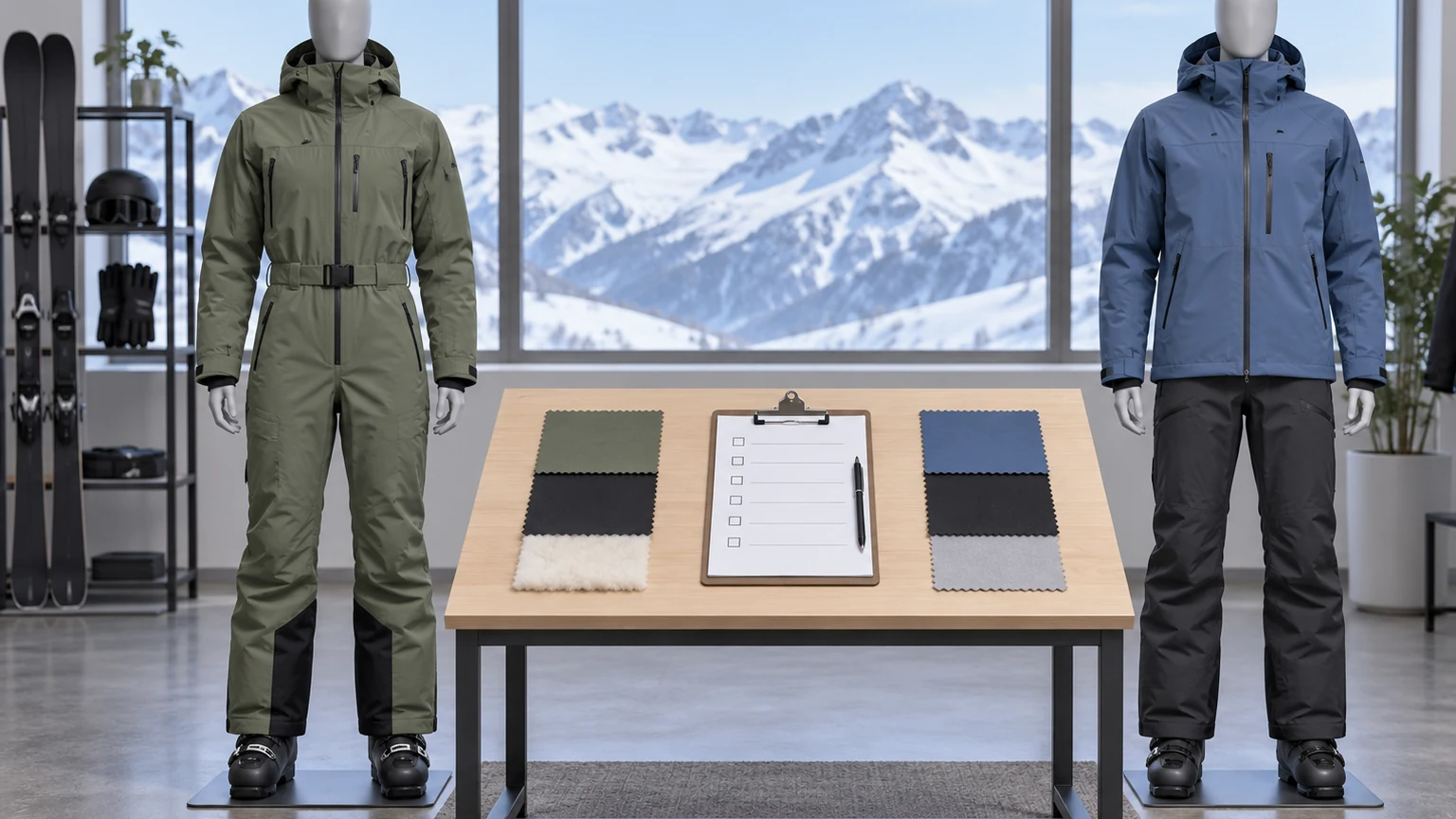
The comparison uses a transparent five-step method intended for a buyer, retailer or resort purchasing team:
- Freeze the model and use case. Record the exact style, intended skier, wet-snow exposure, activity level, lift time, temperature range and whether the garment is personal, team or rental stock.
- Separate verified facts from assumptions. Accept a warmth, waterproofing, breathability, insulation or care claim only when it is tied to the exact model’s current product page, label, technical sheet or report. No such Helly Hansen model evidence was supplied or verified here.
- Test the complete outfit. Use the planned base layer, mid-layer, boots, gloves, helmet and pack. Check overhead reach, binding reach, deep squat, seated knee lift and repeated arm movement.
- Compare methods and construction. Record the test edition, specimen, units and whether a result covers fabric, laminate, seam or finished garment. Inspect zippers, cuffs, hood, snow skirt, pocket openings and seam tape separately.
- Model ownership cost. Include cleaning, reproofing, repairs, replacement of one component, returns, downtime and the cost of carrying one-piece versus two-piece stock.
This method prevents a familiar brand from receiving an unearned pass. It also makes a ski suit Helly Hansen review useful when a buyer later compares a Helly Hansen model with another brand or with a private-label sample.
| Evidence item | What to verify | What it cannot prove alone |
|---|---|---|
| Exact-model product page and care label | Model identity, declared construction, size information and care instructions | Performance of another style or comfort in every weather condition |
| ISO 811:2018 report | Water-penetration method, specimen, edition, units and test scope | That the complete suit will resist every seam, zipper, cuff or hood leak |
| ISO 11092:2026 report | Thermal and water-vapour resistance under stated steady-state conditions | A universal warmth, breathability or temperature promise for a moving skier |
| Finished-garment movement trial | Layer allowance, reach, squat, seated knee lift and equipment compatibility | Laboratory ratings or long-term durability without a separate test plan |
| Controlled wet-snow wear or spray check | Wet-out, leakage, condensation, hood movement and cuff coverage under a repeatable setup | Results for a different size, layer stack, closure configuration or model |
Is a Helly Hansen Ski Suit Warm Enough for Wet-Snow Conditions?
Warmth is a system result, not a brand attribute. An insulated suit can reduce the amount of mid-layer planning, while a shell suit depends on the user adding and adjusting insulation. In wet snow, the outer layer must also limit water entry and wind chill; a thick-looking garment that wets through at a seam or cuff can feel colder than a lighter, dry shell with an appropriate mid-layer.
Ask for the exact insulation type, placement, lining construction and intended layer package. If a seller provides a thermal-resistance result, check whether it was measured under ISO 11092:2026 conditions and whether the specimen represents the supplied garment. That result can help compare like-for-like materials or assemblies, but it cannot promise a particular temperature of comfort for a moving skier. Activity level, moisture, wind, fit and time spent stationary still change the heat balance.
For a Helly Hansen model, the defensible review statement is therefore conditional: it may be warm enough if the documented insulation and shell construction cover the target exposure and the wearer can remain dry and comfortable over the declared layers. Without that model evidence, “warm enough” is not a verified product claim.
How Should a Helly Hansen Ski Suit Fit Over Thermal Base Layers?
Fit should be approved over the actual thermal base layer and any mid-layer, not a thin shirt. Record chest, waist, hip, back length, body rise, inseam and sleeve measurements for the target size range, then compare them with the finished-garment chart and stated tolerances. A skier with a broad chest and short torso may need a different pattern balance from someone with the same chest and a longer rise.
Use repeatable movement checks: arms overhead, binding reach, deep squat, seated knee lift and a forward bend. Look for shoulder lift, crotch pressure, seat tension, sleeve withdrawal, hem coverage and whether the hood, pockets and vents remain usable with gloves. A size increase is not a universal cure; extra volume can bunch under boots, catch on bindings or make the hood shift over the eyes.
For a best ski suit for men comparison, include several representative body shapes rather than approving one fit model. Fit can also affect wet-snow protection: excessive tension stresses seam and closure areas, while folds can create water paths and cold-air circulation. The right size is the one that allows movement and the planned layers without relying on an unsupported warmth promise.
What Waterproof and Breathability Evidence Should a Buyer Request?
Wet snow is a demanding but variable condition. Water can enter through the face fabric, a seam, zipper, pocket, cuff, hood or snow-skirt interface, while internal dampness can come from sweat rather than precipitation. The buyer should identify which problem a claimed number addresses.
ISO 811:2018 describes a hydrostatic-pressure method for resistance to water penetration. It is a test method, not a universal finished-garment certification. ISO 11092:2026 measures thermal and water-vapour resistance under steady-state conditions. Reports should identify the specimen, test edition, conditioning, units and whether the result covers fabric, laminate, seam or finished garment. For a buyer seeking the best ski suit for men, a fabric result should not be rewritten as a complete Helly Hansen ski suit rating.
After the document review, run a controlled wear or spray protocol. Keep the layer stack, closure configuration, posture, exposure time and inspection points consistent. Record wet-out, leakage, condensation, hood movement and cuff coverage. If the exact model’s report is unavailable, say so; do not fill the gap with a brand-wide assumption.
Should You Choose an Insulated Ski Suit or a Shell With Separate Layers?
An insulated ski suit gives a more predictable starting package and can simplify dressing for recreational skiers or low-output duty. Its trade-off is reduced adjustment when the skier works hard, enters a warm lodge or moves between changing conditions. A shell suit with separate layers is more tunable, but only when there is enough internal volume, accessible ventilation and a clear base-and-mid-layer plan.
The best choice depends on the buyer’s operating profile. For a resort rental fleet, repeatable warmth and simple issue procedures may outweigh maximum versatility. For a technical skier, adjustable insulation may be worth the extra layer planning. Neither format should be approved by thickness or silhouette alone.
| Decision dimension | Insulated ski suit | Shell with separate layers | Evidence to verify |
|---|---|---|---|
| Warmth control | Predictable baseline, with less adjustment during high output | Insulation can be changed by weather and activity | Insulation construction, layer allowance and movement trial |
| Wet-snow protection | Depends on shell, seams, zippers, cuffs and hood | Depends on the shell assembly and the same interfaces | Exact-model construction details and water test method |
| Breathability and venting | Can feel too warm if vent access is limited | Layer and vent choices can be tuned | Vapour test scope, vents and controlled wear protocol |
| Fit over thermals | One pattern must balance torso, rise and insulation volume | Jacket and pants can be sized independently | Finished measurements over the actual kit |
| Care and service | One damaged panel may remove the full unit from use | One component may be washed, repaired or replaced separately | Care label, spare parts, repair route and stock model |
Is a One-Piece Ski Suit Better Than a Jacket-and-Pants Setup?
A one-piece reduces the separate waist junction and can make snow-gap control straightforward when the wearer bends, falls or sits. It also makes torso length, body rise and restroom access more critical. A jacket-and-pants setup permits independent sizing, easier component replacement and potentially more flexible venting, but it introduces a waist interface and two garments to issue, wash and track.
For a ski suit Helly Hansen purchase, compare these practical consequences rather than treating one-piece construction as proof of warmth. Ask how many sizes can be mixed, whether a damaged cuff or hem can be repaired without removing the full garment from service, and how the chosen format behaves during repeated sitting, kneeling and binding work. A snowboarder’s stance can expose a fit problem that an upright ski test misses.
Can a Helly Hansen Ski Suit Be Used for Snowboarding?
Potentially, but the activity must be tested rather than inferred from the word “ski.” Snowboarding adds repeated sitting, kneeling, lateral movement, binding reach and falls onto the seat and knees. Check seat ease, knee flexion, cuff-to-boot coverage, hem durability, pocket access and whether the hood or collar moves during head turns. A suit that works for an upright resort skier may feel restrictive in a snowboard stance.
For procurement, add both sports to the approval protocol when the intended assortment serves both users. Keep the same layer stack and equipment configuration while comparing movement. If the exact Helly Hansen model has no stated snowboard use or mobility evidence, describe it as unverified rather than claiming cross-sport suitability.
How Should a Helly Hansen Ski Suit Be Washed and Dried?
Care begins with the exact garment label. Shell fabric, membrane or coating, insulation, seam tape, trims and printed details can respond differently to detergent, agitation and heat. Close fasteners as directed, use only the specified detergent, avoid unapproved softeners and follow the stated drying temperature or method. Do not transfer a reproofing or tumble-dry instruction from another waterproof garment.
ISO 6330:2021 defines domestic washing and drying procedures for textile testing. It can support a controlled buyer evaluation, but it is not a consumer care label or a certification that a particular Helly Hansen suit can tolerate every cycle. After washing, dry the garment fully, inspect seam tape, coating, zippers, cuffs and adjusters, and store it clean and ventilated. Any reproofing product or heat treatment should be checked against the supplied instructions before use.
What Should a Buyer Check Before Calling It the Best Ski Suit for Men?
- Identify the exact model. Save the current product page, size chart, care label and technical sheet; do not generalize from the brand.
- Define wet-snow exposure. Record precipitation, wind, activity, lift time, expected base and mid-layers, and whether skiing and snowboarding are both in scope.
- Approve fit in motion. Test representative body shapes with boots, gloves, helmet, pack and binding movements, then retain measurements and tolerances.
- Trace every performance number. Tie water, vapour and thermal results to the method, edition, specimen, units and finished-garment scope.
- Model ownership. Compare cleaning, drying, reproofing, repairs, spare components, returns, downtime and replacement of a single jacket or pant.
Yuelei Sports can be considered when a buyer needs a configurable ski suit range or coordinated ski jacket range. The supplier brief should include body range, layer plan, insulation or shell architecture, test methods, care-label requirements and acceptance tolerances. The three-layer skiing guide can help document the thermal system, while the men’s skiing clothes checklist helps capture the accessories that affect fit. These internal resources support specification; they do not verify claims about a Helly Hansen model.
FAQs
Is a Helly Hansen ski suit warm enough for wet-snow conditions?
It depends on the exact model, insulation, shell construction, layers, activity and time spent stationary. No model-specific Helly Hansen warmth claim was verified for this draft. Request the product’s insulation and test evidence, then check the complete outfit in movement and wet-snow conditions. A shell may need a mid-layer; an insulated suit may need ventilation.
How should a Helly Hansen ski suit fit over thermal base layers?
It should allow the planned base layer and any mid-layer without pulling at the shoulders, crotch, seat or knees. Check overhead reach, binding reach, deep squat and seated knee lift with boots, gloves and helmet. Use the exact model’s finished measurements; do not assume sizing up fixes an unbalanced torso or rise.
What waterproof and breathability ratings are best for skiing?
There is no universal best number. Compare the method and scope first: ISO 811 addresses resistance to water penetration, while ISO 11092 addresses thermal and water-vapour resistance under stated conditions. Confirm whether the result covers fabric, seam or finished garment, then inspect closures and run a controlled wear trial. Different methods and units are not interchangeable.
Should I choose an insulated ski suit or a shell with separate layers?
Choose insulation when predictable warmth and simpler dressing matter; choose a shell when weather and activity vary enough to justify adjustable layers. A shell is useful only if the pattern allows the planned mid-layer and provides practical vent access. Compare care, repairs and replacement flexibility along with warmth.
Can I wear a ski suit for snowboarding as well as skiing?
Potentially, if the suit supports repeated sitting, kneeling, binding reach, lateral movement and falls. Test the seat, knees, cuffs, hems and boot interface with actual equipment and layers. A ski label does not prove snowboard comfort or mobility, and no such model-specific Helly Hansen claim was verified here.
How do I wash and dry a Helly Hansen ski suit without harming the waterproof coating?
Follow the exact garment’s permanent care label and supplier instructions. Close fasteners as directed, use the permitted detergent, avoid unapproved softeners and use only the stated drying method and temperature. ISO 6330 is a controlled textile-testing procedure, not a replacement for the product care label. Inspect the coating and seam tape after cleaning.
References
- ISO 811:2018 – Textiles – Determination of resistance to water penetration – Hydrostatic pressure test.
- ISO 11092:2026 – Textiles – Measurement of thermal and water-vapour resistance under steady-state conditions.
- ISO 6330:2021 – Textiles – Domestic washing and drying procedures for textile testing.
- U.S. Federal Trade Commission – Care Labeling of Textile Wearing Apparel and Certain Piece Goods.
Is a Helly Hansen Ski Suit Worth It for Wet-Snow Days?
A Helly Hansen ski suit is worth considering when the exact model proves the combination the use case needs: adequate insulation or a workable shell-and-layer plan, movement over thermals, protection at seams and openings, and care instructions that the buyer can operate consistently. The brand name alone cannot establish warmth, waterproofing, breathability or snowboard suitability, and this review does not assign those claims without model-specific evidence. Start by freezing the model and wet-snow profile, then test the complete outfit in motion, check the method behind every rating and model repairs and cleaning before purchase. Do not skip the care label or turn a fabric report into a finished-suit guarantee. For the best ski suit for men decision, evidence beats familiarity; a ski suit Helly Hansen earns approval only when its exact documentation matches the use case. Yuelei Sports can support the same evidence-led process with configurable ski apparel options once the target market, body range, layers, test requirements and care brief are defined.