 Xiamen Yuelei Sports Co., Ltd
Typical procurement scenario: When a category buyer in Vancouver packed a women’s shell for a guided rainy hike, wet sleeves and a shifting hood appeared before lunch. The visible failure looked like a lightweight-fabric problem; the reversal was a specification problem. The brief had no declared rain exposure, seam construction, layer allowance or movement check. This guide gives buyers a practical route from “packable” concept to a defensible product decision.
Summary: A light waterproof jacket womens program works when the shell matches exposure, activity, layers and care. A packable shell can suit rainy hikes when the water path, hood, cuffs and seams are controlled and insulation can be added underneath. ISO 811 provides a water-penetration test method; it does not make a finished jacket waterproof. Before approval, run component, dynamic-fit and water-path checks.
What makes a lightweight shell suitable for rainy hikes?
Start with the hike rather than “lightweight.” Record rain duration, wind, temperature, pack contact, abrasion, pace, rest periods and shelter. A fast uphill route creates more internal moisture than a slow walk; a shell over a thin base may bind over a sweater. A waterproof jacket for women should therefore be specified by movement and layer allowance as well as fabric.
A custom waterproof rain jacket reference can frame specific pack, hood and layer adjustments for that hike.
Packability is a logistics benefit, not a performance result. State packed form, pouch location, recovery after unpacking and pre-use inspection. A thin shell can suit variable weather, while a longer or reinforced pattern may suit prolonged rain or heavy packs. Keep those decisions in the brief.
How should procurement describe waterproofing without overclaiming?
Describe the complete water path: face fabric, coating or membrane, seam sealing, hood, cuffs, hem, pockets and zipper. ISO 811 compares water penetration under declared hydrostatic conditions, but the result belongs to the tested specimen and method. It does not prove every seam, zipper or size will perform identically. Ask for method, conditioning and report scope before using a hydrostatic-head number.
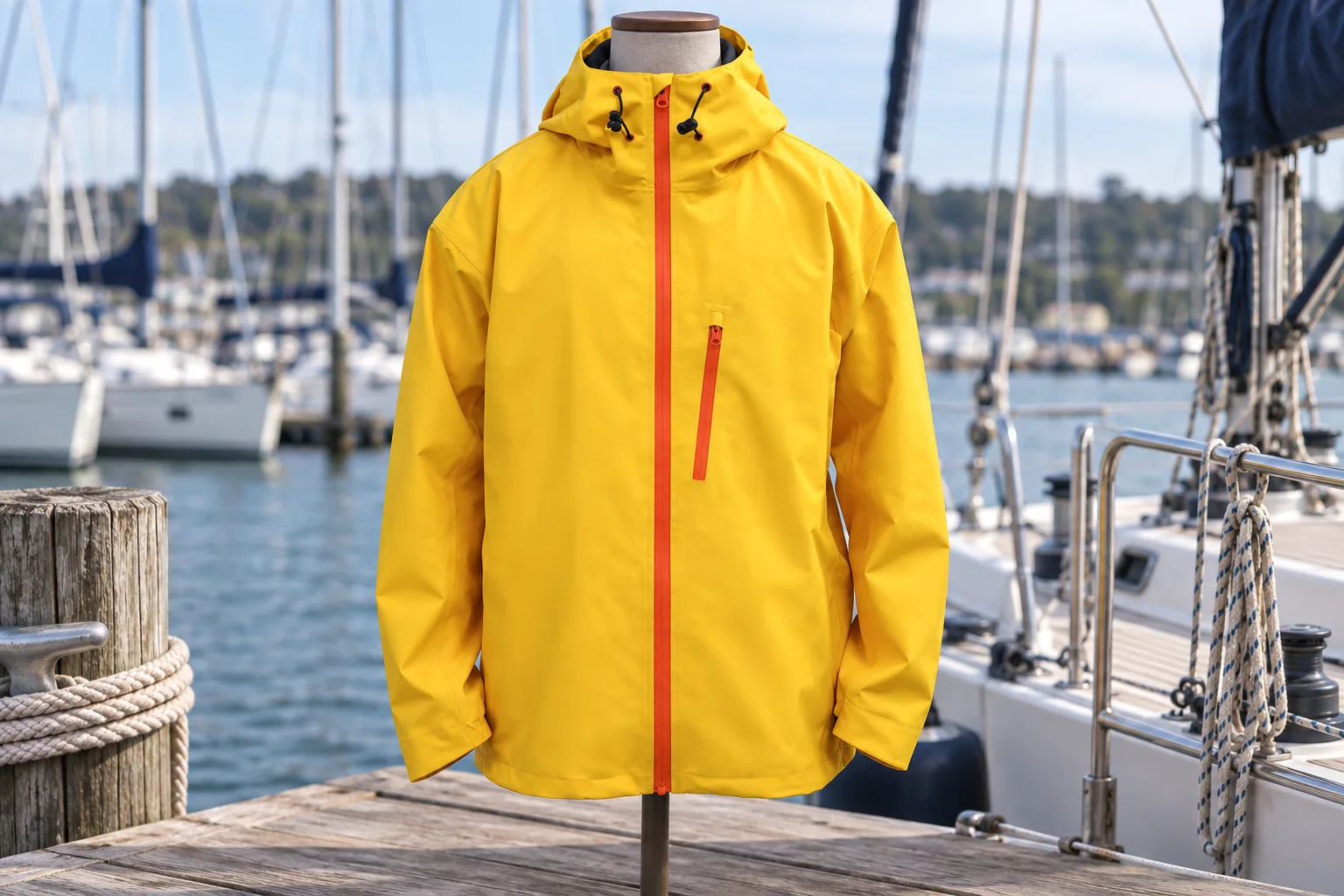
Surface wetting and water penetration are different observations. A face fabric can wet out while the barrier still resists penetration, and a jacket can have a sound fabric result but leak at a seam. When a buyer uses the phrase waterproof jacket lightweight womens, the purchase file should define which properties are required and how the finished garment will be checked.
Which seam, hood and cuff details keep rain out?
Seam sealing should follow shell construction and tape compatibility. Inspect tape width, overlap, corners, end stops and flex zones. Test pocket bags and zipper ends; a rain shell often fails at an interface rather than a panel.
Compare a windproof waterproof outdoor jacket against the same seam, hood and cuff inspection points.
Hood fit is dynamic. Check crown depth, face opening, rear adjustment, peak behavior, peripheral vision and head turn over the intended midlayer. Cuffs should close comfortably and overlap sleeve and glove in the rain path. A women’s windbreaker waterproof jacket can look clean on a mannequin yet expose the wrist during a pole reach.
Should a packable shell be insulated or layered?
A shell blocks weather while the wearer adjusts warmth underneath, but it needs room at shoulders, armholes and hem. An insulated jacket is simpler for cold, low-output use yet can feel too warm during a climb. The choice depends on activity, not a universal “best” label.
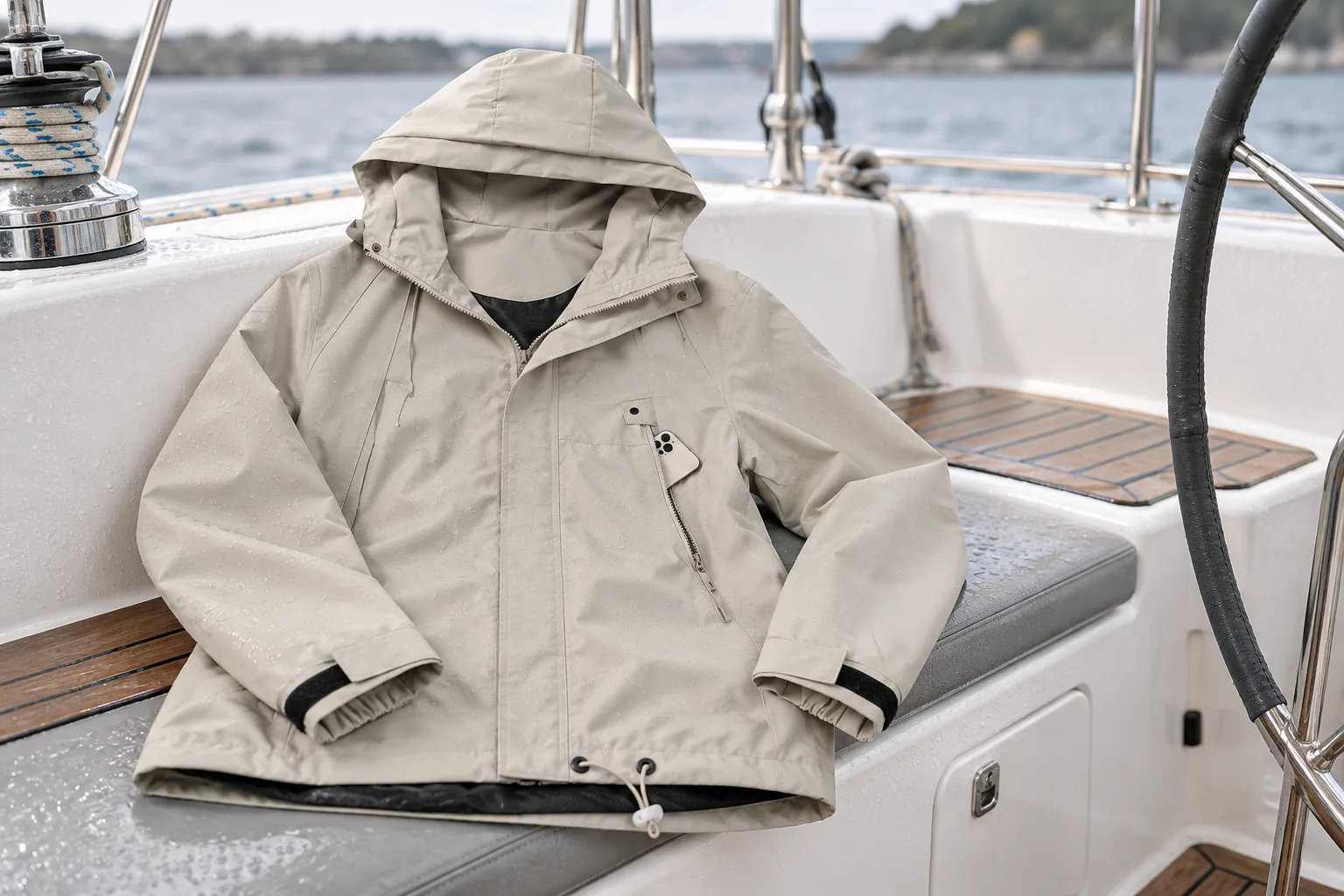
A 3 in 1 womens waterproof jacket combines layers in one system and can simplify merchandising, but it adds components, interfaces, care instructions and size interactions. Compare it with a shell plus separate midlayer using the same wearer movements and temperature assumptions. For buyers comparing a best waterproof jacket for women, document whether “best” means pack volume, wet-weather protection, warmth, range of motion or total ownership effort.
The commuter waterproof jacket checklist offers a related test for pack straps, posture, hood retention and indoor transitions.
| System | Strength for a rainy hike | Trade-off to control | Approval evidence |
|---|---|---|---|
| Lightweight shell | Small packed volume and adjustable warmth | Needs layer room; may feel thin at rest | Dynamic fit, seam and water-path checks |
| Insulated waterproof jacket | Ready warmth during low-output exposure | Less adaptable and potentially bulkier in a pack | Thermal plan, movement and care review |
| 3-in-1 system | One product can cover more than one weather state | More parts, interfaces and grading complexity | Component compatibility and full-system trial |
| Softshell or windbreaker | Comfort and airflow for drier active use | Do not infer waterproof protection from wind resistance | Claim boundary and declared test method |
How should a women’s fit be approved over layers?
Use a measurement chart and graded pattern, then test the intended base and midlayer. Review bust, shoulder, sleeve, back length, hem and armhole movement; women’s blocks can require different balance from a unisex block. ISO 8559-1 supplies shared terminology but does not replace a chart or wearer trial.
Run reach, cross-body, pole-hold, bend, pack-strap and seated checks. Watch hem lift, sleeve exposure, hood shift and pocket access. Approve a pre-production sample with final trims and care label, then inspect proportions at the smallest and largest sizes.
Which procurement dimensions decide whether “lightweight” is enough?
| Dimension | Packable shell is usually defensible when… | Consider a heavier or insulated option when… |
|---|---|---|
| Exposure | Rain is intermittent and shelter is available | Rain, wind or spray is prolonged with limited shelter |
| Activity | Movement is active and heat build-up is likely | Activity is slow, stationary or includes long rest periods |
| Layer plan | A midlayer can be carried and fitted underneath | Warmth must be built in or layers are impractical |
| Pack and abrasion | Light load and low-contact trails dominate | Heavy packs, rock contact or repeated kneeling are expected |
| Commercial use | Small volume, broad season and easy replacement matter | Uniform warmth, simplified issue or severe exposure matters more |
Which standards and care checks matter?
ISO 811 addresses water penetration by hydrostatic pressure. ISO 11092 addresses thermal and water-vapour resistance under steady-state conditions, so compare breathability only when methods and conditioning match. ISO 6330 specifies domestic washing and drying procedures; state the selected cycle and property to recheck. These are methods, not automatic certifications.
Care instructions are part of the product. Confirm detergent, drying, reproofing, seam-tape and storage limits for the exact shell. If marketed as PPE in the EU, Regulation (EU) 2016/425 may apply; an ordinary hiking shell should not borrow PPE language without the required assessment and technical file.
What should buyers do before choosing a ladies lightweight waterproof jacket?
- Write the exposure. Define rainy-hike duration, wind, temperature, pace, pack and shelter.
- Specify the water path. List shell, seams, hood, cuffs, hem, pockets and zippers, then define the test scope.
- Approve movement over layers. Use the real base, midlayer, pack and hand position during fit review.
- Compare systems by use. Evaluate a shell, insulation and 3-in-1 configuration against the same scenario.
- Control production. Freeze artwork, trims, care labels, size grading, tolerances and substitution rules.
Yuelei Sports is presented on its public site as a B2B outdoor-apparel supplier with Intertek tested and Alibaba verified badges. Those are sourcing signals at company level; the exact style still needs its own construction, sample and evidence review. Buyers comparing a ladies waterproof jacket can review the products directory and the waterproof jackets category before sending a specification.
Lightweight waterproof jacket for women FAQ
What makes a lightweight waterproof jacket for women suitable for rainy hikes?
Suitability depends on exposure, movement, layers and construction. Check the shell, seams, hood, cuffs, hem and zippers as one water path, then test reach and pack-strap movement. A lightweight shell is more defensible when the wearer can add warmth underneath and access to shelter is realistic.
Should I choose a lightweight shell or an insulated lightweight waterproof jacket for women?
Choose a shell when activity and changing conditions make adjustable layers useful. Choose insulation when the wearer is colder, slower or stationary for longer periods. Compare both systems over the same layers and movement sequence before selecting a commercial range.
How waterproof does a lightweight waterproof jacket for women need to be for everyday rain?
There is no universal number that covers every finished jacket or use. Specify the intended exposure, request the ISO 811 method and report scope, and verify seam, hood, cuff and zipper construction. Use any hydrostatic-head value only with its test conditions and claim boundary.
What hood and cuff features keep rain out most effectively?
A hood should retain position during head movement while preserving peripheral vision; cuffs should close comfortably and overlap the sleeve or glove in the rain path. Test both while reaching and wearing the intended midlayer. Adjustments that look effective at rest may shift during a hike.
How should a lightweight waterproof jacket for women fit over sweaters or active layers?
Approve fit over the thickest intended layer, then check bust, shoulder, sleeve, hem and armhole movement with a pack. Use reach, bend, pole-hold and head-turn actions. Grade the full size range rather than assuming the medium sample represents every wearer.
How does a lightweight waterproof jacket for women compare with a heavier insulated jacket?
The lightweight shell offers packability and adjustable warmth; a heavier insulated jacket offers built-in warmth but can be bulkier and less adaptable during high activity. The better option follows exposure, pace, rest time, layer plan and commercial issue requirements. Record those assumptions before approving the product.
References
- ISO 811, Textiles — determination of resistance to water penetration — hydrostatic pressure test.
- ISO 11092, Textiles — physiological effects — thermal and water-vapour resistance.
- ISO 8559-1, Size designation of clothes — anthropometric definitions for body measurement.
- ISO 6330, Textiles — domestic washing and drying procedures for textile testing.
- EU Regulation 2016/425 on personal protective equipment, where applicable to the intended use.
Conclusion
A ladies lightweight waterproof jacket earns its place when packability supports the route and interfaces remain defensible under movement and rain. Define exposure and layers, select shell or insulation, verify seams, hood, cuffs and zippers, approve the graded range, then release against written controls. Packed size cannot replace a finished-garment water-path review, and a method result is not an automatic certification. Yuelei Sports can support the specification conversation through its products directory; send the hike profile, size range and verification needs.