 Xiamen Yuelei Sports Co., Ltd

When a technical engineer in Hamburg encounters a jacket that fits in the shop but restricts his shoulders with its liner attached, the sizing error becomes apparent during the first bicycle commute. In this illustrative scenario, he checked only the outer shell. The problem is not defective waterproof fabric; the complete clothing system was never fitted together.
Summary: A men’s 3 in 1 waterproof jacket combines two garments in three wearing configurations: shell alone, liner alone, or both together. It can simplify everyday winter dressing, but it does not automatically outperform separate layers. Check combined fit, attachment compatibility, shell construction and replacement availability before paying for the system.
The North Face describes a three-in-one jacket as an outer shell and an insulating inner jacket that can be worn separately or connected. “Three” therefore counts configurations; it does not mean three-layer waterproof fabric. That distinction prevents a common mistake when comparing waterproof jacket systems on supplier quotations.
How does a 3 in 1 jacket work?
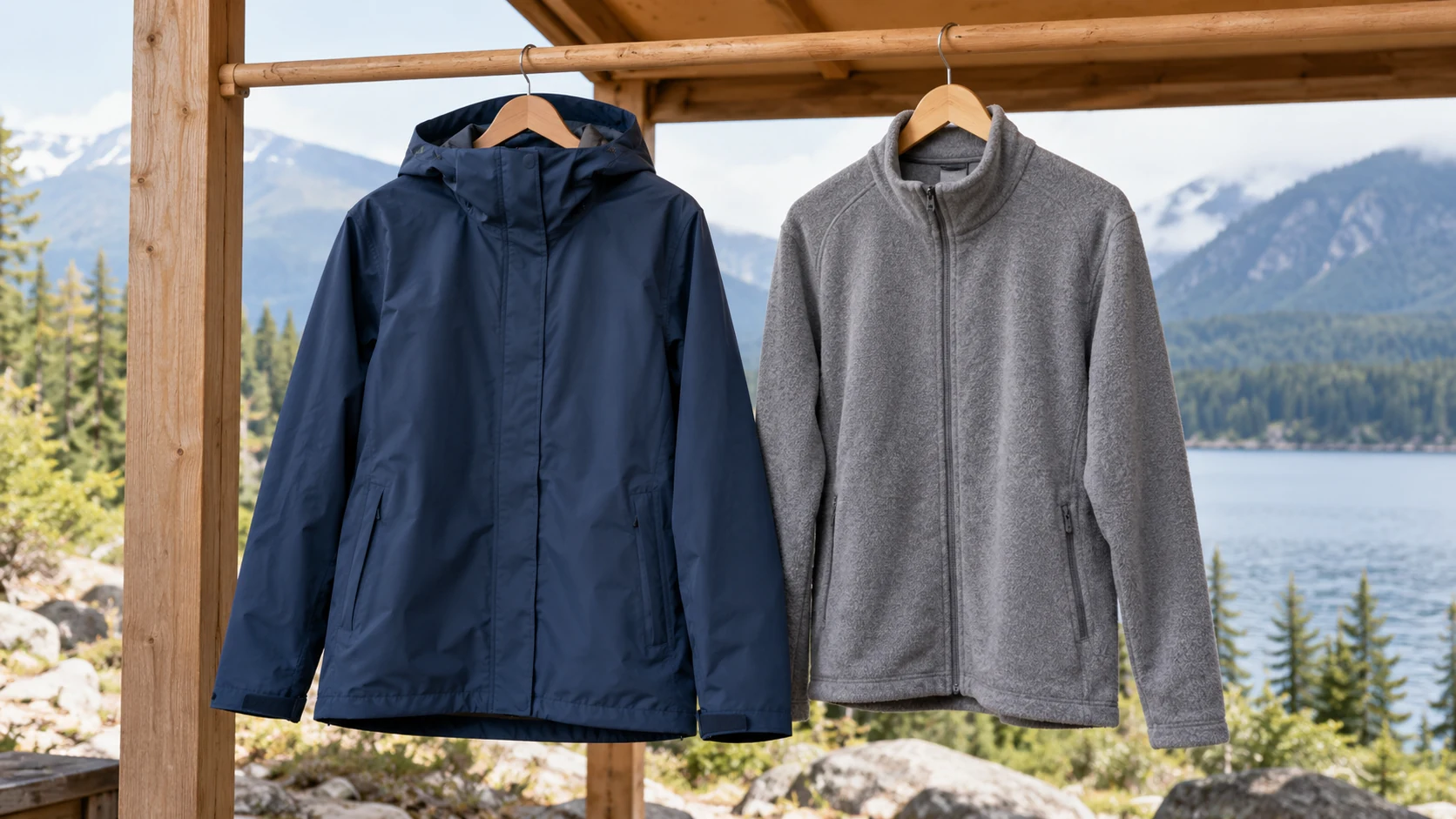
The shell handles wind and rain exposure, subject to its actual construction. The liner supplies insulation. Connection zippers and attachment points may keep the components together while dressing, but their layout is product-specific. A photograph showing two jackets cannot establish that either can zip into another model.
There are three intended configurations. The shell alone suits milder wet conditions; the liner alone suits conditions where its limited weather protection is adequate; the combined system suits colder wet weather. No configuration has a universal temperature range because activity, wind, other clothing and individual response all change comfort.
The liner should not be described as waterproof unless its own specification supports that claim. Similarly, a fleece-lined jacket with permanently sewn insulation is not necessarily a three-in-one system. Buyers should ask whether the liner is fully removable and wearable on its own, rather than infer this from the word “layered.”
Are 3 in 1 jackets good for hiking?
They can suit moderate walking with changing weather, especially when the wearer values an easy complete outfit. During a demanding uphill walk, however, the attached liner may supply more warmth than needed. Removing it requires stopping, separating the garments and finding somewhere to carry the liner.
Separate layers give more freedom to choose a thin fleece, a warmer insulating jacket or no midlayer. A three-in-one offers convenience when its supplied liner is a good match for the usual activity. Neither arrangement changes the basic need to manage heat before heavy sweating starts.
Waterproof construction is a separate question. ISO 811 measures textile resistance to water penetration under hydrostatic pressure. A shell claiming 10,000 mm has a stated laboratory water-head result, not proof that the whole system will remain dry for every hike. Seam sealing, closures, pack contact and fabric condition also need review.
Can any fleece zip into a waterproof shell?
No. Matching nominal size or brand does not establish attachment compatibility. Zipper type, length, slider orientation and attachment positions must match the specific system. Even compatible hardware may produce a poor fit if the liner is too long at the sleeves or too bulky around the shoulders.
Ask the supplier to identify the exact shell and liner combination and demonstrate it on a sample. Confirm whether a replacement liner will remain available and whether future production changes affect interchangeability. An undocumented promise that “all our fleeces fit” creates a stock-management problem when customers need replacements.
Check both pieces independently. The liner should have usable cuffs, pockets and a finished front when worn alone. The shell should remain comfortable without the liner; dangling attachments, an oversized collar or an excessively loose body can reduce the value of the shell-only configuration.
How should a three-in-one jacket fit with both layers attached?
Fit the assembled system over the intended base layer, then check both components separately. Begin with chest, shoulder, sleeve and body length measurements from the supplier. The same letter size can conceal a substantially different cut between manufacturers.
- Fasten the shell and liner and raise both arms forward; check for shoulder resistance.
- Bend the elbows and reach for a bag strap; liner cuffs should not bunch inside shell sleeves.
- Sit down; the lower front should not push the collar into the throat.
- Remove the liner and repeat the hood and cuff checks on the shell alone.
A men’s warm waterproof jacket needs space for insulation to sit comfortably, but simply buying a larger size can create long sleeves and a poorly controlled hood. If the system fits only in one of its three configurations, it does not deliver its advertised versatility for that wearer.
Is a 3 in 1 jacket better than separate shell and fleece layers?
| Buying question | Connected three-in-one | Separate shell and midlayer |
|---|---|---|
| Getting dressed | Components can stay attached | Two independent garments to put on |
| Choice of insulation | Usually centred on the supplied liner | More freedom to vary warmth and bulk |
| Replacement | Attachment compatibility may limit options | Either garment can be replaced independently if fit works |
| Sample approval | Check three configurations | Check each garment and the combined fit |
| Stock planning | One packaged system, but component availability matters | More separate stock lines and mixing options |
The purchase price alone does not settle value. For a uniform buyer, easier issuing and fewer separate stock lines may justify the system. For a hiking retailer, freedom to choose insulation may be more useful. Include replacement liners, handling exchanges and mismatched component returns in the comparison; do not assume one system lasts longer without evidence.
When does the complete system make sense?
| Situation | Likely priority | Decision point |
|---|---|---|
| Cold commute with frequent indoor stops | Convenient dressing and removable warmth | Can the liner be removed and carried easily? |
| Moderate countryside walking | Comfort across changing weather | Does the supplied liner suit the usual effort? |
| High-output hill walking | Fine control of insulation and ventilation | Would separate lighter layers be more practical? |
| Staff clothing programme | Consistent sizing and replacement supply | Can shell and liner identifiers remain traceable? |
Storage and laundering deserve attention too. Components may have different care instructions; detachable does not mean they should be washed together. Follow each label, dry thoroughly and inspect the attachment points before reassembling. For a related comparison of warm constructions, the insulated versus fleece-lined jacket guide explains the distinction; fit requirements remain model-specific.
Which standards apply to a three-in-one system?
ISO 811 can support a fabric water-resistance claim, while ISO 11092 addresses thermal and water-vapour resistance under defined laboratory conditions. A result for the shell alone should not be presented as the result for the assembled shell and liner. Ask which material or assembly was tested and which edition of the method was used.
For EU sales, Regulation 1007/2011 addresses textile fibre labelling. Fibre content for different components should be clear. Ordinary private-use winter rainwear is not automatically protective equipment under Regulation 2016/425. Occupational or other protective claims require their own applicable evidence; “three-in-one” is not a certification.
What should be included in a supplier enquiry?
- State the intended weather, activity and base layers.
- Request a sample with the exact liner and attachment system proposed.
- Approve measurements and movement in all three configurations.
- Confirm component identification, separate care labels and replacement availability.
Yuelei Sports provides outdoor clothing options including a custom waterproof rain jacket. Buyers considering a detachable-liner project should confirm feasibility and the exact construction rather than assume every listed shell supports a zip-in liner. Request model-specific evidence before making warmth or compliance claims.
Frequently asked questions
What features should a men’s 3 in 1 waterproof jacket have for changeable winter weather?
Look for a suitable waterproof shell, a genuinely removable wearable liner, practical closures and comfortable combined fit. Confirm that the shell remains usable without the liner and that the liner can be replaced.
Is a breathable men’s 3 in 1 waterproof jacket better than an insulated one for daily use?
A three-in-one is already an insulated system when assembled, and it can also be breathable. Its main advantage is removable warmth; a permanently insulated jacket may be simpler if conditions rarely change.
What waterproof rating is enough for commuting and weekend activities?
A documented 10,000 mm shell specification can be a starting point. Check the method, seam sealing and intended exposure; adding a liner does not increase the shell’s waterproof rating.
How should a men’s 3 in 1 waterproof jacket fit over a shirt, fleece or midlayer?
Fit the supplied system over the intended base layer. Adding another fleece may create unnecessary bulk. Check shoulder movement, sleeve alignment and collar comfort with both components fastened.
Which pockets, vents and hood adjustments are genuinely useful?
Choose pockets accessible with the system assembled, vents that are not blocked by the liner and a hood that works in shell-only and combined use. Check all controls while wearing gloves.
How does a men’s 3 in 1 waterproof jacket compare with separate shell and fleece layers?
It offers convenient attached dressing and a coordinated purchase. Separate layers offer more freedom to choose or replace insulation. The better choice depends on routine use, fit and component availability.
References
- The North Face: what a three-in-one jacket means
- REI: rainwear and layering construction
- ISO 811: resistance to water penetration
- EU textile fibre-labelling requirements
A three-in-one earns its place when all three configurations are useful. Contact Yuelei Sports with the intended climate, liner preference and size range to discuss suitable waterproof outerwear options and sample requirements.