 Xiamen Yuelei Sports Co., Ltd

When a technical engineer in Glasgow receives a matched shell-and-liner sample, the outer jacket fits neatly over a shirt. In this illustrative trial, attaching the fleece changes the result: the sleeves twist when the wearer removes the jacket, the shoulders feel tight and the cuff tabs pull. The system has two usable pieces, but their combined fit has not been approved.
Summary: A 3 in 1 waterproof jacket contains two garments with three wearing combinations: shell, liner or both. Separate layers offer the same basic combinations without proprietary attachment points. Choose the matched system for convenient dressing; choose independent pieces for broader replacement and insulation options. Check both pieces separately and together before ordering.
The difference is largely how the garments connect and how they are sold. The North Face describes the three combinations in its product guidance, while Plus Outdoor’s comparison highlights replacement flexibility and attachment complexity. Neither arrangement is automatically warmer, more waterproof or better value. Those outcomes depend on the particular shell, insulation and fit.
What does a 3 in 1 waterproof jacket actually include?
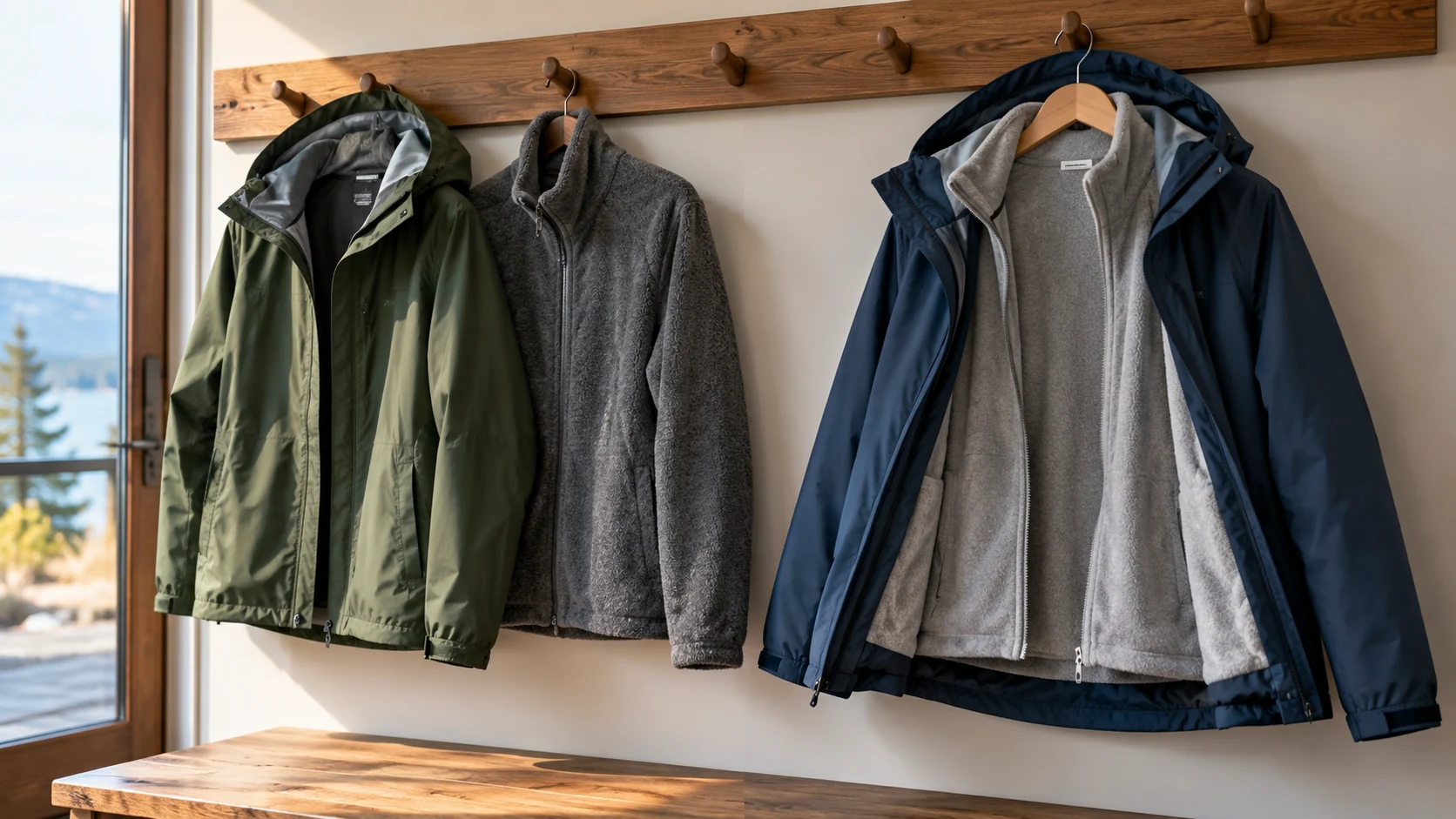
The usual arrangement is a weather-protective outer shell and a removable insulating jacket. The liner may be fleece or another insulation type; its materials and construction need checking. “Three” counts wearing modes, not three physical jackets and not necessarily three bonded fabric layers.
This distinction matters because 3-layer waterproof fabric describes a different construction concept. A 3-layer shell may be worn over a separate fleece without being a zip-in 3-in-1 system. Likewise, an attached liner does not establish whether the shell’s fabric is a 2-layer, 2.5-layer or 3-layer construction.
ISO 811 assesses fabric water-penetration resistance. It does not define the retail term “3-in-1” or certify the complete system. Buyers should request separate descriptions for the shell construction, insulating component and attachment arrangement so that the product listing does not merge unrelated meanings.
Are separate layers more versatile than a matched system?
Both allow shell-only use in rain and insulation-only use when conditions permit. Independent layers make it easier to substitute a thinner fleece, a warmer midlayer or a different shell. A 3 in 1 waterproof jacket may provide a convenient combined garment, especially for everyday use when the wearer changes layers less often.
Compare the two purchasing approaches across the actual wardrobe. A buyer who already owns a suitable fleece may gain little from another liner. A uniform programme may value a coordinated set, but should still confirm how replacement pieces will be supplied. The men’s 3-in-1 waterproof jacket guide covers the basic clothing-system choices.
ISO 11092:2026 can support thermal and water-vapour resistance assessment under defined test conditions. It does not show that a removable liner is inherently more comfortable than separate insulation. The actual materials, fit and activity determine the comparison.
What should buyers check in the zip-in liner?
Inspect the front connection, sleeve attachments and neck attachment, where fitted. Those three locations are a practical inspection grouping, not a prescribed universal design. Some products use different arrangements. Request photographs or samples of the proposed construction rather than assuming every jacket connects the same way.
Operate the attachment without forcing it. Check whether the liner sits flat, whether its hem protrudes and whether sleeve anchors twist the inner cuffs. Then remove and put on the complete jacket several times during the sample session. A connection that looks correct on a table can become awkward during ordinary dressing.
Matching zipper appearance or nominal size does not prove compatibility with another brand or model. Agree replacement availability for the exact liner and shell. ISO 811 evidence covers fabric resistance, not zipper compatibility or attachment durability, so those points require their own confirmation.
Is a 3 in 1 waterproof jacket warm enough for winter rain?
Possibly, but the name provides no temperature rating. Winter in a coastal city differs from exposed mountain conditions, and a person walking briskly needs different insulation from someone waiting outdoors. Shell, liner, base layers, wind and activity all affect the result.
Evaluate three configurations separately: shell alone, liner alone and the combined outfit. ISO 11092 gives a framework for measuring material or assembly thermal resistance under its defined conditions, but a quoted value is not a universal comfort temperature. A supplier should not attach a specific temperature guarantee without an appropriate basis.
For active use, the ability to remove insulation matters. Wearing the liner separately under the shell without attaching it may simplify changes if the manufacturer permits it and the fit works. A 3 in 1 waterproof jacket should offer useful choices rather than forcing the wearer to keep an unnecessarily warm combination on all day.
Can the shell and liner be washed together?
Check both labels first. Different materials may require different programmes, detergents or drying methods. Separating the components, when instructed, makes it easier to follow their respective care requirements and to inspect the shell’s seams and the liner’s attachment points.
Do not assume that a heat treatment suitable for one shell is suitable for every liner. Similarly, a repellency product intended for the outer face should not be applied indiscriminately to absorbent lining materials. REI’s rainwear guidance distinguishes surface water repellency from the waterproof barrier; refreshing the former does not repair damage to the latter.
For a managed clothing programme, record one care route for each component and identify which replacement part belongs to which set. Clear naming helps prevent staff from pairing incompatible liners or treating every navy shell as the same model. Dry the garments fully before storage, including cuffs and attachment tabs.
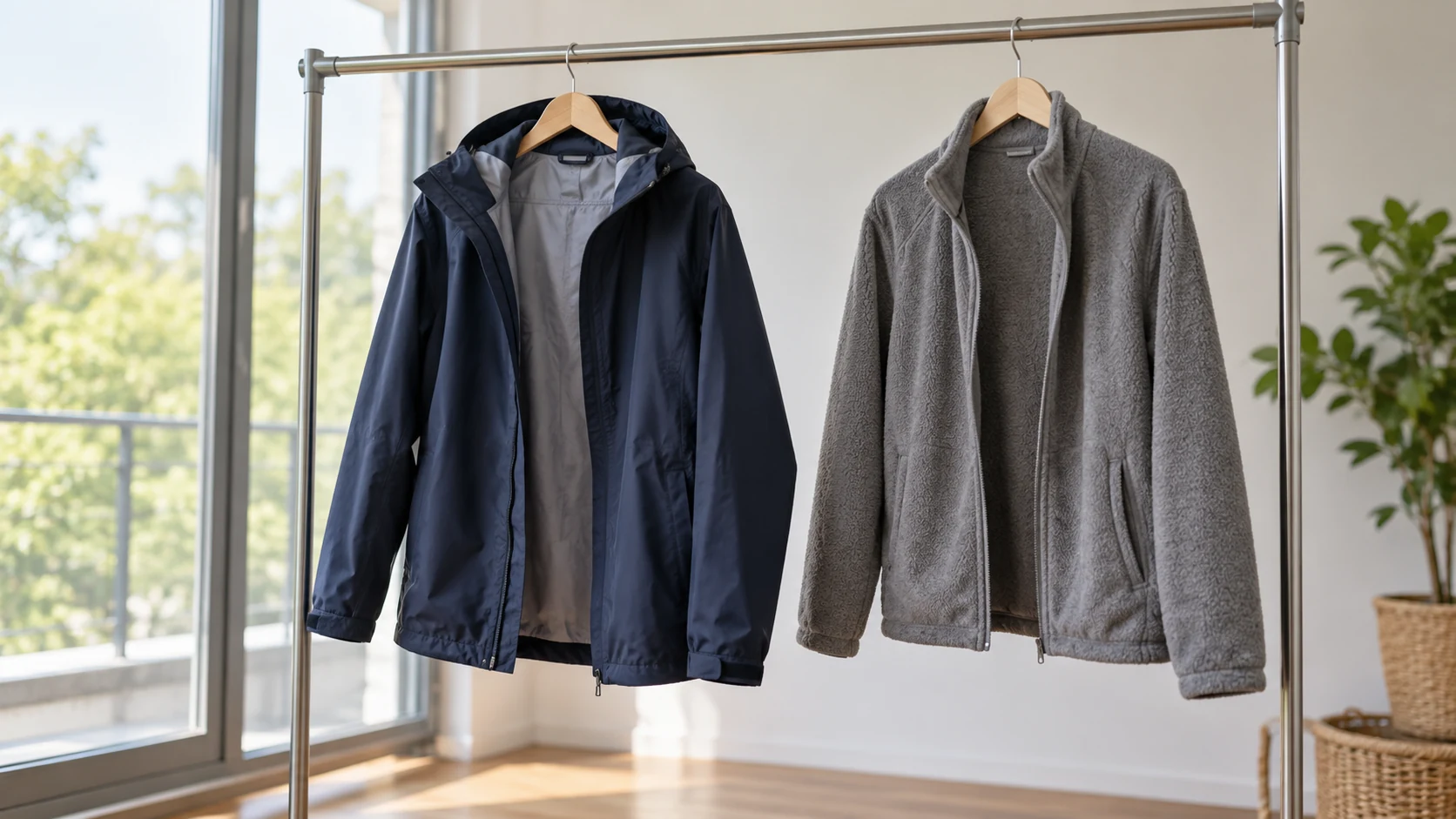
Which system has the lower total cost?
| Buying factor | Matched 3-in-1 system | Independent shell and fleece |
|---|---|---|
| Initial selection | Coordinated package | Separate choices need checking together |
| Replacement | May depend on model-specific parts | Broader choice of replacement pieces |
| Temperature changes | Three intended combinations | Easy substitution of other insulation |
| Handling | Convenient combined dressing when attachments work | No attachment zips to manage |
| Care | Follow both component labels | Wash pieces independently as required |
A useful cost comparison includes purchase price, replacement availability, repairs, washing and fitting-related returns. It should not assume a universal percentage saving. If only the liner wears out, the cost depends on whether a compatible replacement is sold; if an existing fleece already works, an independent shell may avoid an unnecessary purchase.
Who benefits most from each option?
| User pattern | Likely starting point | Reason to confirm on samples |
|---|---|---|
| Everyday commuting with predictable layers | Matched system | Convenient dressing and coordinated fit |
| Active hiking with frequent heat changes | Independent layers | Easy insulation changes during the day |
| Existing outdoor wardrobe | Shell fitted over current midlayers | Avoid duplicate insulation |
| Uniform supply across several seasons | Compare both approaches | Replacement stock and care logistics matter |
Which standards apply to the clothing system?
Water-resistance evidence such as ISO 811 relates to the material and conditions tested. ISO 11092 concerns thermal and water-vapour resistance. Neither standard certifies that any shell and fleece can be combined or that the system suits a particular winter climate.
If the clothing is sold as protective workwear, other requirements may apply to the exact approved configuration. Ordinary private-use weather clothing is outside the EU PPE Regulation’s scope, but protective claims should be assessed separately. A retail feature name or factory certificate does not replace model-specific evidence.
How can a buyer approve a system without overlooking the liner?
- Fit shell-only, liner-only and combined configurations across the planned sizes.
- Check dressing, arm movement, seated comfort and attachment operation.
- Confirm compatible replacements and whether parts can be ordered separately.
- Agree accurate shell, insulation and care descriptions for the product listing.
Yuelei Sports provides outdoor rainwear for B2B discussions. A custom waterproof shell enquiry can include the intended liner, but attachment compatibility and system performance should be confirmed on the actual proposal. A 3 in 1 waterproof jacket earns its value through usable combinations, not the number in its name.
Frequently asked questions
What does 3 in 1 waterproof jacket actually mean?
It normally means a shell and removable insulating jacket that can be worn separately or together. There are two physical garments and three intended combinations.
Can I wear the shell and inner jacket separately?
Usually, that is the purpose of the design. Check that the liner is suitable for independent wear and that the shell still fits comfortably without it.
Is a 3 in 1 jacket warm enough for winter rain?
That depends on insulation, layers, weather and activity. The product name alone provides no reliable temperature rating.
How does a 3 in 1 jacket compare with a separate shell and fleece?
A matched system offers convenient attachment; independent layers offer more freedom to substitute and replace individual pieces. Both provide several wearing combinations.
What should I check in the zip-in liner and attachment points?
Check alignment, smooth operation, cuff twisting and comfortable movement. Confirm model compatibility and replacement availability rather than assuming similar zips will connect.
How do I wash a 3 in 1 jacket without damaging the layers?
Follow both care labels and separate components when instructed. Use approved cleaning and drying methods for each piece, then dry fully before reassembly or storage.
References
- ISO 811: fabric water resistance
- ISO 11092: thermal and water-vapour resistance
- The North Face: what a 3-in-1 jacket means
- Plus Outdoor: matched systems and separate layers
- REI: rainwear selection
A useful clothing system is easy to change, comfortable to wear and practical to maintain. Contact Yuelei Sports with the target season, layers and replacement needs to discuss a 3 in 1 waterproof jacket brief.