 Xiamen Yuelei Sports Co., Ltd
When a technical engineer in Glasgow encountered tight shoulders during a winter sample fitting, he had already selected a larger jacket from its chest measurement. The sleeves still pulled back when he reached forward. In this illustrative buying scenario, the problem was compressed insulation and sleeve geometry, not a defective waterproof fabric.
Summary: An insulated waterproof jacket combines rain protection with retained warmth, but bulk alone proves neither. ISO 11092:2026 measures thermal and water-vapour resistance; it does not assign a universal comfort temperature. Buyers should compare insulation, complete-garment weather protection and movement over the intended layers before choosing a winter range.
REI distinguishes waterproof insulated jackets from ordinary water-resistant puffers, while Cotswold Outdoor explains why insulation needs change between walking and resting. That distinction matters to distributors: a jacket that feels reassuring in a cold showroom can become uncomfortable during a brisk commute. The useful question is how much warmth the wearer needs while doing the actual job.
How much insulation is enough for the way the jacket will be used?
A person waiting outside generates less heat than someone walking uphill. Consequently, one fill specification cannot sensibly serve every winter customer. Begin with expected activity, exposure and access to shelter; then decide whether fixed insulation is helpful or whether removable layers offer better control.
Keep three quantities separate: the mass of the whole garment, insulation mass per unit area where provided, and measured thermal resistance. A heavier zip or thicker face fabric increases jacket weight without necessarily increasing useful insulation. Two synthetic fills with the same stated grams per square metre can behave differently because their construction, loft and placement differ.
ISO 11092:2026 is useful because it measures thermal resistance under defined steady-state conditions, including multilayer assemblies. The standard explicitly says those conditions do not represent specific comfort situations. A supplier should therefore identify the tested assembly rather than turn its result into an unsupported claim that every wearer will be comfortable at a particular temperature.
For a warm waterproof jacket intended for active use, ask where insulation is placed and how excess heat escapes. A modest fill with accessible ventilation may be more usable than a heavily filled garment that must be removed whenever the wearer starts moving.
Is synthetic insulation more practical than down in wet weather?
Down offers excellent warmth for its weight when dry and can pack efficiently. Synthetic insulation is generally more forgiving of damp conditions and simpler to manage during repeated wet outings. Neither choice removes the need for a protective outer fabric, properly sealed construction and a workable drying routine.
Cotswold Outdoor’s layering guidance describes synthetic insulation as useful in damp conditions and down as particularly appealing for cold, dry conditions. That is a selection principle, not proof that every synthetic jacket is warmer than every down model. The total fill, its distribution and the completed garment still matter.
Consider two routes by which the insulation becomes damp: rain entering through openings and moisture produced inside. A waterproof membrane addresses rain penetration, but it cannot guarantee that perspiration escapes as quickly as it forms. ISO 11092:2026 treats water-vapour resistance separately from thermal resistance, which is why a single warmth label cannot describe both.
A buyer comparing samples should request separate shell and insulation care instructions, clarification of any down treatment, and the expected drying method. A shell that dries quickly is of limited benefit if the filling remains damp overnight between consecutive workdays.
How should an insulated jacket fit without becoming oversized?
Fit the garment over the actual base layer and sweater or fleece. Excessive tightness can flatten the insulating layer and restrict movement; excessive volume can make the jacket awkward and leave openings that admit drafts. Buying one size larger is an unreliable substitute for a suitable pattern.
A practical fitting session can use four movements: reach forward, raise both arms, sit down and turn the head with the hood closed. These are proposed sample checks, not a standardized certification test. Observe cuff coverage, hem lift, shoulder tension and whether the collar presses against the chin.

Check pockets with the same gloves used outdoors. A pocket that is comfortable with bare hands may become difficult to access once insulation, cuffs and gloves overlap. The buyer should also check whether a backpack or vehicle seat compresses the jacket where warmth is needed.
REI’s rainwear guidance emphasizes adjustable hoods, wrists and hems because these openings affect weather protection. The existing waterproof jacket hood fitting guide covers that adjustment in more detail. A roomy torso cannot compensate for a hood that turns independently of the wearer’s head.
What keeps a warm jacket waterproof after repeated use?
Warmth comes from insulation; resistance to water penetration comes from the shell and its construction. ISO 811:2018 tests fabric resistance to hydrostatic pressure. It does not test every zip, seam junction or hood opening in an assembled jacket, and a fabric report should not be presented as complete-garment certification.
Ask whether all weather-exposed seams are sealed and how pockets, vents and the main opening are protected. Quilting deserves particular attention: decorative stitch lines and the waterproof barrier must be considered together. Buyers should request construction information rather than assume every visibly quilted puffer is suitable for prolonged rain.
Maintenance adds a second purchasing consideration. Follow the garment label for washing, detergent and drying; follow the insulation maker’s instructions where applicable. Heat or treatment appropriate for one shell can be unsuitable for a different laminated or insulated assembly. Never prescribe one drying temperature across an entire product range.
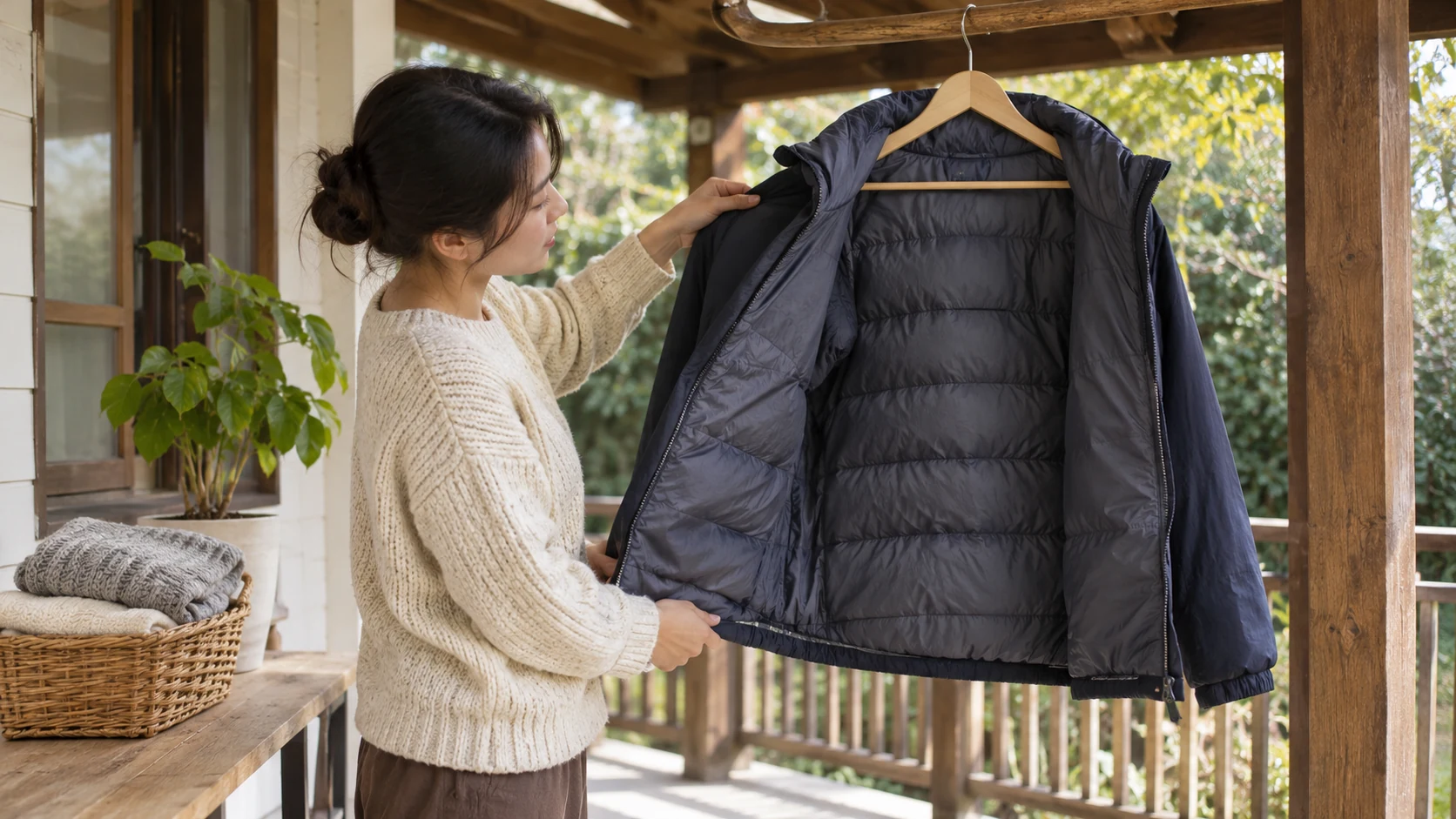
The lightweight warm waterproof jacket that saves packing space may still require patient drying. Record care time, access to drying facilities and repair options alongside purchase price. For a fleet, a garment unavailable for the next shift is an operational cost even when its material specification looks attractive.
Which construction offers the most useful warmth for the cost?
| Choice | Main benefit | Trade-off to check | Cost beyond purchase |
|---|---|---|---|
| Synthetic insulated waterproof jacket | Convenient warmth for damp, cold days | Fixed insulation can be too warm during exertion | Drying time and whole-garment cleaning |
| Down insulated waterproof jacket | Potentially strong warmth relative to bulk | Moisture management and recovery after wetting | Care requirements and filling repairs |
| Shell with separate insulation | Layers can be changed independently | More pieces and overlapping collars | Separate replacement and washing options |
These are construction tendencies, not rankings of particular products. A simple purchasing calculation is total acquisition, care and repair expense divided by useful wear days. Any estimate should use the buyer’s own records; there is no defensible universal payback period for choosing synthetic fill over down.
Which winter use should each option serve?
| Use | Useful priority | Sample question |
|---|---|---|
| Cold urban commuting | Convenience and seated coverage | Does the hem remain comfortable on public transport? |
| Fast winter walking | Ventilation and adjustable insulation | Can warmth be reduced before sweating heavily? |
| Long stationary periods | Coverage and insulation continuity | Are cuffs, collar and lower back protected? |
| Multi-day damp conditions | Drying and repeat use | Can the entire assembly dry between outings? |
Which claims need supporting documents?
Keep ISO 811:2018 fabric reports and ISO 11092:2026 thermal or vapour-resistance results attached to the materials actually supplied. Record sample identification, test conditions and any laundering pretreatment. Neither test method is a brand certification or a blanket guarantee of winter comfort.
For EU consumer ranges, Regulation (EU) No 1007/2011 governs textile fibre names and composition labelling within its scope. Unsupported fill descriptions or temperature claims can create returns and disputes, even where the garment keeps rain out. Occupational protection claims require a separate assessment of the intended use.
What should a buyer confirm before approving the sample?
- Define the wearer’s activity and typical time outside before selecting fill.
- Fit the sample with the intended layers, gloves and bag.
- Request shell, insulation and seam information for the exact construction.
- Include drying, repairs and replacement availability in the cost comparison.
Yuelei Sports lists outdoor waterproof rain jacket options. For an insulated development brief, buyers should specify the required fill, lining and size range and request confirmation against a physical sample. No unverified insulation rating or certification is assumed here.
Frequently asked questions
What is the difference between an insulated waterproof jacket and a shell?
An insulated model adds a warmth layer inside its weather protection. A shell normally relies on separate clothing for insulation, giving the wearer more freedom to change warmth during the day.
How much insulation do I need for cold and wet weather?
It depends on activity, exposure, underlying clothing and individual comfort. Compare samples under a realistic wear plan instead of selecting a fill weight from outdoor temperature alone.
Is synthetic insulation better than down in rainy conditions?
Synthetic insulation is generally more forgiving of dampness. Down can still suit a well-protected garment, but keeping it dry and following its drying instructions becomes especially important.
Can an insulated waterproof jacket be too warm for walking?
Yes. Fixed insulation may retain more heat than an active walker needs. Lighter insulation, adjustable vents or separate layers can make temperature control easier.
How should an insulated jacket fit over base layers?
It should allow natural movement without flattening the filling or pulling the cuffs back. Check reach, seated posture and hood movement while wearing the intended layers.
How do I clean and dry an insulated waterproof jacket safely?
Follow its care label for the complete garment, including insulation and shell. Allow all layers to dry before storage and avoid applying heat or reproofing treatments that the manufacturer does not permit.
References
- ISO 811:2018: resistance to water penetration
- ISO 11092:2026: thermal and water-vapour resistance
- REI: How to Choose Rainwear
- Cotswold Outdoor: The Layering System Guide
- EU textile fibre labelling regulation
Useful warmth is the warmth a wearer can keep through movement, rain and the next day’s outing. Yuelei Sports’ waterproof jacket range provides a starting point for a sourcing discussion; contact the team with the intended climate, activity and sample requirements.