 Xiamen Yuelei Sports Co., Ltd

When a technical engineer in Newcastle encountered cold air inside a sample jacket on a windy walk, he had already checked the waterproof fabric report. The loose hem lifted as he reached for his bag. In this illustrative scenario, the draft entered through an opening; the fabric number had never evaluated the fit.
Summary: A windproof and waterproof jacket addresses two different exposures: moving air and liquid water. Waterproof shells commonly provide strong wind protection, but a windproof garment may only resist light rain. Assess the fabric, closures and ventilation separately; ISO 811:2018 measures fabric water penetration, while ISO 11092:2026 addresses thermal and water-vapour resistance.
The distinction is useful for buyers choosing between a windbreaker, softshell and rain shell. REI’s rainwear guide separates wind resistance from rain protection, and Cotswold Outdoor describes windproof layers as useful during dry, breezy activity. The right choice depends on whether perspiration, wind exposure or sustained rain is the main problem.
Does windproof mean the jacket will keep out rain?
No. A fabric can limit air movement through a tight weave or barrier while allowing water to penetrate during prolonged exposure. Water-repellent surface treatment may make droplets bead briefly, but that appearance does not establish waterproof performance.
REI distinguishes windproof jackets from wind-resistant lightweight garments and notes that some windproof technologies are only water-resistant. It also describes waterproof rain jackets as windproof in practical use. Buyers should still check the specification because terminology and test thresholds vary between suppliers.
ISO 811:2018 uses hydrostatic pressure to assess water penetration through fabric. It does not measure air flow or determine the effectiveness of a drawcord. Request separate evidence for the advertised properties rather than assuming that one test report supports every weather-protection claim.
A useful comparison starts with two questions: is sustained rain expected, and how exposed is the route to wind? A lightweight wind layer can be comfortable during a dry climb. If the same route is likely to remain wet, a properly constructed waterproof shell becomes a different proposition.
Within a windproof waterproof jacket range, avoid grouping every water-repellent outer layer under the same description. Clear distinctions help retailers explain why a soft, airy jacket and a sealed rain shell can both be good products for different uses.
Why can a windproof jacket still feel drafty?
The whole garment has openings that fabric testing does not capture. A loose cuff, high-riding hem or hood that fails to follow the head can admit air directly. A front zip left open for ventilation has the same effect intentionally.
REI emphasizes three main adjustment areas: hood, wrists and hem. Check each with the intended layers and gloves. The adjustment should reduce unwanted gaps without becoming uncomfortable or restricting movement; pulling every cord as tightly as possible is not a useful fitting strategy.
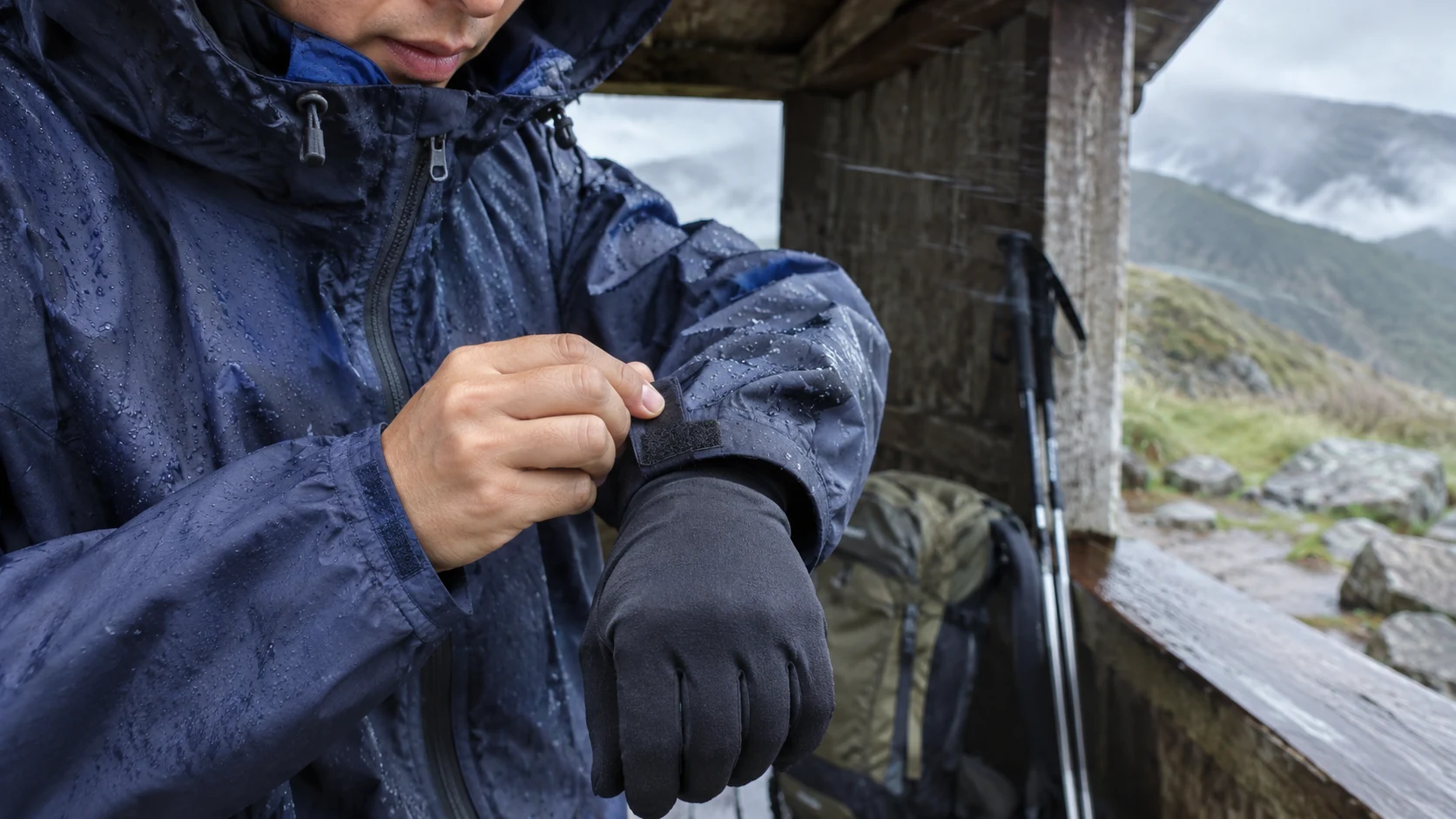
Movement changes those openings. Reaching forward can draw sleeves back, sitting can lift the hem and a backpack can pull the collar away from the neck. A practical sample review should include those positions instead of relying only on a still photograph.
The waterproof jacket hood guide explains how fit affects coverage and vision. That is particularly relevant on exposed routes, where an oversized hood may move independently of the wearer and encourage them to leave it down.
For commercial specifications, record which openings are adjustable and how the garment is intended to be worn. A report describing the main fabric should not be expanded into a promise that the finished jacket blocks every draft in every posture.
Does blocking wind reduce breathability?
It can reduce direct air exchange, but water-vapour transfer is a separate process. A shell may block much of the moving air while allowing some sweat vapour to pass through its material. This explains why “windproof” and “breathable” are not automatically contradictory.
ISO 11092:2026 measures thermal resistance and water-vapour resistance under defined steady-state conditions. It is not an air-permeability test. Ask which property a supplier means by “breathability” and which method produced the number before comparing two fabrics.
REI notes that some rainwear technologies allow a degree of air permeability and that this can affect warmth retention. There is no universal rule that the most air-permeable jacket is the best: a fast-moving wearer and a stationary wearer may prefer different balances.
Controllable ventilation provides another way to adjust comfort. Underarm openings or other designed vents can release heat when conditions allow. Their usefulness depends on access with a bag, ease of operation and the risk of admitting rain through the opening.

A windproof waterproof jacket should not be sold as a guarantee against perspiration. During strenuous movement, moisture production can exceed the system’s ability to release it. Reduce unnecessary insulation and use suitable vents before the interior becomes heavily damp.
What should be worn under a windproof waterproof jacket in cold weather?
A shell reduces exposure but usually supplies little insulation by itself. Cotswold Outdoor describes three clothing functions: base-layer moisture management, midlayer warmth and outer-layer weather protection. Choosing the shell does not remove the need to match the other layers to the activity.
For steady walking, a lighter midlayer may be sufficient until the wearer stops. For long periods waiting outside, more insulation and coverage may be needed. The relevant question is how the clothing system behaves across the whole outing, including stops and indoor transitions.
Test the shell over the intended layers rather than selecting size from a T-shirt fitting. Compressed insulation can lose useful loft, while excessive spare volume may leave awkward openings. The cuffs, collar and hood also need to work together with gloves and hats.
The hidden cost of the wrong choice is often a second purchase. A wind layer selected for daily wet commuting may soon need a rain shell alongside it; a heavy rain shell chosen for mainly dry running may remain unused. Define the customer’s dominant conditions before comparing prices.
How do windbreakers, softshells and rain shells compare?
| Type | Typical use | Rain limitation to check | Comfort consideration |
|---|---|---|---|
| Light windbreaker | Dry, breezy activity and compact carry | May only handle brief light rain | Air exchange varies with fabric |
| Softshell | Movement in cool or changeable conditions | Many are not intended for sustained rain | Stretch and moisture handling can be useful |
| Waterproof shell | Persistent rain and exposed routes | Seams and openings remain important | Ventilation may be needed during exertion |
These are general categories, not guarantees. Some products combine constructions or have specialist features, so the actual specification takes priority. For a sourcing comparison, separate material cost from the value of usable adjustments, repair access and clear care information.
Which protection does each routine need?
| Routine | Main exposure | Useful selection approach |
|---|---|---|
| Dry, windy fast walking | Wind with substantial body heat | Consider a breathable wind layer and forecast |
| Wet commuting | Rain, wind and repeated transitions | Check sealed construction and easy adjustments |
| Exposed coastal walking | Changing wind and rain | Prioritize hood stability, coverage and layers |
| Waiting outside in cold rain | Low heat production and wet exposure | Combine a rain barrier with suitable insulation |
Which claims need separate evidence?
Keep water-penetration, water-vapour-resistance and any air-flow claims distinct in the technical file. ISO 811:2018 and ISO 11092:2026 describe test methods, not blanket certification of the brand or garment. Test conditions and sample identity are essential to a meaningful comparison.
For occupational rain-protection claims, EN 343:2019 has its own requirements and classifications, as SATRA explains. A casual rain jacket should not be described as certified protective clothing simply because its fabric was tested. Unsupported wording can create purchasing disputes and unsuitable use.
What should buyers verify before placing an order?
- State whether sustained rain, dry wind or mixed exposure is expected.
- Request evidence for each weather-protection claim separately.
- Fit the sample with the intended layers, gloves and bag.
- Check controllable ventilation and care requirements.
Yuelei Sports lists custom waterproof rain jacket options. A sourcing brief should specify exposure, movement and opening adjustments, with the required performance confirmed for the final sample rather than inferred from its style name.
Frequently asked questions
Is a windproof and waterproof jacket better than a standard rain jacket?
Many waterproof rain jackets already provide strong wind protection. The extra wording does not automatically indicate better performance; compare construction, closures and supporting specifications.
Can a jacket be waterproof but not windproof?
Waterproof barriers generally offer strong wind protection, though some constructions allow limited air exchange. Drafts can also enter through openings. Check the actual claim rather than treating either label as an absolute.
How does windproof fabric affect breathability?
It can limit direct air flow while still allowing water-vapour transfer. Those are different properties. The test method, whole garment and available ventilation determine how useful the fabric is for the activity.
What should I wear under a windproof waterproof jacket in cold weather?
Use moisture-managing base clothing and insulation suited to activity and exposure. An uninsulated shell provides weather protection but does not replace a warm layer during long cold stops.
Do I need a windproof waterproof jacket for commuting?
It can be useful when rain and exposed wind are common. For short sheltered trips in mainly dry weather, another combination may be adequate. Consider the actual route and time outdoors.
How do I tell whether windproof protection is built into the jacket?
Read the supplier’s material and performance information and ask how the claim was assessed. Check the hood, cuffs, hem and front closure too; the fabric alone does not determine drafts.
References
- REI: rainwear and wind-protection terminology
- Cotswold Outdoor: layering and windproof clothing
- ISO 811:2018
- ISO 11092:2026
- SATRA: the EN 343 protective clothing standard
Good weather protection starts with knowing what is entering the clothing system and where. Contact Yuelei Sports to discuss a windproof and waterproof jacket specification suited to the intended route, activity and season.