 Xiamen Yuelei Sports Co., Ltd
When a gear manager in Glasgow needs jackets for staff moving between rainy streets and cold waiting areas, buying the warmest-looking coat can miss the problem. In this illustrative scenario, some wearers stand still while others arrive sweating, and every jacket must be ready for another shift.
Summary: A waterproof down jacket can suit cold, wet conditions when its shell keeps rain out and its down stays lofted. It is less forgiving when moisture accumulates inside. Choose by activity, exposure and drying access, not the waterproof label alone. For mixed workloads, compare integrated insulation with a separate shell and midlayer before ordering.
Down works best when the jacket keeps its loft dry.
Down traps insulating air within its loft. When it becomes wet and clumps, that air space shrinks, reducing warmth. A waterproof outer barrier helps manage rain, but it does not eliminate moisture from perspiration, open collars or wet clothing underneath. Cold rain and hard activity therefore create different demands from cold rain and standing still.
Ask wearers where discomfort begins. Damp shoulders following rain suggest a different investigation from a clammy back after climbing stairs. These observations do not prove leakage, but they help distinguish external entry, condensation and overheating. Check the shell, seams, closures and layering before deciding that more insulation is the answer.
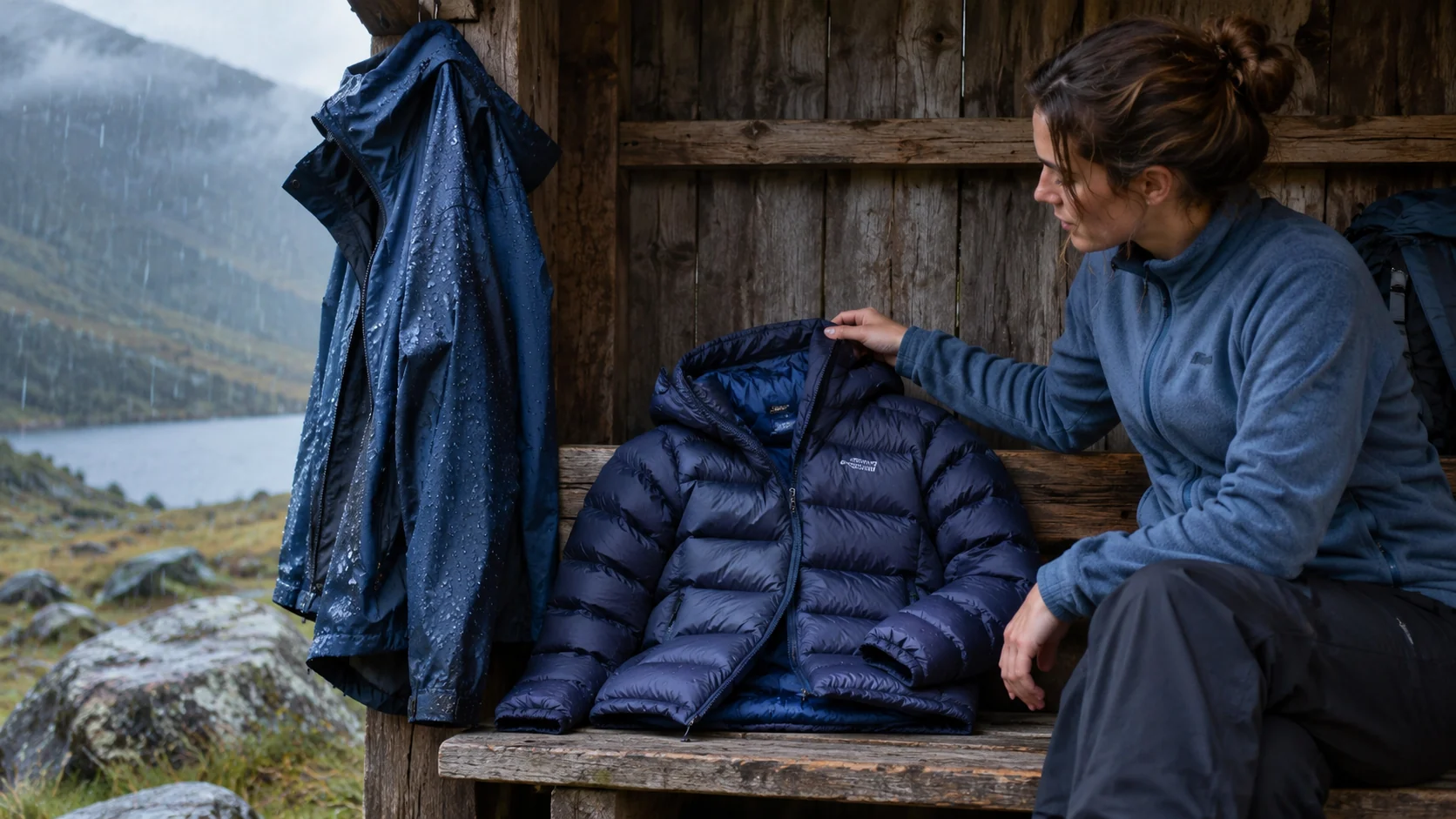
For a separate-layer arrangement, hang the damp outer layer clear of the dry, lofted down midlayer on a sheltered bench. Keep the pieces from touching and protect the insulation from drips. This illustrates the practical advantage of separating rain protection from warmth; it is not a waterproofness test.
Synthetic insulation is generally more forgiving of dampness, though a wet synthetic garment is not automatically comfortable or suitable. Down remains worth considering when dry warmth and packability matter and drying is reliable. Treat prolonged wet exposure without recovery time as a reason to reconsider the system.
A waterproof shell needs more than surface beading.
Durable water repellent, or DWR, helps water bead and roll off an outer fabric. It is not the waterproof barrier itself. A wetted-out face fabric can feel unpleasant without proving that the barrier has failed. Conversely, attractive beading does not establish that seams, pocket openings and closures resist rain.
Inspect how the hood adjusts, whether cuffs close over intended layers, and whether the front closure is protected. Try reaching forward and bending while dressed for work. Insulation compressed by an overly tight shell has less room to loft, while gaps at the neck can admit rain.
When assessing a waterproof down jacket, ask for the stated waterproof test method and whether the result describes fabric or the complete garment. No universal rating in the available information establishes suitability for every wearer. Use insulated waterproof jacket to consider the relationship between insulation and outer protection, then request item-specific construction details.
Ventilation matters because moisture must also leave. Compare accessible openings and adjustment with the wearer’s normal workload. If the garment becomes oppressive during routine movement, a higher waterproof claim alone will not resolve the mismatch.
City waiting and active hiking call for different systems.
For short walks followed by long periods outdoors, integrated down insulation may offer convenient warmth with fewer separate pieces to manage. On active hikes, the same insulation can become excessive during climbs. A removable shell and midlayer allow changes before sweat accumulates, provided wearers have somewhere dry to stow unused layers.
Run a supervised fit and usability trial within the intended activity, without deliberately soaking people. Check hood visibility, reach, pocket access and whether closures remain manageable with the gloves actually worn. Ask participants to report overheating as well as cold spots; warmth while stationary is only part of the decision.
Browse waterproof jackets to compare shell arrangements, but verify each shortlisted item rather than assuming that a category description applies throughout. Stop a trial if a wearer becomes cold or uncomfortable and move them to shelter. Clothing selection is not a reason to extend exposure beyond the activity’s safety arrangements.
Care and return decisions depend on the complete garment.
Before purchase, obtain washing and drying instructions covering both insulation and waterproof construction. Generic shell guidance may conflict with an insulated garment’s requirements. Follow the exact care label and manufacturer advice for detergent, machine use, drying and water-repellent treatment; do not transfer heat settings from another jacket.
After the permitted drying process, feel along each insulated baffle for damp clumps and compare loft across the garment. Hands checking a baffle can reveal uneven recovery that deserves further attention. A dry-feeling surface does not establish that all the fill is dry.
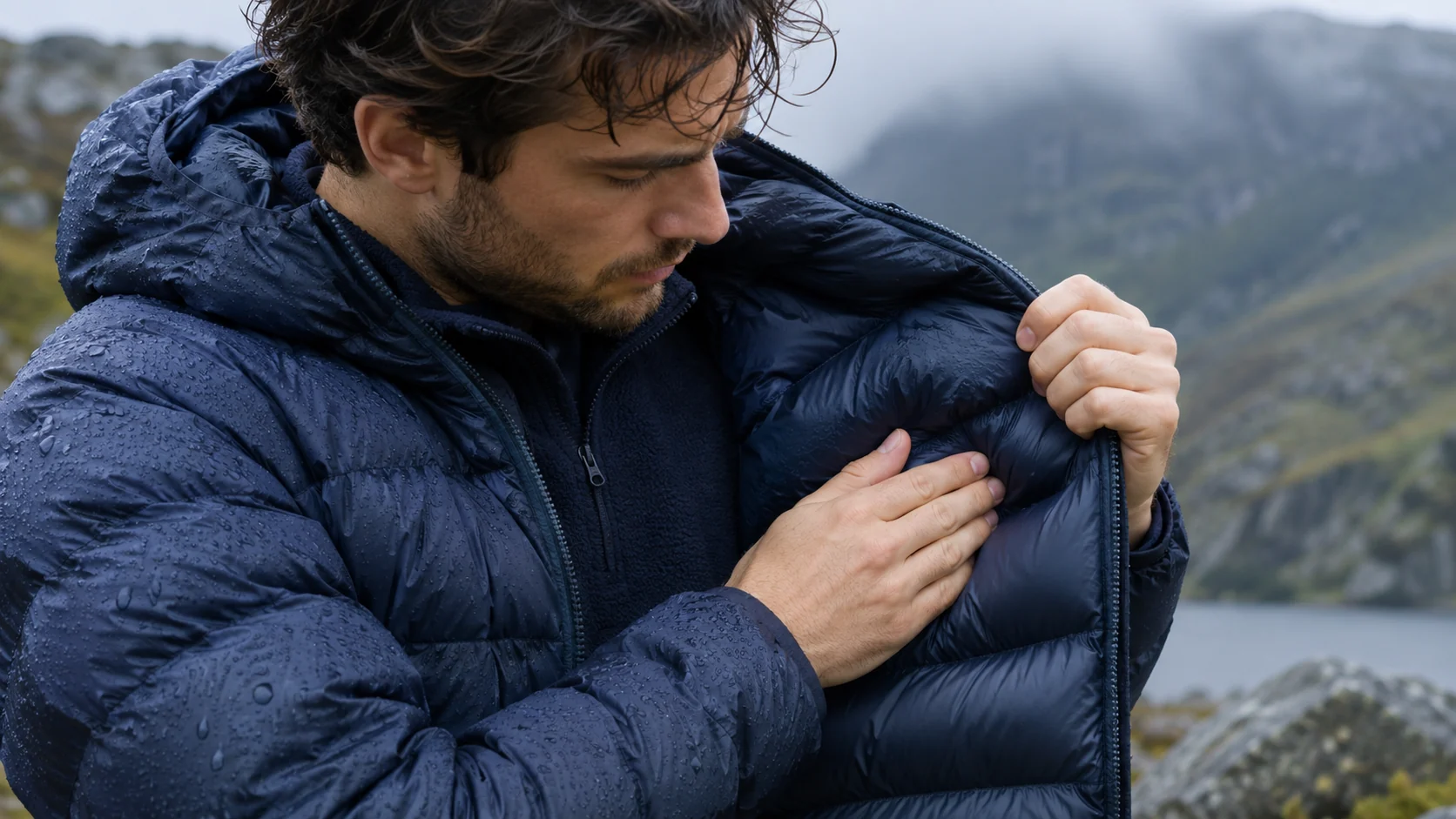
Do not return a jacket to shared stock while dampness remains unresolved. If clumps persist after approved care, contact the seller rather than improvising a repair. For suspected leakage, record where moisture appeared, activity, weather, layers and care history. Check the return policy before laundering or further use when a newly delivered garment appears defective.
A waterproof down jacket should also be rejected during selection if its care demands cannot fit the organisation’s facilities. A garment that needs unavailable drying equipment creates a readiness problem even when its construction otherwise suits the task.
Compare insulation choices separately from fault symptoms.
| System | Useful fit | Buyer’s caution |
|---|---|---|
| Down inside a waterproof shell | Cold waiting with limited layer changes. | Check internal moisture management and whole-garment care. |
| Synthetic insulated shell | Tasks where incidental dampness is difficult to avoid. | Damp tolerance does not establish warmth for the intended exposure. |
| Separate shell and insulation | Mixed activity requiring frequent adjustment. | Allow storage, compatible fit and separate item tracking. |
Use the next comparison at inspection or handover. Its observations guide follow-up; none alone identifies a manufacturing defect.
| Visible or felt symptom | Check next | Decision |
|---|---|---|
| Outer fabric stops beading. | Consult approved cleaning and DWR guidance. | Do not equate wetting-out with proven barrier failure. |
| Clammy lining after exertion. | Review ventilation, layers and workload. | Reconsider insulation before ordering more. |
| Persistent damp baffle clumps. | Confirm the approved drying process was completed. | Withhold from issue and seek guidance. |
| Repeated local wet patch during rain. | Document location, closures and conditions. | Discuss assessment or return with the seller. |
Test information should narrow uncertainty, not promise comfort.
ISO 11092 measures thermal and water-vapour resistance under steady-state conditions. Its stated conditions do not represent specific comfort situations, and it does not set physiological comfort performance specifications. A result therefore cannot establish that a particular team will stay comfortable on a wet shift.
Likewise, published care guidance for GORE-TEX outerwear demonstrates why product exceptions matter: some constructions prohibit treatments permitted for others. That guidance does not establish compatibility with an unspecified down jacket. No supplied item-specific results establish waterproofness, warmth or durability for the garments being considered.
Buy against a written use case and a realistic care budget.
- Define the assignment. Record stationary time, exertion, rain exposure, storage and drying access. Give Yuelei Sports this brief before discussing a shortlist.
- Request comparable details. Ask about shell construction, seams, insulation, ventilation, care and returns. If considering a custom waterproof rain jacket, confirm insulation separately; the description alone does not establish down content.
- Budget the system. As an illustrative calculation, 12 jackets at £120 cost £1,440; alternatives at £160 cost £1,920. The £480 difference should be weighed against documented laundry and spare-stock needs, not assumed savings.
- Approve a sample before scaling. Record fit, closure use, drying requirements and unresolved faults. Agree acceptance and return terms in writing before committing the full order.
Frequently asked questions
Is a waterproof down jacket warm enough for cold, wet weather?
It can be, provided the shell manages rain, the down remains dry and lofted, and the insulation suits the wearer’s activity. Standing in cold rain differs from walking uphill. Assess fit, ventilation, exposure and drying access rather than treating waterproof construction as a warmth guarantee.
Does down lose warmth when it gets wet?
Yes. Wet down can clump and lose loft, reducing the air space that provides insulation. Moisture can come from rain entry or perspiration. Keep affected garments out of shared stock until approved drying is complete, and seek guidance if damp clumps persist.
How does a waterproof down jacket compare with synthetic insulation?
Down is worth considering for dry warmth and packability, while synthetic insulation is generally more forgiving of dampness. Neither choice removes the need for rain protection and moisture management. Compare complete garment systems, including ventilation, fit, drying requirements and the activity, rather than fill alone.
What waterproof rating should an insulated down jacket have?
There is no universally suitable rating established by the available information. Ask which waterproof test was used, what conditions applied and whether the result covers fabric or the finished garment. Seams, closures, fit and ventilation also affect whether a jacket suits the intended work.
Can I wear a waterproof down jacket for hiking or only for city use?
It can suit either setting, but the workload matters more than the location. Insulation useful for cold city waiting may cause overheating on an uphill hike. For variable exertion, consider separate shell and insulation layers, and check adjustment, storage and fit during a controlled trial.
How do I wash and dry a waterproof down jacket without clumping the fill?
Follow the exact garment label and manufacturer’s directions for both the down and waterproof construction. Do not borrow another shell’s detergent or heat settings. After permitted drying, check baffles for damp clumps and uneven loft; seek advice if the fill does not recover.
References
- How to Choose Rainwear
- ISO 11092:2026 — Thermal and water-vapour resistance under steady-state conditions
- Outerwear Care Instructions | GORE-TEX Brand
Buy for the wet shift and the drying room, because tomorrow’s warmth depends on what happens after today’s rain.
Discuss your intended use, activity levels and care facilities with Yuelei Sports, and explore the waterproof jacket range to begin a focused buying conversation.