 Xiamen Yuelei Sports Co., Ltd

When a procurement director for a regional outdoor gear distributor in British Columbia, Canada, encountered a sudden 15% return rate on a new batch of breathable chest waders, panic set in. The end-users—hardcore winter steelhead anglers—were furious, claiming the waders suffered from catastrophic “crotch and knee leaks” after just one trip. The distributor halted sales and prepared to demand a massive refund from the factory. However, after sending the returned units to a lab for hydrostatic testing, the twist was revealed: there were zero pinholes and no seam tape failures. The waders hadn’t leaked a single drop. The culprit? Severe internal condensation caused by anglers wearing heavy cotton sweatpants underneath the waders in near-freezing waters. It wasn’t a product failure; it was a fundamental misunderstanding of how breathable waterproof membranes interact with human sweat in extreme temperature gradients.
Summary: Distinguishing between a true leak and internal condensation (sweat) is the most common challenge in the outdoor gear industry. True leaks are localized and constant, while condensation feels like a damp, clammy layer across broad areas like the legs and crotch. According to the Outdoor Industry Association (OIA), over 60% of wader “leak” returns are actually condensation issues caused by improper base layering. This guide breaks down the real-world scenarios, testing protocols, and engineering standards to determine the true source of moisture in your chest wader, saving distributors from unnecessary return costs.
The Physics of Moisture: Why “Breathable” Doesn’t Mean “Magic”
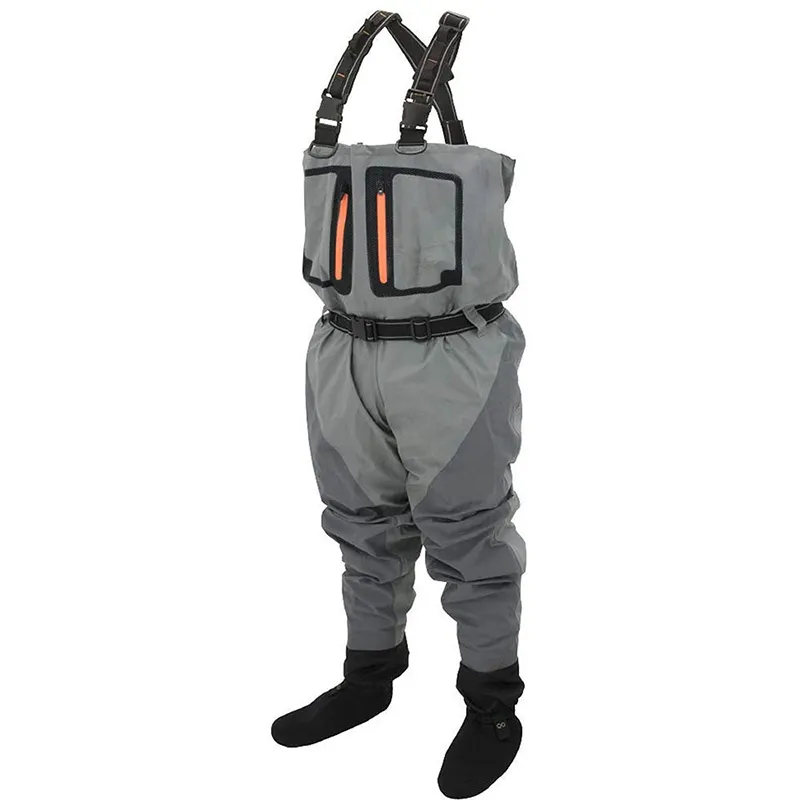
To understand why moisture builds up inside a breathable chest wader, we need to look at the technical specifications that govern the fabric. Breathable materials rely on microscopic pores large enough to let water vapor (sweat) escape, but small enough to block liquid water from entering.
- The Hydrostatic Head (ISO 811): This measures waterproofness. A high-quality waterproof fishing wader typically boasts a rating of 10,000mm to 20,000mm, meaning the fabric can withstand a massive column of water before yielding.
- Water Vapor Transmission Rate (ASTM E96): This measures breathability (e.g., 10,000g/m²/24hrs). However, this transmission only works efficiently if the temperature and humidity inside the wader are higher than outside.
When an angler wades into 35°F (1.6°C) water, the fabric instantly cools down. If the angler is sweating from a long hike, that warm water vapor hits the freezing cold fabric and immediately turns back into liquid water on the inside of the waders. This is condensation, and to the wearer, it feels exactly like a leak.
Diagnosing the Source: 3 Common Moisture Scenarios
When a customer complains about getting wet, the first step is to ask where and when it happened. Here is how to identify the root cause based on real-world feedback.
Scenario 1: Broad dampness across the legs and lower back after hiking
The Reality: This is classic condensation. The user is likely wearing cotton or inappropriate mid-layers that trap moisture against the skin instead of pushing it outward.
The Fix: Educate the customer on proper layering. They must switch to moisture-wicking synthetic base layers (like polyester or merino wool) and fleece mid-layers. Never wear cotton jeans or sweatpants under waders.
Scenario 2: A sudden, cold trickle of water in one specific spot (e.g., the shin)
The Reality: This indicates a pinhole puncture, often caused by walking through thorny brush, sliding on sharp rocks, or catching a stray fly hook.
The Fix: Perform a quick alcohol test (detailed below) to locate the exact pinhole and seal it with a UV-curing urethane adhesive.
Scenario 3: Slow, spreading dampness originating exactly at the crotch gusset or boot junction
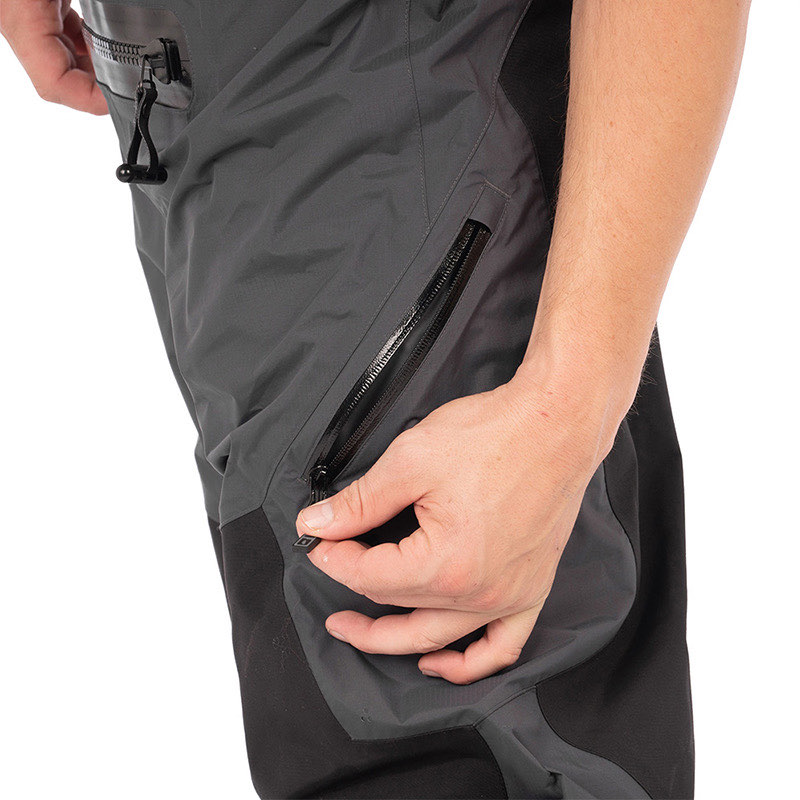
The Reality: This points to seam tape failure or neoprene degradation. It is especially common in a poorly manufactured bootfoot chest wader where the transition between the rigid rubber boot and the flexible upper fabric undergoes extreme mechanical stress.
The Fix: If the wader is new, this is a legitimate manufacturing defect and a warranty issue. If it has seen years of heavy use, it requires extensive seam re-taping.
Condensation vs. True Leak: A Quick Comparison
If you are still unsure whether a returned product is defective or just sweaty, use this quick reference guide to evaluate the gear:
| What to Look For | If It’s Internal Condensation (Sweat) | If It’s a True Fabric/Seam Leak |
|---|---|---|
| Moisture Pattern | Broad, diffuse dampness (often symmetrical on both legs). | Highly localized wet spot; asymmetrical. |
| Location | High-sweat areas: Crotch, back of knees, lower back. | High-abrasion areas: Shins, knees, seam junctions. |
| Timing of Wetness | Gradual build-up; peaks after physical exertion (hiking). | Immediate cold sensation upon entering the water. |
| Undergarment Check | Base layer is damp all over; cotton layers are soaked. | Base layer is completely dry except for one specific wet patch. |
| The “Hang Dry” Test | Waders dry completely overnight when turned inside out. | Water continues to seep through specific points if filled with water. |
The Definitive Testing Protocols
Before processing a costly return or sending a chest wader back to the manufacturer, distributors and shop owners should conduct at least one of these industry-standard checks.
- The Isopropyl Alcohol Test (For Breathable Fabrics): Turn the waders inside out. Spray rubbing alcohol (isopropyl) on the suspected leak area. If there is a microscopic pinhole, the alcohol will immediately penetrate the membrane and show up as a dark, distinct spot on the inner fabric.
- The Flashlight Test (For Pinholes): Take the waders into a pitch-black room. Insert a high-lumen flashlight into the legs. Look at the outside of the fabric. If you see tiny pricks of light shining through, those are puncture leaks.
- The Submersion Test (For Bootfoot and Neoprene): For a bootfoot chest wader, fill a large tub with water. Trap air inside the waders, roll the top down tightly to pressurize the air, and submerge the suspected area. A steady stream of bubbles confirms a structural leak.
Standards, Compliance, and Commercial Risks
For B2B buyers, outfitters, and distributors, misunderstanding the difference between condensation and leaks carries severe commercial risks. High false-return rates destroy profit margins and strain supplier relationships.
It is crucial to source waterproof fishing waders from manufacturers that adhere to strict international standards. Fabrics must pass the ISO 811 hydrostatic pressure test to guarantee waterproofness under deep wading conditions. Furthermore, materials should ideally hold OEKO-TEX® Standard 100 certification, ensuring that the chemical DWR (Durable Water Repellent) coatings and seam tapes are free from harmful substances and are environmentally compliant for global distribution.
Procurement Guide: How to Avoid Wader Failures
To minimize both true leaks and severe condensation complaints, buyers should look for specific engineering features when selecting a manufacturing partner:
- Single-Seam Construction: Ensure the waders eliminate inner-leg seams. Seams on the inside of the legs constantly rub together during walking, leading to premature tape failure.
- Multi-Layer Breathability: Opt for 3-layer upper and 4-layer or 5-layer lower constructions. The heavier lower layers resist punctures from rocks, while the lighter upper layers maximize the ASTM E96 water vapor transmission rate where the body sweats the most.
- Anatomical Booties: For stockingfoot models, ensure the neoprene booties are anatomically mapped (left and right specific) to prevent fabric bunching, which causes micro-tears inside wading boots.
Yuelei Sports provides premium breathable chest waders engineered with advanced 4-layer waterproof-breathable fabrics and reinforced single-seam architecture. Manufactured under strict ISO 9001 quality control and utilizing OEKO-TEX® certified materials, our waders are rigorously tested via ISO 811 hydrostatic standards to ensure zero true leaks out of the box, giving B2B buyers absolute confidence in their inventory.
Frequently Asked Questions
What are chest waders used for?
Chest waders are waterproof overalls used primarily by anglers, hunters, and outdoor workers to stay dry while standing or walking in deep water. They provide full-body protection up to the chest, making them essential for fly fishing, river crossings, and cold-water wading.
Are chest waders worth it?
Yes, chest waders are absolutely worth it if you frequently fish or work in water deeper than your knees. They protect you from hypothermia in freezing conditions and shield your skin from waterborne irritants, making them a crucial investment for outdoor professionals and enthusiasts.
What is a breathable wader?
A breathable wader is constructed from multi-layer synthetic fabrics bonded with a microporous membrane. This specialized membrane blocks liquid water from entering from the outside, while allowing internal water vapor (sweat) to escape, keeping the wearer dry and comfortable during physical exertion.
How long do chest waders last?
With proper care, a high-quality pair of breathable chest waders typically lasts 3 to 5 seasons for frequent anglers. Lifespan depends heavily on usage frequency, storage conditions, and whether the waders are thoroughly rinsed with fresh water after saltwater exposure.
Do you wear shoes in chest waders?
It depends on the wader style. For “stockingfoot” waders, you must wear separate wading boots over the attached neoprene socks. However, for a bootfoot chest wader, the heavy-duty rubber boots are permanently attached to the legs, so no additional shoes are required.
Are breathable waders really breathable?
Yes, but their breathability depends on the temperature gradient. They work best when the outside water or air is colder than the inside temperature. If you wear cotton underneath or sweat profusely in warm weather, condensation can still build up faster than the fabric can expel it.
What is the best material for chest waders?
The best material for modern chest waders is a 3-layer to 5-layer waterproof-breathable synthetic fabric (such as advanced polyester or nylon blends with a DWR finish). This material offers the optimal balance of puncture resistance, flexibility, and moisture-wicking performance compared to traditional heavy neoprene or PVC.
Are fishing waders waterproof?
Yes, high-quality waterproof fishing waders are 100% waterproof. They achieve this through specialized membranes, DWR (Durable Water Repellent) coatings, and fully taped seams. Top manufacturers test this using the ISO 811 hydrostatic pressure standard to ensure zero leaks under deep water pressure.
{ "@context": "https://schema.org", "@type": "FAQPage", "mainEntity": [ { "@type": "Question", "name": "What are chest waders used for?", "acceptedAnswer": { "@type": "Answer", "text": "Chest waders are waterproof overalls used primarily by anglers, hunters, and outdoor workers to stay dry while standing or walking in deep water. They provide full-body protection up to the chest, making them essential for fly fishing, river crossings, and cold-water wading." } }, { "@type": "Question", "name": "Are chest waders worth it?", "acceptedAnswer": { "@type": "Answer", "text": "Yes, chest waders are absolutely worth it if you frequently fish or work in water deeper than your knees. They protect you from hypothermia in freezing conditions and shield your skin from waterborne irritants, making them a crucial investment for outdoor professionals and enthusiasts." } }, { "@type": "Question", "name": "What is a breathable wader?", "acceptedAnswer": { "@type": "Answer", "text": "A breathable wader is constructed from multi-layer synthetic fabrics bonded with a microporous membrane. This specialized membrane blocks liquid water from entering from the outside, while allowing internal water vapor (sweat) to escape, keeping the wearer dry and comfortable during physical exertion." } }, { "@type": "Question", "name": "How long do chest waders last?", "acceptedAnswer": { "@type": "Answer", "text": "With proper care, a high-quality pair of breathable chest waders typically lasts 3 to 5 seasons for frequent anglers. Lifespan depends heavily on usage frequency, storage conditions, and whether the waders are thoroughly rinsed with fresh water after saltwater exposure." } }, { "@type": "Question", "name": "Do you wear shoes in chest waders?", "acceptedAnswer": { "@type": "Answer", "text": "It depends on the wader style. For 'stockingfoot' waders, you must wear separate wading boots over the attached neoprene socks. However, for a bootfoot chest wader, the heavy-duty rubber boots are permanently attached to the legs, so no additional shoes are required." } }, { "@type": "Question", "name": "Are breathable waders really breathable?", "acceptedAnswer": { "@type": "Answer", "text": "Yes, but their breathability depends on the temperature gradient. They work best when the outside water or air is colder than the inside temperature. If you wear cotton underneath or sweat profusely in warm weather, condensation can still build up faster than the fabric can expel it." } }, { "@type": "Question", "name": "What is the best material for chest waders?", "acceptedAnswer": { "@type": "Answer", "text": "The best material for modern chest waders is a 3-layer to 5-layer waterproof-breathable synthetic fabric (such as advanced polyester or nylon blends with a DWR finish). This material offers the optimal balance of puncture resistance, flexibility, and moisture-wicking performance compared to traditional heavy neoprene or PVC." } }, { "@type": "Question", "name": "Are fishing waders waterproof?", "acceptedAnswer": { "@type": "Answer", "text": "Yes, high-quality waterproof fishing waders are 100% waterproof. They achieve this through specialized membranes, DWR (Durable Water Repellent) coatings, and fully taped seams. Top manufacturers test this using the ISO 811 hydrostatic pressure standard to ensure zero leaks under deep water pressure." } } ] }
References
- American Association of Textile Chemists and Colorists (AATCC). Test Method 127: Water Resistance: Hydrostatic Pressure Test.
- ASTM International. ASTM E96 / E96M Standard Test Methods for Water Vapor Transmission of Materials.
- Outdoor Industry Association (OIA). Best Practices for Waterproof/Breathable Gear Maintenance and Warranty Assessment.
After years of outfitting professional guides and field-testing gear in freezing rivers, we’ve learned one hard truth: the biggest enemy of a dry angler isn’t a punctured seam—it’s bad layering. I vividly remember a client who was ready to return a whole batch of waders because his knees were constantly soaked after a day in the water. We did a quick alcohol test right on the tailgate of his truck and found absolutely zero pinholes. The real issue? He was wearing heavy cotton long johns under high-end breathable fabric. Once he switched to a merino wool base layer the next morning, the “leaks” magically disappeared. This field lesson completely changed how we handle warranties—proving that educating your customers on proper layering is just as critical as the waterproof rating of the gear you sell.
Yuelei Sports builds advanced outdoor sportswear and fishing gear with this exact field-tested mindset, ensuring your clients stay dry, comfortable, and focused on the water. Explore our professional-grade manufacturing solutions at Yuelei Sports Chest Waders and upgrade your product line today.