 Xiamen Yuelei Sports Co., Ltd
When a technical engineer in St Andrews encounters a rain jacket that catches across his shoulders during a practice swing, its comfortable standing fit suddenly means little. In this illustrative buying scenario, he checked the size over a polo shirt and added a midlayer only at the course. The problem is movement and layering, not necessarily the waterproof fabric.
Summary: The best golf waterproof jacket for men keeps rain protection, shoulder freedom and sleeve control in balance. Compare a complete swing in the intended layers before choosing a model. A 10,000 or 20,000 mm fabric claim is a hydrostatic-head result, not proof of unrestricted movement or a guaranteed dry round.
Golf Monthly’s rain-jacket testing places freedom of movement alongside weather protection and comfort. Its reviews also discuss details such as fabric noise, cuffs and pocket access. Those are useful priorities for a pro shop or team buyer assessing waterproof golf jackets; a generic “outdoor” description does not establish suitability for repeated swings.
What is the best waterproof jacket for golf?
There is no defensible universal winner without knowing the player’s build, layers, climate and budget. A lightweight shell may be ideal for a walking golfer in mild rain, while a cold-weather player who spends time waiting may need more insulation beneath it. The most useful shortlist starts with those conditions.
Rain protection should include the fabric, seams and closures. Water-repellent surface beading is not enough to establish waterproof construction. Ask whether seams are sealed and how the front closure, collar and cuffs manage driven rain. A jacket can have excellent fabric yet allow water through an opening.
Look for a clear specification and a sample that can be tried in motion. Brand reputation and published reviews help identify candidates, but they cannot predict an individual golfer’s shoulder room. For bulk orders, a size set is more valuable than approving one medium sample for everyone.
Will the jacket restrict a full golf swing?
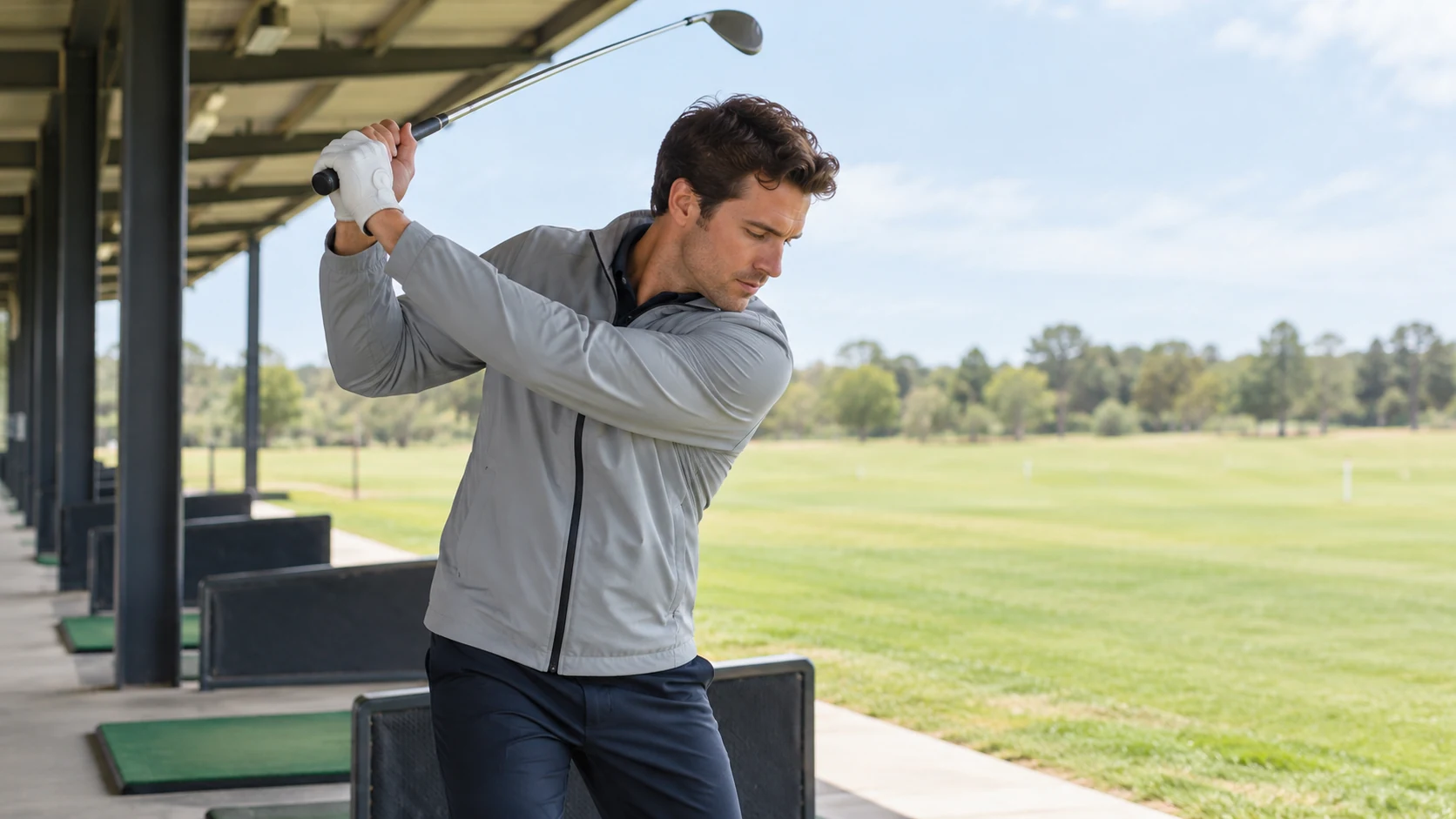
Check the entire movement, not just the address position. Wear the usual polo and intended midlayer, close the jacket as it would be worn in rain, then make controlled practice swings in a safe space. Observe the shoulders, upper back, elbows, cuffs and hem.
At the top of the backswing, the fabric should not pull the arms off their comfortable path. Through the follow-through, the hem should retain useful coverage without the collar being dragged upward. A large size may remove tension at the shoulders but create loose sleeves that interfere with the hands.
Stretch can help, but the word does not specify how much stretch, in which direction or how the finished garment behaves. Articulated sleeves and pattern shape can also matter. A fabric result under ISO 811 addresses water penetration, not swing performance; the sample trial answers a different question.
Is 10k or 20k waterproof better?
Under comparable test conditions, a 20,000 mm hydrostatic-head result represents greater resistance to water pressure than 10,000 mm. ISO 811 describes a hydrostatic-pressure method for textiles. The numbers correspond to water-head equivalents of 20 and 10 metres; they are not rainfall depths and do not translate into a number of dry holes.
Golf Monthly’s comparison includes reviewed jackets with different declared ratings and some with no published figure. That variation reinforces the need to check the whole garment. A higher number cannot compensate for poor cuff fit, unsealed seams or water entering an open collar.
For a purchasing brief, a documented 10,000 mm target can begin a routine rainwear comparison. Frequent exposed play may justify a more demanding specification and relevant conditioned testing. There is no universal rating that guarantees comfort throughout every round. Rain gear also does not make lightning safe; course suspension and shelter instructions take priority.
Which cuffs, pockets and hood designs suit golf?
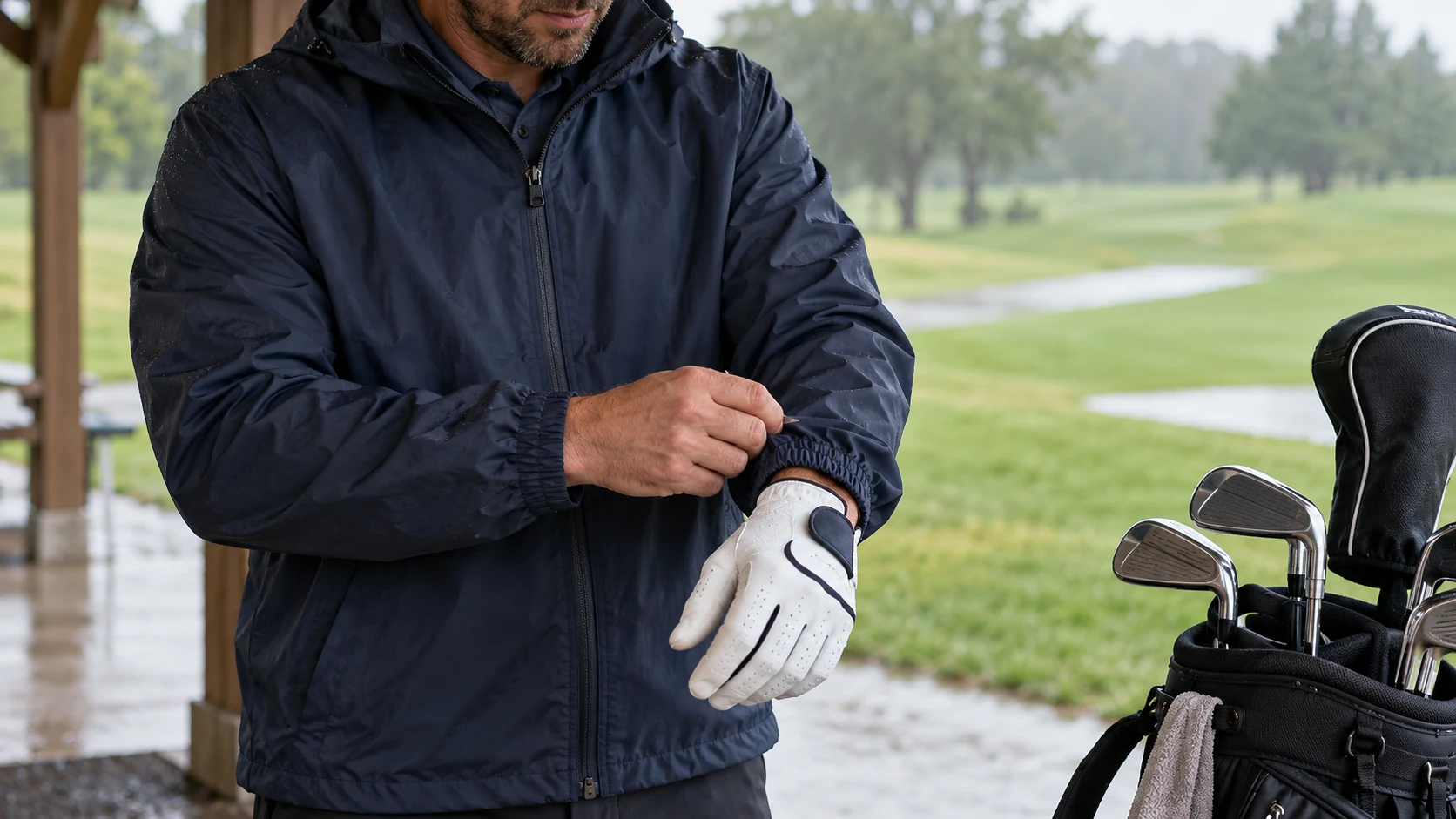
Cuffs should stay clear of the glove and grip without squeezing the wrist. Try the adjustment while wearing the actual glove. A soft inner cuff that projects beyond the outer sleeve may absorb rain; inspect how the materials overlap rather than judging appearance alone.
Pockets should hold the intended small items without causing a distracting bulge during rotation. Check access with the jacket fastened. Avoid treating a zippered pocket as waterproof storage for a phone unless that specific claim is supported; a separate protected compartment in the bag may be more suitable.
A hood is useful between shots or off the course, but an oversized loose hood can move in wind or affect peripheral vision. A collar-only design may suit players using a separate rain hat. Neither option is automatically superior: test the actual hood, cap, collar and swing combination.
Does a breathable golf jacket need to be insulated?
Breathability concerns moisture transfer, while insulation concerns heat loss. A walking golfer can become warm even on a cool wet day. A shell over a removable midlayer allows adjustment as activity changes; fixed insulation may suit colder, lower-activity use but offers less flexibility.
ISO 11092 measures thermal and water-vapour resistance under controlled conditions. Its results do not predict every player’s comfort in changing weather. Ventilation, lining, base layers and how closely the jacket fits all contribute. A dry practice session can expose noisy fabric or awkward controls, but it cannot prove rain performance.
The insulated versus fleece-lined jacket guide explains the warmth choices in more detail. The construction principles are relevant, while a men’s golf pattern still needs its own movement and size checks.
How does a golf rain jacket compare with a hiking shell?
| Feature | Golf-focused requirement | Typical hiking consideration |
|---|---|---|
| Movement | Repeated torso rotation and a complete swing | Walking, reaching and pack use |
| Sleeves | Cuffs stay clear of glove and grip | Coverage with poles or raised arms |
| Fabric feel | Low distraction and acceptable noise during shots | Abrasion and pack comfort may take priority |
| Hood | Compatibility with cap, vision and swing | Stability in wind and any required helmet use |
| Pockets | Small-item access without interfering with rotation | Access beneath pack straps or a hip belt |
A hiking shell can work well for golf if it passes the practical checks. A golf label does not guarantee a better fit. The comparison should identify useful design differences rather than assume that one category always performs better.
Which playing conditions should guide the specification?
| Playing pattern | Priority | Common purchasing mistake |
|---|---|---|
| Walking in mild rain | Ventilation, low bulk and freedom of movement | Buying unnecessary fixed insulation |
| Cold, exposed rounds | Layering room and controlled openings | Approving fit over a polo only |
| Occasional wet-weather play | Convenient bag storage and reliable construction | Confusing a windbreaker with a waterproof shell |
| Team or club orders | Size consistency, sample approval and decoration planning | Assuming one sample represents every size |
Club orders have costs beyond the unit price: fitting exchanges, delayed replacement sizes and decoration that interferes with the waterproof construction. Agree branding placement and method before production. Needlework can affect a waterproof assembly unless appropriately planned and treated; a decorated sample should be assessed as the product actually supplied.
What claims and documents should a buyer check?
Request reports matched to the proposed material and construction, with test methods and conditioning stated. ISO 811 is a textile method, not a complete golf-jacket certification. For EU retail, Regulation 1007/2011 governs fibre-composition labelling. Ordinary private-use golf rainwear is not automatically PPE.
A warranty is a commercial promise with conditions, not a laboratory result or fixed service-life measurement. Check exclusions, care requirements and the handling process before using warranty length as the main comparison. Follow garment-specific washing and drying instructions; an unsuitable treatment can damage fabric or finishes.
How should a club approve a jacket order?
- State typical weather, walking or cart use, and intended midlayers.
- Arrange a size set and controlled swing checks.
- Confirm fabric, seam and closure evidence alongside care instructions.
- Approve any decoration on a representative finished sample.
Yuelei Sports lists a custom waterproof rain jacket for buyer enquiries. Golf suitability, decoration details and supporting reports should be confirmed for the proposed order. A golf waterproof jacket for men earns approval through movement and construction checks, not the category name alone.
Frequently asked questions
What features should a golf waterproof jacket for men have for playing in the rain?
Prioritise waterproof construction, sealed seams, unrestricted shoulder movement and cuffs clear of the grip. Check collar or hood stability and pockets during a full controlled swing.
Is a breathable golf waterproof jacket for men better than an insulated one for daily use?
A breathable shell with removable layers is flexible for walking and changing temperatures. Insulation can suit cold, low-activity conditions; an insulated jacket can also be breathable.
What waterproof rating is enough for commuting and weekend activities?
A documented 10,000 mm target can start a comparison, including occasional golf. Longer exposed play requires closer review of construction and condition; no number guarantees a dry round.
How should a golf waterproof jacket for men fit over a shirt, fleece or midlayer?
It should permit the full swing with those layers in place while keeping cuffs clear and the waistband covered. An ordinary standing fit is not enough to judge shoulder freedom.
Which pockets, vents and hood adjustments are genuinely useful?
Useful pockets stay accessible without bulky contents interfering with rotation. Vents should close against rain; hood and collar adjustments should preserve vision and avoid distracting movement.
How does a golf waterproof jacket for men compare with a standard hiking shell?
A golf design may prioritise swing motion, sleeve control and quieter fabric. A hiking shell can still work if it meets those needs; test the individual garment rather than relying on its label.
References
- Golf Monthly: golf rain-jacket comparisons and testing
- ISO 811: hydrostatic-pressure testing
- REI: rainwear construction and comfort
- EU textile fibre-labelling regulation
A useful golf jacket protects the player without becoming part of the swing. Contact Yuelei Sports with the club’s size range, climate and decoration brief to discuss waterproof jacket options and a sample review.