 Xiamen Yuelei Sports Co., Ltd
A jacket can feel perfectly comfortable on a short walk and become frustrating once a backpack is on and the rain has settled in. The hood moves across the eyes, a hip belt covers the pockets, or reaching forward leaves the wrists exposed. None of those problems is answered by the waterproof number on the label. For long wet trails, the fabric matters, but so does the way the jacket works around a moving person and a loaded pack.
A hiking waterproof jacket for women is worth assessing through six features: water-resistance evidence, sealed seams, a stable hood, protected cuffs and closures, backpack-compatible fit, and an appropriate approach to warmth. The aim is a jacket that remains usable throughout the walk. A high fabric rating cannot make up for an exposed opening, and extra insulation can become a burden during sustained climbing.
1. What does the waterproof rating actually cover?
A rating needs a test method and a clear description of the specimen. ISO 811:2018 measures resistance to water penetration under hydrostatic pressure. A result for the shell fabric does not establish the rain protection of the complete jacket, including its seams and openings.
For a women’s windproof waterproof jacket, ask which claims are supported by the available evidence. Waterproofness and wind protection should not be inferred from the appearance of the fabric. Also check whether any results apply to new material only or to material after the stated care procedure.
There is no single fabric number that guarantees comfort on every trail. Exposure, movement and the condition of the garment all matter. The useful comparison is between clearly documented results and construction suited to the intended walk, rather than unexplained headline figures.
2. Are the seams protected as well as the fabric?
Stitching creates potential paths for water. Confirm which seams are sealed rather than assuming that a waterproof fabric means the entire jacket is sealed. The shoulders, hood attachment and junctions around closures deserve attention when reviewing the finished sample.
A coating or membrane description is not an answer to the seam question. Ask how the proposed construction is checked and whether the evidence matches the garment being supplied. For a range buyer, this is a more useful discussion than simply asking for the highest available rating.
3. Does the hood stay in place when the wearer turns?
Fasten the jacket fully, adjust the hood and look to either side. Then look down and walk. The opening should remain positioned without dropping across the eyes or pulling backwards off the head. A hood that works only while standing still has not passed a useful fitting check.
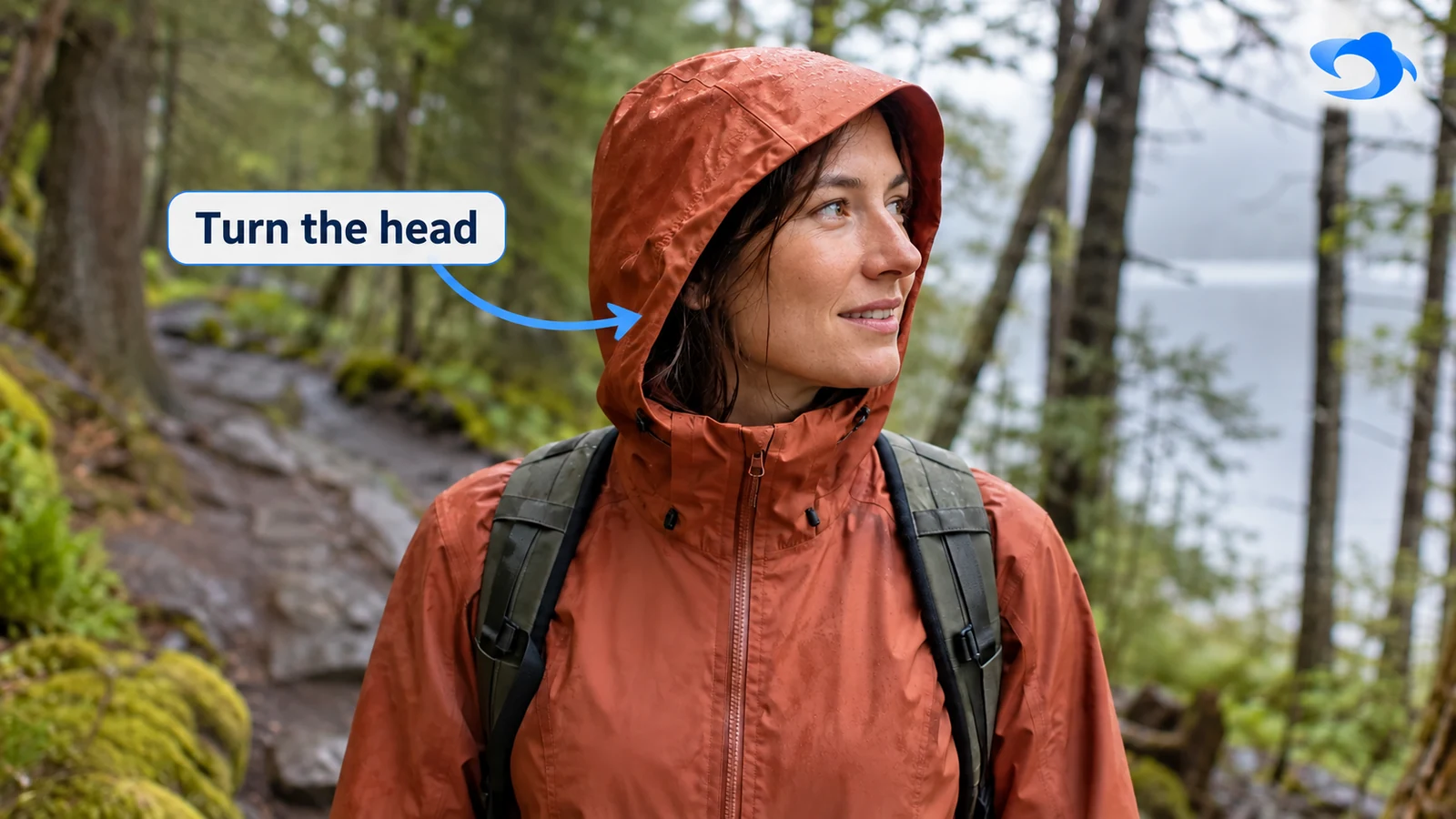
Test with the intended hat or other headwear, and check whether the adjustment remains accessible with gloves. Where the hood has a peak, examine its stability rather than assuming its shape in a photograph tells the whole story.
4. Do the cuffs and front closure stay covered in motion?
Check the wrists with the arms reaching forward, not just hanging at the sides. Trekking-pole use or a forward reach can reveal sleeve gaps that are easy to miss during a static fitting. Cuffs need to close around the intended wrists or gloves without making movement awkward.
The front fastening and neckline need the same attention. “Full zipper” describes a closure type, not its rain protection. Examine how the opening is covered and how it meets the collar and hood. One well-designed detail cannot compensate for an exposed gap beside it.
5. Can the jacket be used comfortably with a loaded backpack?
Put on the pack, fasten the hip belt and check the pockets. Low pockets may become inaccessible; shoulder straps may obstruct adjustments or vents. Reach forward and raise the arms to see whether the hem lifts or the fabric pulls across the back.
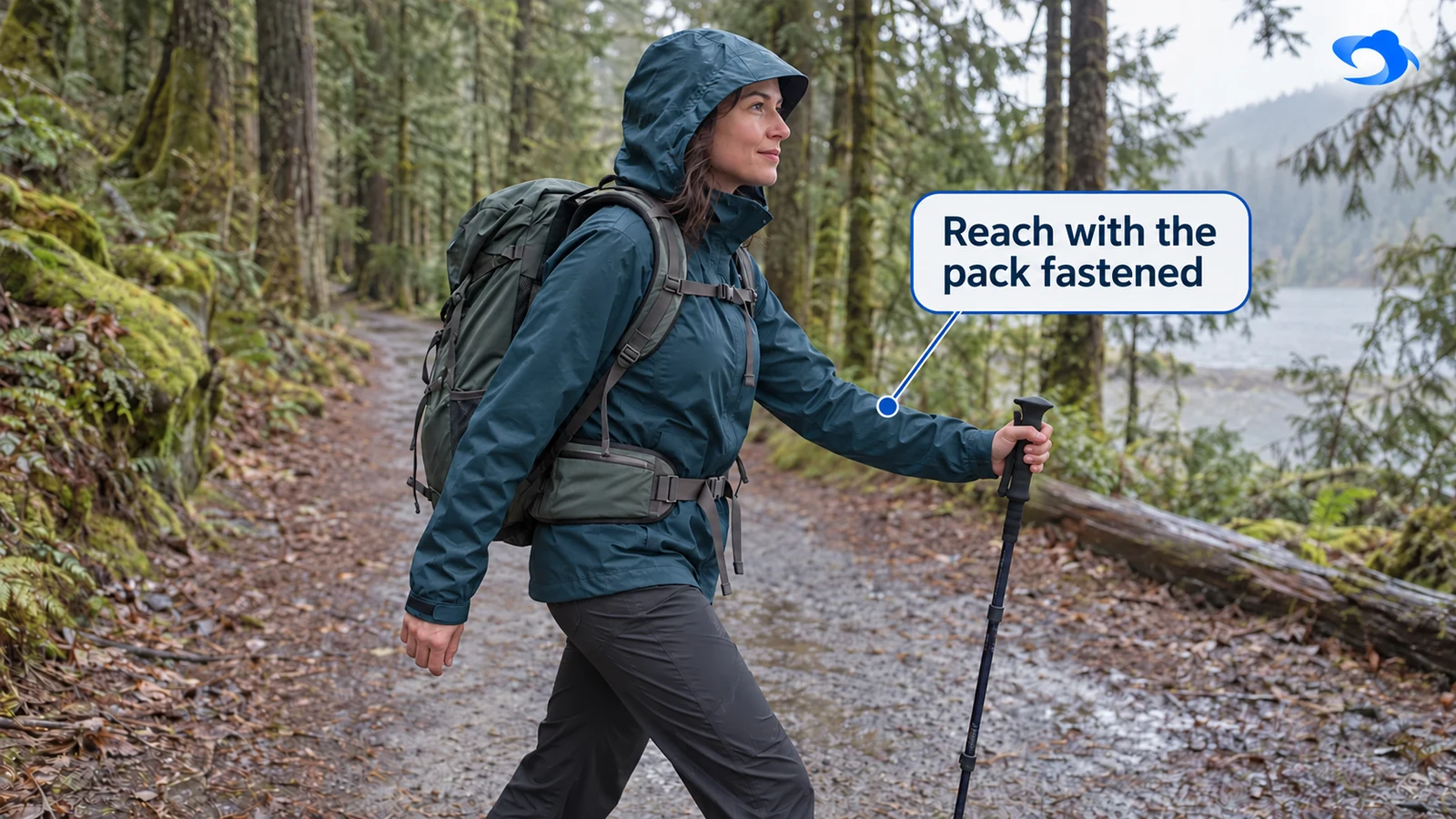
A ladies plus size waterproof jacket needs these checks just as much as any other size. Chest circumference alone does not establish shoulder movement, upper-arm room or sleeve reach. Retailers should assess representative sizes rather than treating one medium sample as proof of the whole range.
Yuelei Sports’ adjustable-hood hiking jacket is a starting point for a fit discussion. Its public product photograph includes trousers as well as a jacket, so confirm whether a quotation covers the jacket alone or the set. The photograph cannot establish comfort under a loaded pack.
6. Should warmth come from the jacket or from separate layers?
A shell allows the insulating layer to change as effort and weather change. A fixed insulated jacket offers simpler warmth, but that warmth cannot be removed while keeping the same outer garment on. The right choice depends on the walk, including slower stretches and stops as well as climbing.
| Option | Useful role | Trade-off on a wet hike |
|---|---|---|
| Uninsulated shell | Flexible layering during changing effort | Warmth must come from other clothing |
| Insulated waterproof jacket | Cold conditions and slower outings | Less adjustment during sustained climbing |
| Everyday rain jacket | Shorter walks and everyday use | Pack fit and prolonged-rain construction still need checking |
Low weight is not proof of breathability. ISO 11092 addresses thermal and water-vapour resistance under controlled steady-state conditions; a fabric result does not predict comfort at every effort level. The lightweight waterproof shell is positioned for travel and walking, but its proposed materials and performance still need confirmation for the intended use.
What should be checked before committing to a jacket?
| During the fitting | What to look for | Why it matters |
|---|---|---|
| Turn and look down | Hood movement and side vision | Rain coverage must remain usable while walking |
| Reach with the pack fastened | Sleeve reach and hem lift | A standing fit can hide restricted movement |
| Fasten the hip belt | Pocket and adjustment access | Useful details should not disappear under the pack |
| Wear the intended warm layer | Shoulder room and closure tension | The shell must fit the clothing actually carried |
If the inside feels damp, do not diagnose a leak from location alone. Perspiration and condensation can also leave moisture inside. Record the conditions and inspect seams and openings using the supplier’s guidance; a household pressure washer is not a substitute for controlled testing.
The everyday rainwear guide covers the simpler checks that also apply away from the trail. For commercial ranges, keep fibre labels consistent with the materials and do not describe ordinary private-use rainwear as certified PPE on the strength of a fabric test.
Can an everyday rain jacket handle a wet hike?
What makes a jacket suitable for a long wet trail?
Relevant water-resistance evidence, protected seams and openings, a stable hood and comfortable pack fit all matter. The category name alone establishes none of them.
Is a lightweight shell better than an insulated hiking jacket?
A shell gives more control over warmth during changing effort. Insulation may suit colder, slower outings; assess both moving and stationary parts of the route.
Is an everyday rain rating enough for hiking?
There is no universal everyday-rain threshold to carry over. Longer exposure makes finished construction, condition and fit important alongside the fabric result.
Which hood and cuff details matter on a trail?
The hood should remain stable during head turns, and the cuffs should maintain sleeve coverage during a forward reach. Check them with the intended gloves and layers.
How much room should be left for layers?
Enough to wear the intended clothing without compressing it or restricting the shoulders. Test that combination with the backpack rather than judging the shell alone.
Can an everyday rain jacket be used for hiking?
Possibly, if its construction and fit suit the route. Check prolonged exposure, pack compatibility and movement before treating it as a trail jacket.
References
- ISO 811:2018: water-penetration testing
- Regulation (EU) No 1007/2011: textile labelling
- Regulation (EU) 2016/425: PPE scope
Which features deserve priority on a wet trail?
Start with the route and the backpack, then work through the jacket. A useful waterproof shell needs more than resistant fabric: the hood must stay positioned, the sleeves must reach and the pockets must remain accessible. Check those details over the layers that will actually be worn. Decide separately how warmth will be managed when climbing, slowing down and stopping. For a custom range, Yuelei Sports’ waterproof jacket options can support that discussion. Compare the proposed construction and a fitted sample before agreeing performance claims; a photograph and a large waterproof number cannot do that job.