 Xiamen Yuelei Sports Co., Ltd

A warm raincoat can be comfortable at a bus stop and far too hot on the walk that follows. A thin shell solves the second problem but needs another layer for the first. This is where a three-in-one jacket can earn its place: the wearer can change the insulation without changing the outer jacket. The catch is that all three ways of wearing it need to work. A bulky inner, awkward attachments or a shell that hangs badly on its own can make the extra flexibility less useful than it sounds.
A ladies 3 in 1 waterproof jacket consists of a rain shell and a removable insulating jacket. The shell handles rain; the inner supplies warmth; the two can be worn together in colder wet weather. The inner is not necessarily waterproof. Before choosing a set, check each piece separately, then try them together over the clothing normally worn underneath. The important question is how often those different combinations will actually be used.
When should the shell, inner or both be worn?
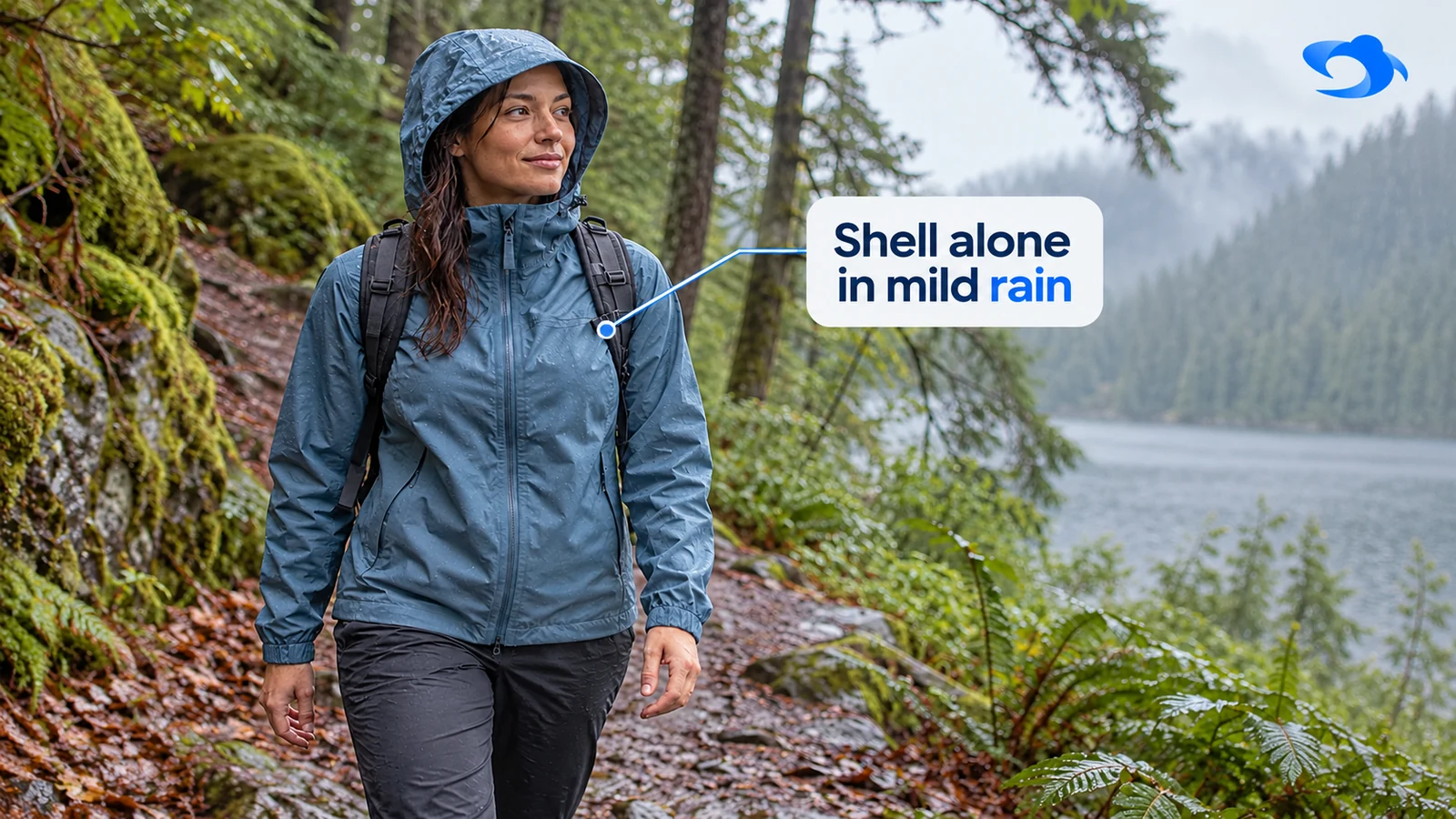
The shell alone is useful on a mild rainy day, when built-in insulation would be unnecessary. The inner alone makes sense in dry, cooler conditions, provided it is designed to be worn independently. Together, the pieces offer rain protection and additional warmth for colder days.
| Combination | When it is useful | What to check |
|---|---|---|
| Shell alone | Mild rain and changeable weather | Does it still fit neatly without the inner? |
| Inner alone | Dry, cool conditions | Are its closure, pockets and fit useful on their own? |
| Shell and inner | Cold rain and outdoor waiting | Can the wearer move without compressing the layers? |
“Three-in-one” describes these combinations, not three levels of waterproofing. A fleece inner should not be treated as a rain jacket just because it belongs to a waterproof set. Its outer fabric and construction need to support any separate weather-protection claim.
Is a three-in-one better than buying separate layers?
A coordinated set saves the work of finding two jackets that fit comfortably together. It can suit someone whose routine alternates between walking, waiting outdoors and heated transport. A ladies insulated waterproof jacket with a fixed lining is simpler when the same warmth is needed most of the day.
Separate layers offer more freedom. Someone who already owns a suitable fleece may only need a shell. Someone who uses the shell frequently but rarely needs the supplied inner may gain little from buying the complete set. Compare what will be worn, rather than counting configurations as an automatic saving.
| Starting point | Likely practical choice | Reason |
|---|---|---|
| No suitable shell or midlayer | A matched three-in-one set | Both pieces can be assessed together |
| An existing midlayer fits well | A separate waterproof shell | A second inner may be unnecessary |
| Consistently cold, less active use | A fixed insulated jacket | Fewer pieces and attachments to manage |
| Frequent changes in temperature | Removable or separate insulation | Warmth can change while the rain shell stays in use |
How should it fit with and without the inner?
Try the complete jacket over the usual sweater, fasten it and reach forward. Tightness across the shoulders, sleeves that pull back or a hem that rises noticeably are reasons to reconsider the size or cut. More room is not always the answer: sizing up can leave the hood and cuffs difficult to adjust.
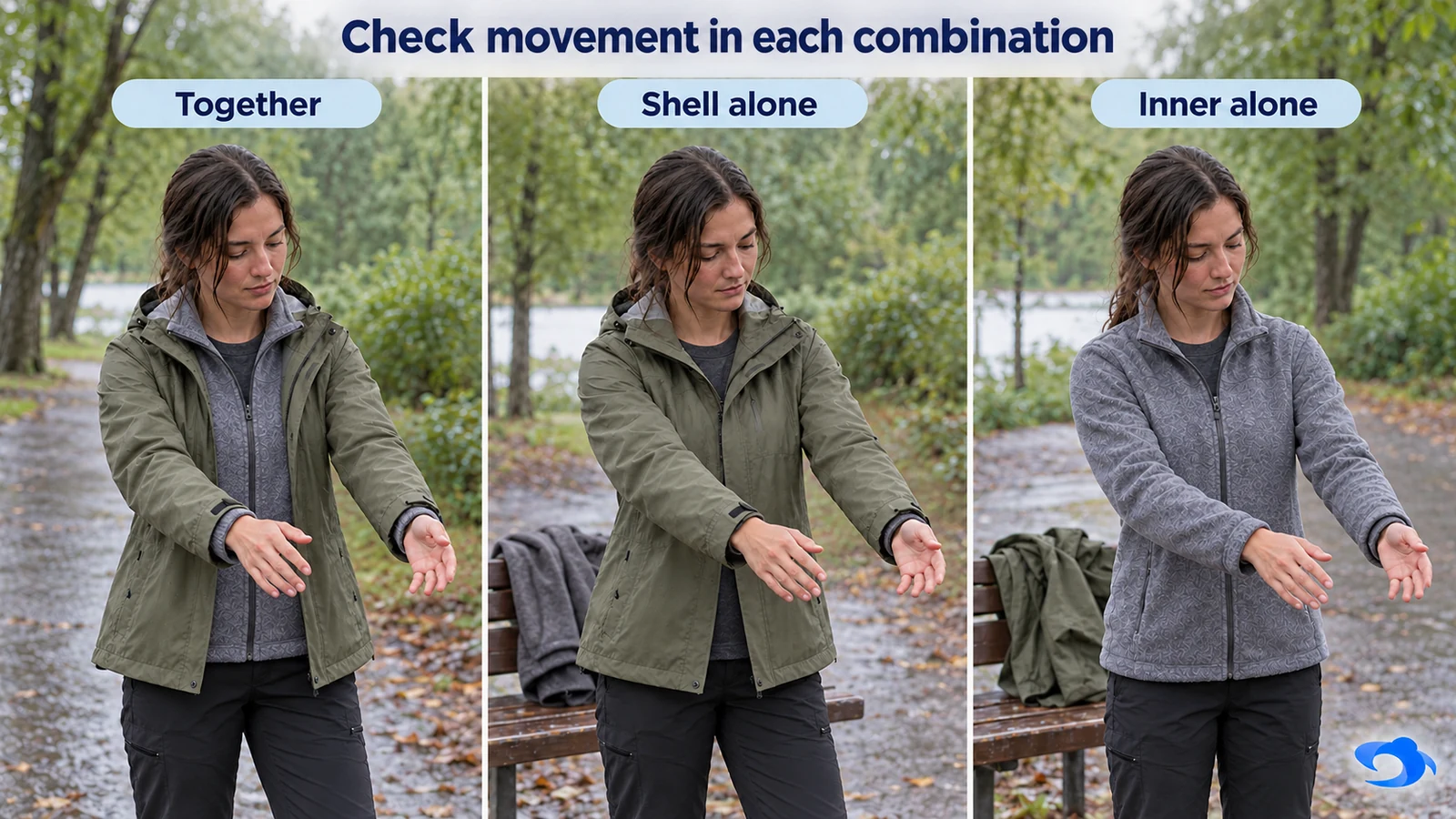
Then remove the inner and repeat the movements. The shell should remain usable rather than feeling like an oversized coat. Finally, wear the inner by itself and check its sleeve length and shoulder fit. One comfortable configuration does not establish the fit of the other two.
For a ladies waterproof jacket with hood, test head movement with the front fully fastened. The hood should stay positioned without blocking side vision. Check cuff closure over the intended sleeves or gloves, especially when the insulating layer adds bulk at the wrist.
What can go wrong with the attachments?
The connection between the pieces is easy to overlook in an online photograph. Check how the inner attaches at the front, sleeves and neckline. Zippers need compatible lengths and directions; any anchoring points should be accessible without awkward pulling.
A replacement fleece with a similar shape may not connect to the shell. Confirm replacement options before relying on the attachment system for long-term use. For retailers, availability of separate inners and small replacement components belongs in the cost comparison alongside the initial set price.
The same care instructions may not suit both pieces. Follow each component’s label and check whether the pieces must be separated for washing or drying. Detachability is useful only if taking the set apart and putting it back together remains straightforward.
Does the waterproof rating cover the whole jacket?
Not necessarily. ISO 811:2018 measures a specimen’s resistance to water penetration under hydrostatic pressure. A fabric result does not establish how the complete jacket performs at seams, pockets, the front fastening or the hood opening. Ask what was tested and which seams are sealed.
This distinction also applies to warmth. Fleece is an insulating material, but its name alone cannot establish a temperature limit. The amount, coverage and fit of the insulation matter. A tighter combined fit is not proof of greater warmth if it compresses the layers or restricts movement.
The everyday rain-jacket guide covers hood, cuff and closure checks that remain useful whichever layering system is chosen.
What should be confirmed before ordering a private-label version?
Yuelei Sports’ custom waterproof rain jacket provides a shell reference, not confirmation of a detachable-inner system. The proposed inner, attachment design and all three fit configurations need separate approval. The page’s customizable 20,000 mm target also requires confirmation for the material being ordered.
For a less bulky outer layer, the lightweight waterproof shell is another starting point. Neither photograph proves compatibility with a particular inner. For EU sales, fibre-composition labels must match the supplied materials; ordinary private-use rainwear should not be presented as certified PPE merely because its fabric has been tested.
How does a three-in-one jacket work for everyday rain and winter?
Are three-in-one jackets good for changing winter weather?
They can be, when both pieces fit well and the wearer regularly needs different amounts of warmth. They are less compelling if only one combination will be used.
Is a lightweight shell enough without the inner?
It can be in mild rain or over an existing warm layer. It should not be expected to supply the insulation of the complete set.
What waterproof rating is needed for everyday rain?
No single number guarantees a dry wearer. Consider the fabric result together with seam sealing, protected openings and the likely length of exposure.
Which hood and cuff details matter most?
A hood that remains stable during head turns and cuffs that close over the intended layers are useful priorities. Both need checking with the inner attached.
Should a three-in-one jacket be sized up for sweaters?
Not automatically. Try the intended sweater under the complete set; a different cut may solve tightness more effectively than a larger size.
How does it differ from a standard rain shell?
A standard shell leaves the insulating layer to the wearer. A three-in-one supplies a coordinated inner as well, with extra attachments and fit checks.
References
- ISO 811:2018: hydrostatic-pressure water-penetration testing
- Regulation (EU) No 1007/2011: textile fibre-composition labelling
- Regulation (EU) 2016/425: PPE scope and exclusions
Is the extra flexibility worth paying for?
A three-in-one is worth considering when the wearer will genuinely use the shell alone, the inner alone and the complete set. Otherwise, a shell over an existing midlayer may be the more useful purchase. Start with those wearing habits, check the fit in each configuration and examine the attachments before comparing prices. Rain protection still depends on the shell’s fabric, seams and openings; it does not improve simply because another layer is attached. Yuelei Sports’ waterproof jacket range offers a starting point for a custom shell discussion. Confirm the inner, compatibility and supporting documentation before ordering a complete system.