 Xiamen Yuelei Sports Co., Ltd
A short rain jacket can keep the upper body covered while directing runoff straight onto the thighs. A longer coat helps with that problem, especially on walks or while waiting outdoors. But extra fabric also changes how the garment feels on stairs, across a seat and in a cycling position. The question is not simply whether a longer jacket covers more. It is whether that coverage remains useful during the activities it is being bought for.
A ladies long waterproof jacket is worth considering when exposed clothing below a short shell is the main concern. It cannot compensate for leaking seams or an unstable hood, and it does not protect the whole lower body. Before choosing one, check the actual back length, the front opening and the hem while moving. “Long” is a description, not a consistent measurement across styles.
Which parts of the body does a longer jacket protect?
Compared with a shorter shell, a longer jacket can cover more of the hips, seat and upper legs. That overlap can be useful over everyday clothing in persistent rain. The benefit is easiest to judge against what a shorter jacket leaves exposed.
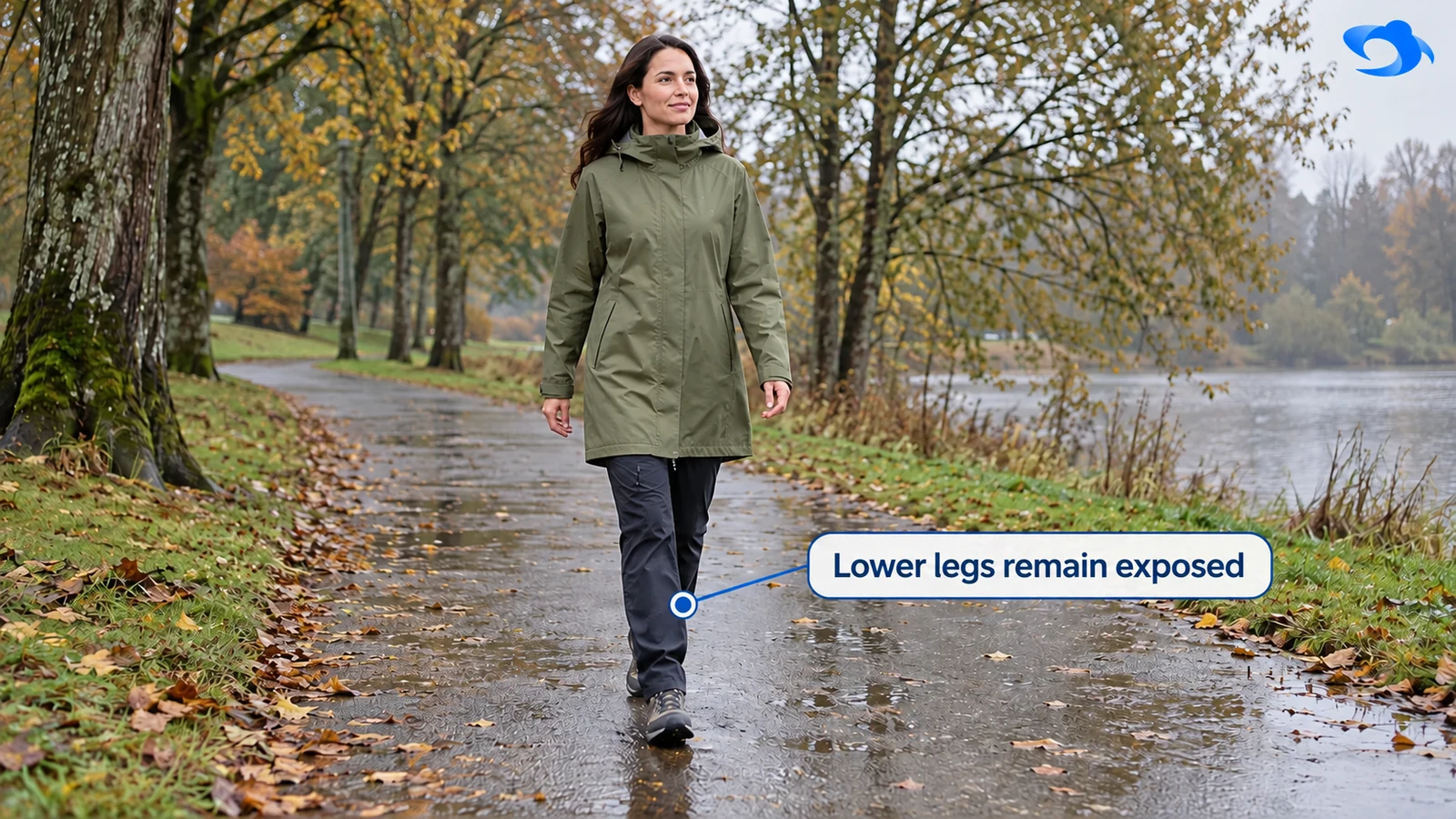
Runoff still leaves the hem somewhere. A longer coat does not remove the need to consider trousers and footwear during prolonged wet conditions. Nor does a knee-length coat guarantee the same coverage on wearers of different heights.
Ask for the finished centre-back length and check where it falls on the intended wearer. A product photograph or size name may not distinguish a mid-thigh jacket from a substantially longer coat.
| Use | What extra length can offer | What it does not settle |
|---|---|---|
| Walking in rain | More overlap over upper-leg clothing | Stride room and water entry at openings |
| Waiting outdoors | More coverage over everyday layers | Warmth and complete lower-body protection |
| Seated travel | Potential overlap over the seat | Fit across the hips and front fastening |
| Cycling | Coverage depends on the riding posture | Hem clearance around moving parts |
Will the hem allow stairs, long strides and sitting?
Walk normally, take a longer step and sit down with the jacket fastened. Check for pulling across the thighs or lap. A coat that hangs well while standing may feel restrictive once the legs move.
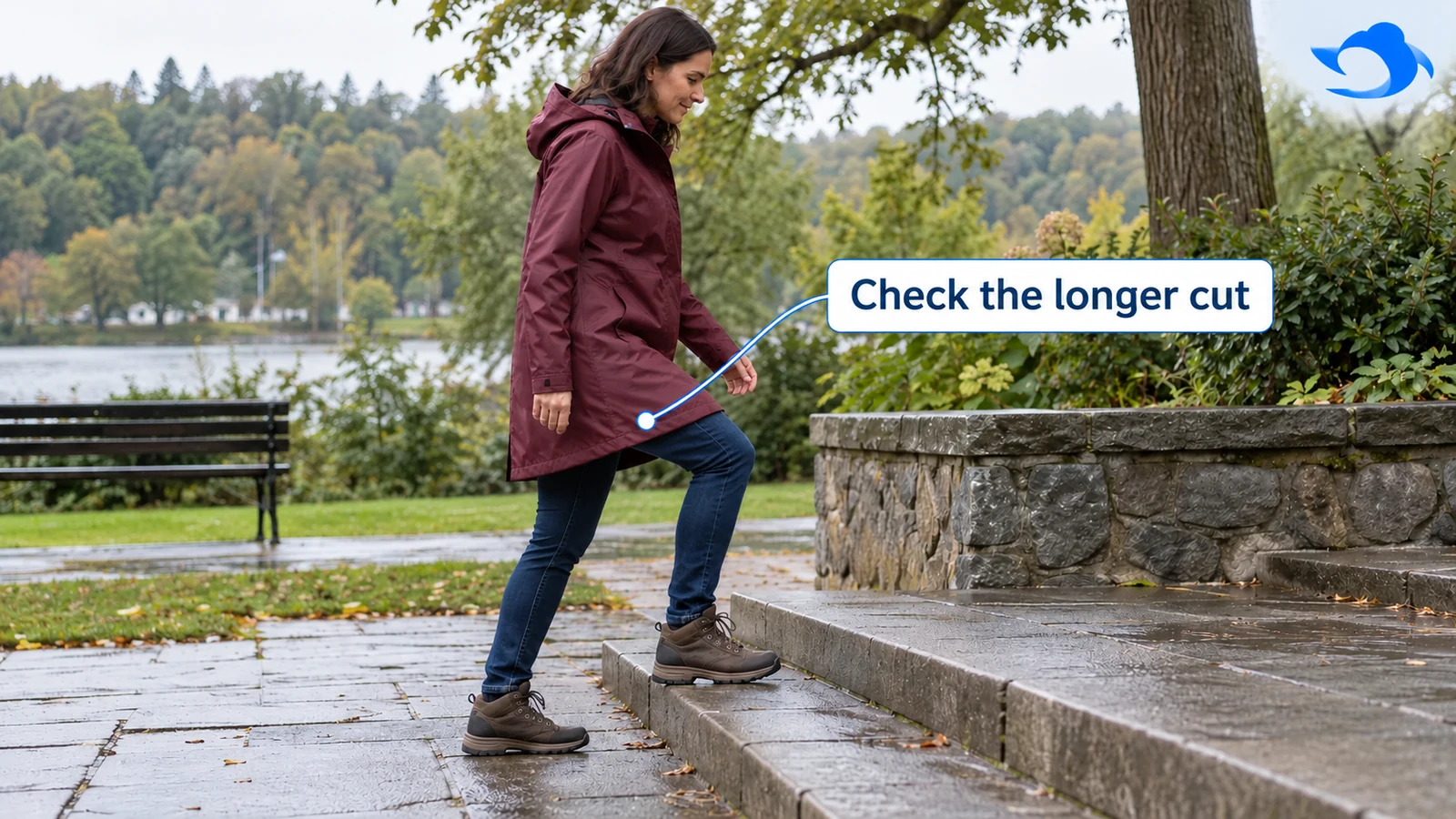
A two-way front zipper, where supplied, may allow the lower opening to change for movement. Test the actual closure rather than assuming the feature solves every fit issue. Opening the lower front also exposes clothing to rain, so there is a coverage trade-off.
Rear vents and split hems need the same inspection. They change both movement and overlap. The useful question is how the design behaves in the intended position, not whether it has the longest hem in the comparison.
Does a longer coat keep the seat dry?
It may cover the seat while standing without giving the same protection when sitting. A wet bench introduces contact with water, and sitting can tension the fabric across the hips. Do not infer seated performance from a standing photograph.
For a commuter, sit in the proposed sample over normal clothing and inspect the coverage at the rear and front. For regular cycling, use a design appropriate to the bent posture and keep loose fabric clear of the wheels and drivetrain.
The commuting rain-jacket checklist is useful for judging the everyday movements that can matter more than extra length alone.
What matters in heavy rain besides coat length?
The fabric, seams and openings still do the work of resisting water entry. ISO 811:2018 measures resistance to water penetration in the tested specimen. A fabric result is not a finished-coat test, and a longer cut does not change that distinction.
Confirm which seams are sealed and inspect the front fastening, pockets and neckline. Test the hood with the front fully fastened, then turn the head. It should remain positioned without forcing a choice between useful coverage and side vision.
Check cuffs while reaching, because sleeve gaps can appear only in motion. Where cuffs fasten over gloves, test that combination. A comfortable cuff around a bare wrist does not establish its fit over winter clothing.
Is a long shell or a lined raincoat the better choice?
A ladies lightweight waterproof jacket with hood leaves warmth to the layers underneath. In a long cut, that can suit changing temperatures and active walking. A ladies fleece lined waterproof jacket provides integrated warmth, which may be useful for cold outdoor waiting.
Fleece lining does not make the shell more waterproof. It also stays with the coat when the wearer moves into a heated train or starts walking more briskly. Judge the warmth against the routine rather than assuming heavy rain calls for heavy insulation.
| Routine | Starting choice | Main check |
|---|---|---|
| Brisk walking and mixed temperatures | Long shell with separate layers | Layer room without restricted stride |
| Cold waits and slower journeys | Lined or insulated long coat | Warmth and comfort on transport |
| Frequent cycling or deep strides | Mobility-led cut or shorter shell | Hem clearance in the actual posture |
| Extended rain exposure | Construction suited to the exposure | Seams and closures, regardless of lining |
What should be measured before ordering a longer cut?
For a custom range, agree the finished back length, front-opening arrangement and fit over the intended layers. Approve walking and seated positions on the same sample. Extra length can affect material use, packing volume and drying arrangements; those costs need to earn their place through useful coverage.
Yuelei Sports’ custom waterproof rain jacket is a shell reference, not proof of a longline pattern. Confirm a proposed longer cut separately, including measurements and construction.
The lightweight waterproof shell provides another reference for discussing the outer layer. Its public positioning does not establish a particular back length. Confirm care instructions for the supplied materials and, for EU retail, matching fibre labels. A fabric test alone is not a PPE certification.
When is a long raincoat more practical than a short jacket?
Are long waterproof jackets better for heavy rain?
They cover more clothing below the waist. Whether the wearer stays dry also depends on fabric resistance, seams, closures and fit.
Should a long raincoat be insulated?
Insulation suits colder, less active use. A shell offers more adjustment when walking and indoor transitions make warmth requirements change.
Does more length mean a higher waterproof rating?
No. Length describes coverage; the rating describes a tested specimen’s resistance to water penetration. Neither establishes the other.
Which hood and cuff features matter most?
Look for a hood that remains stable during head turns and cuffs that maintain coverage when reaching. Check both with the intended layers.
How should a long jacket fit over a sweater?
It should fasten without tension across the shoulders or hips and allow comfortable sitting and stepping. Try the actual sweater rather than sizing up by default.
When is a short rain jacket more practical?
When less fabric around the legs makes the activity easier. Cycling, frequent stairs or large strides can favour a shorter cut, depending on the design.
References
- ISO 811:2018: hydrostatic-pressure testing
- Regulation (EU) No 1007/2011: textile fibre labelling
- Regulation (EU) 2016/425: PPE scope
Is the extra coverage worth it?
Extra length earns its place when a shorter jacket leaves clothing exposed during the wearer’s normal routine. Check where the longer hem falls, then walk, sit and take stairs before judging the benefit. If the coat binds or its lower opening must stay wide open to move, some of that coverage may be lost in practice. Keep the rain-protection check separate: the seams, hood, cuffs and front fastening still matter. Yuelei Sports’ waterproof jacket range offers starting points for a custom discussion. Confirm the required length on a fitted sample before treating a longer style as the better option.