 Xiamen Yuelei Sports Co., Ltd
When a technical engineer in Leeds encounters a work jacket that rides above the waistband every time he reaches for a service panel, its neat standing fit stops being an advantage. In this illustrative sample review, the jacket was chosen by chest size alone. The problem is not the fabric rating; the purchase missed the movements and layers required during the shift.
Summary: A men’s work waterproof jacket should be selected around the job’s rain exposure, movement, existing PPE and care routine. EN 343:2019 distinguishes four classes for water penetration and four for water-vapour resistance. Those classifications do not establish flame, electrical, chemical or high-visibility protection. Approve the actual garment and its documentation before issuing it.
A work shift differs from a weekend walk because the wearer may have little choice about activity, location or opportunities to dry clothing. A maintenance buyer comparing waterproof work jackets therefore needs a task description before a fabric target. “Outdoor work” alone is too broad to specify the correct garment.
What should a waterproof jacket protect against at work?
Separate ordinary weather exposure from other hazards. A groundskeeper, delivery driver and worker near live electrical equipment may all encounter rain, but they do not have the same protective-clothing requirements. The employer’s risk assessment must determine the required protection and compatibility with other equipment.
Rainwear should not cover required high-visibility areas or interfere with a harness, helmet, hearing protection or other PPE. Conversely, a bright colour or reflective-looking trim is not proof of high-visibility certification. A casual waterproof shell should not be substituted for flame-resistant or arc-rated clothing because it happens to keep rain out.
For procurement, record the normal tasks, exposure duration, temperatures, cleaning method and existing equipment. Describe whether workers spend most of the shift moving, standing or alternating between a cab and outdoors. These details affect lining, ventilation, length and pocket placement far more directly than a generic “heavy duty” description.
What do the EN 343 classifications actually tell a buyer?
SATRA’s explanation of EN 343:2019 identifies four water-penetration classes and four breathability classes. Higher classes have different requirements, including relevant pretreatments. A buyer needs both results, the standard edition and the evidence supporting the offered garment—not simply the words “EN 343 fabric.”
Waterproof ratings also use different units. A requirement expressed in pascals is not the same numerical value in millimetres of water head. SATRA notes that 1,000 Pa is approximately 102 mmH₂O. Comparing a 20,000 Pa requirement with a retail 20,000 mm claim as if they were identical would be a substantial specification error.
Materials and seams do not answer every design question. SATRA describes the optional EN 14360 rain-tower test as a way to reveal issues such as water wicking through openings or collecting in pockets. Request whole-garment evidence where the application warrants it; do not imply that every EN 343 claim includes this optional test.
Which pockets, cuffs and closures work during a shift?
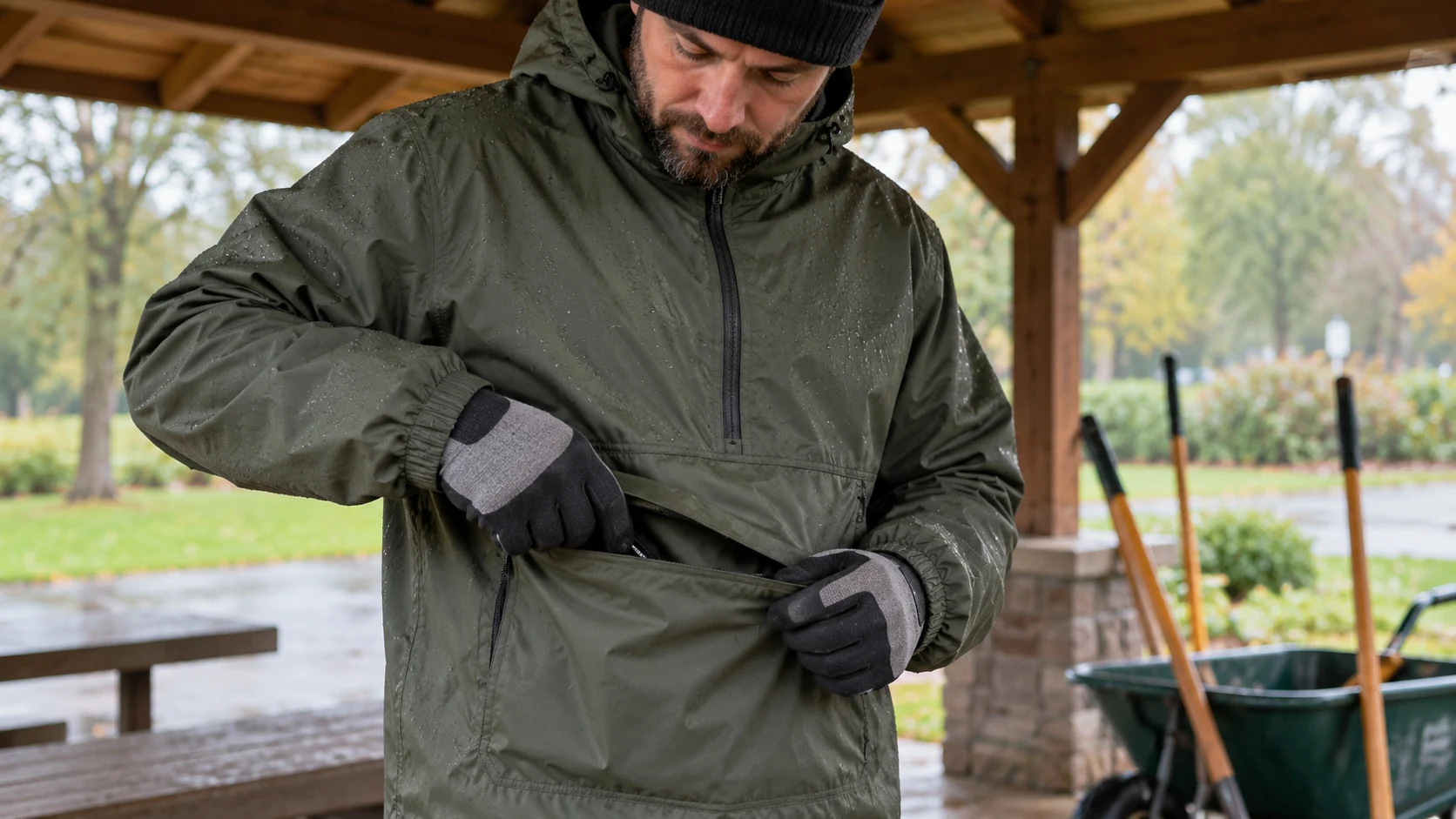
Test controls with the gloves actually used. A small pull tab that works in a warm showroom may be awkward with wet gloves. Try the front zipper, pocket closures and hood adjustments without removing required equipment. A two-way front zipper may help seated movement, but it also needs careful closure when full rain coverage is required.
Load pockets with representative items. A notebook, radio or keys can change how the jacket hangs and how comfortable it feels when bending. Keep required equipment access clear, and do not assume a jacket pocket provides dry storage for electronics. Radio placement and harness interaction need approval against the real equipment system.
Cuffs should stay clear of tools while limiting unwanted water entry. Long loose sleeves can interfere with work; cuffs pulled too tightly can restrict movement or make glove overlap awkward. There is no universal rule that a glove always goes inside or outside the sleeve: task, glove design and arm position determine the appropriate arrangement.
How should the jacket fit over work layers and equipment?
Fit a size set on representative wearers using their normal clothing and permitted equipment. Check forward reach, overhead reach where appropriate, bending, kneeling and sitting. A longer back hem can improve coverage, but excess length at the front may bunch against the lap or interfere with equipment.
Warmth and breathability must be considered together. A men’s insulated waterproof jacket can suit low-activity cold work yet be uncomfortable during heavy physical tasks. Removable insulation or separate layers may serve mixed shifts better. ISO 11092 tests thermal and water-vapour resistance under controlled conditions; those results do not predict every worker’s comfort.
Do not treat a ventilation opening as a universal solution. Rain direction and the job may prevent it being left open. Discuss sweat management, layering and suitable breaks as part of the work system. A garment that workers repeatedly leave unfastened to cope with heat may no longer provide its intended coverage.
How does work rainwear compare with a casual rain jacket?
| Procurement issue | Work rainwear selected for the task | Casual rain jacket |
|---|---|---|
| Protection claims | Matched to the risk assessment and documented scope | Usually described for ordinary weather use |
| Equipment compatibility | Checked with gloves, helmet or other required PPE | May not accommodate occupational equipment |
| Movement | Reviewed during representative work actions | Often tried only for everyday wear |
| Care | Must suit the approved workplace cleaning process | May allow domestic care only |
| Replacement | Planned sizes, identification and reissue checks | Retail availability can change between seasons |
The table describes purchasing requirements, not an automatic quality ranking. A well-made casual shell may be suitable for an ordinary low-risk task; a garment sold as workwear can still be wrong for a particular hazard. The specification and evidence decide.
Which work patterns change the specification?
| Pattern | Priority | Hidden cost to consider |
|---|---|---|
| Repeated cab entry and exit | Seated fit, hem and closure access | Exchanges caused by uncomfortable length |
| Active grounds maintenance | Movement, ventilation and practical care | Premature retirement after unsuitable washing |
| Low-activity outdoor inspection | Warm layers and controlled openings | Extra garments needed when insulation was underspecified |
| Tasks requiring additional PPE | Documented compatibility and hazard protection | Unusable stock if rainwear obscures or compromises PPE |
Cost per usable shift is a more informative framework than purchase price alone. Include purchase, cleaning, repairs, replacements and handling, then divide by documented usable shifts. This is a planning calculation, not a claim about garment life; pilot records are needed before inserting reliable numbers.
What compliance information belongs in the purchase file?
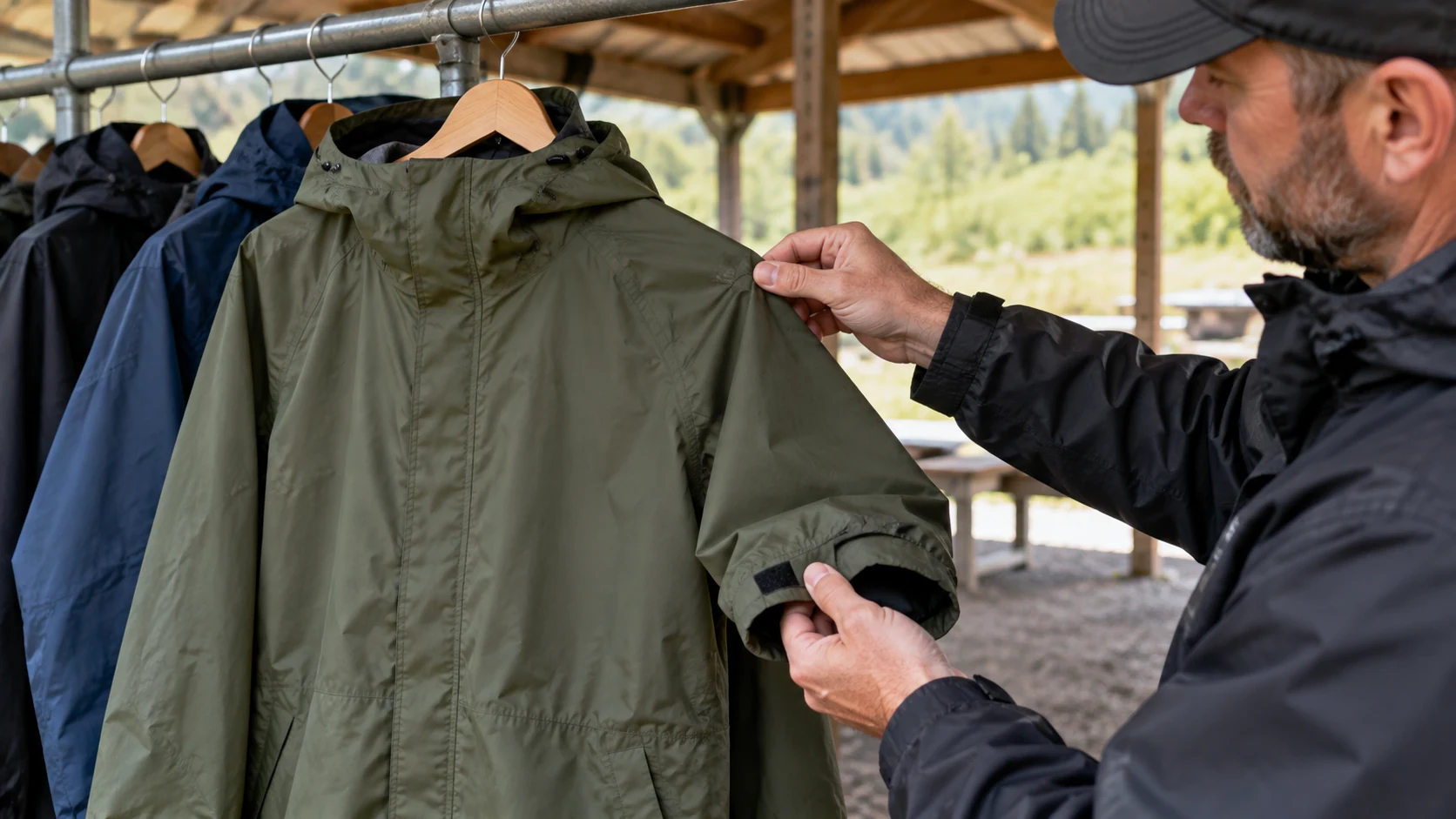
For EU protective rainwear, assess the applicable obligations under Regulation 2016/425 and the stated protective scope. Keep declarations, instructions and evidence tied to the exact supplied model. EN 343 rain protection does not establish compliance with EN ISO 20471 high visibility, EN 342 cold protection or standards addressing other hazards.
Check whether specified cleaning is domestic or industrial and whether reports include relevant conditioning. A laboratory result on new fabric cannot establish performance after an arbitrary number of worksite washes. Missing or mismatched documentation can leave a shipment unsuitable for issue even when its appearance meets the order.
What should be checked before uniforms are issued?
- Approve the task and hazard requirements before selecting a style.
- Fit representative sizes with normal layers and required equipment.
- Check pockets, closures and movement during a controlled sample trial.
- Agree cleaning, inspection, repair and retirement procedures with the supplier.
Yuelei Sports lists a custom waterproof rain jacket for specification discussions. Occupational suitability and any claimed certification must be confirmed for the exact proposed garment. Its custom jacket design guide provides a useful starting point for organising a sample brief.
Frequently asked questions
What features should a men’s work waterproof jacket have for long outdoor shifts?
It needs rain protection appropriate to the task, useful movement, glove-friendly controls and compatibility with required equipment. Care and drying arrangements matter as much as additional pockets.
Is a breathable men’s work waterproof jacket better than an insulated one for daily use?
Breathability and insulation are separate properties. Active work may favour a breathable shell with adjustable layers; low-activity cold work may need insulation. The task assessment should determine the combination.
What waterproof rating is enough for commuting and weekend activities?
A documented 10,000 mm target can start a leisure comparison, but it should not be imported as a workplace compliance rule. Work rainwear requires the protection evidence and classifications appropriate to the job.
How should a men’s work waterproof jacket fit over a shirt, fleece or midlayer?
It should permit representative work movements without exposing wrists or the waistband. Check the full clothing combination and required equipment, including comfortable seated fit where driving is involved.
Which pockets, vents and hood adjustments are genuinely useful?
Useful features can be operated with work gloves and do not interfere with equipment. Hood fit must suit the required head protection; vents must not compromise rain coverage or other protection.
How does a men’s work waterproof jacket compare with a regular casual rain jacket?
Work rainwear should be selected and documented for occupational demands. A casual jacket may be adequate for ordinary low-risk weather exposure but does not establish protection against workplace hazards.
References
- SATRA: the EN 343 protective clothing standard
- Regulation (EU) 2016/425: PPE
- ISO 811: textile water-penetration resistance
- REI: rainwear construction and breathability
Good work rainwear starts with the job description. Contact Yuelei Sports with the tasks, required protection, size range and care process to discuss waterproof jacket options that can be assessed against the actual brief.