 Xiamen Yuelei Sports Co., Ltd
When a technical engineer in Manchester encountered an overflowing daypack during a travel-range sample review, he had already selected the lightest jacket on the quotation. Its stiff folded shape occupied more space than a slightly heavier alternative. In this illustrative example, garment weight had been mistaken for usable packability.
Summary: A packable waterproof jacket should be judged by weight, packed volume, rain protection and durability together. A hypothetical reduction from 400g to 250g saves 150g, but says nothing about seam quality or bag space. Compare the same size, packing method and included accessories, then confirm waterproof construction rather than relying on “ultralight.”
REI uses “packable” for rainwear that stuffs into its own pocket or an included sack. The term describes storage convenience; it is not a waterproof rating or an independent durability standard. This guide focuses on evaluating the weight and volume trade-off, rather than naming a universally best travel jacket.
What should be included when weighing a packable jacket?
Compare complete garments in the same nominal size and record whether the storage pouch is included. Detachable hoods, removable parts and size differences can distort a comparison. A published weight for a small sample should not silently become the advertised weight of every size in a wholesale range.
Use the 400g-to-250g example only as arithmetic: the difference is 150g, or 37.5% of the heavier garment’s weight. These are invented comparison values, not measured product specifications. The purchasing question is what changes along with that saving: pockets, adjustments, fabric construction or simply a better material choice.
REI notes that pockets, zips and a fuller feature set affect both weight and price. A lightweight waterproof jacket that removes a useful hood adjuster may be less convenient in real rain, even if its scale result wins. Decide which features the customer actually needs before accepting a weight reduction.
Record the weighing method in the sample notes so repeat orders remain comparable. The same approach helps resolve disagreements when a production garment weighs more because its size, lining or accessories differ from the approved reference.
How should packed size be compared fairly?
Weight and volume are separate. A soft shell can compress into irregular gaps, whereas a stiff fabric or bulky zip may form a larger package. Packing into a built-in pocket is convenient, but forcing a garment into an extremely tight space is not a useful everyday test.
A buyer can compare three practical conditions: the jacket loosely folded, packed in its supplied pouch and placed in the actual daypack. This is a proposed assessment, not an industry certification. Keep the packing pressure similar and include the same other items so the comparison reflects usable space.
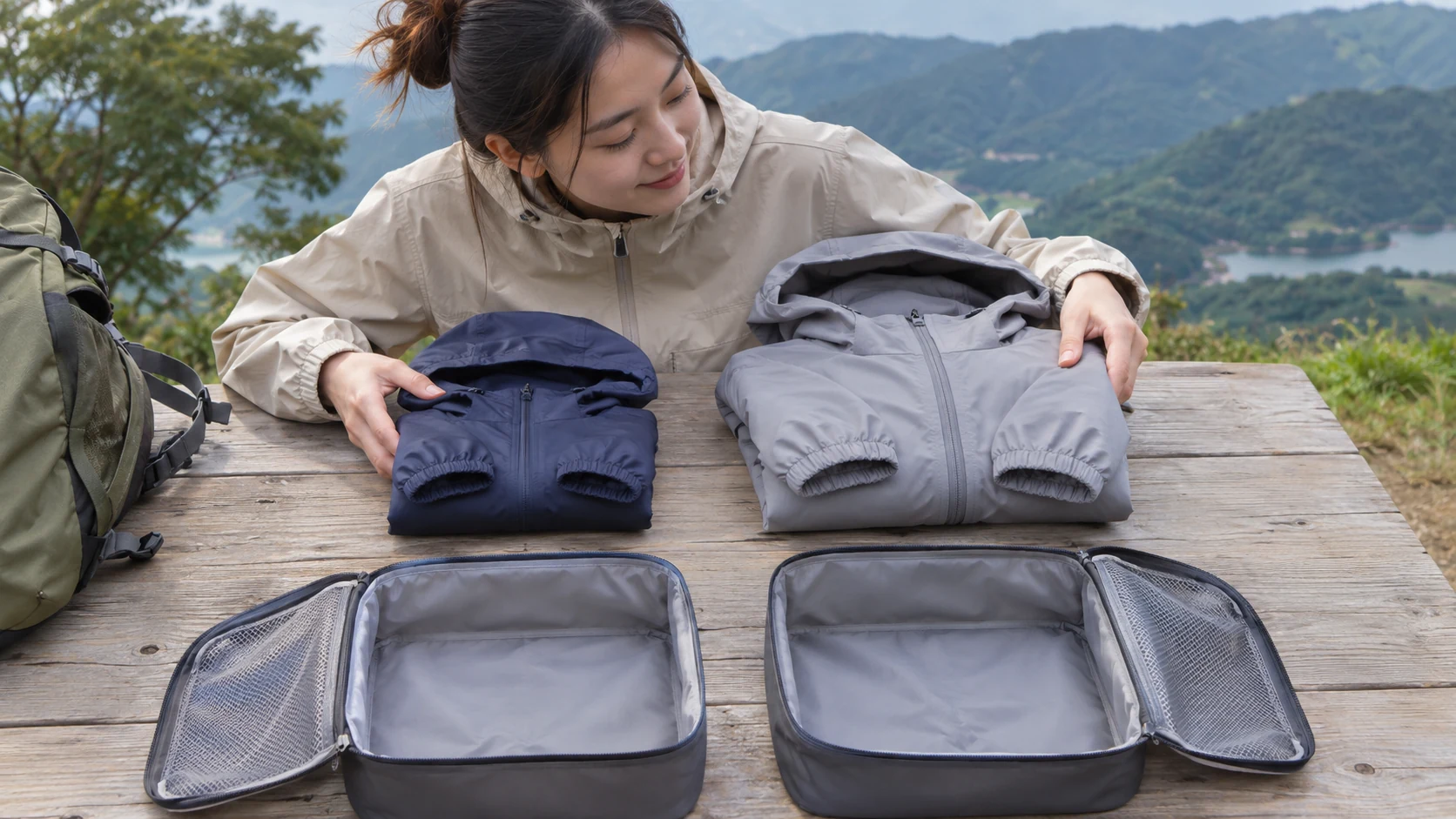
REI’s construction overview explains why 2.5-layer garments are often light and compact, while a 3-layer construction includes a bonded inner protective layer. Those labels describe construction, not a guaranteed packed size. A lightweight 3-layer jacket can still be competitive with a bulkier design using another construction.
The earlier men’s packable rain jacket travel guide covers broader feature selection. For this comparison, the decisive detail is whether the packed shell fits where it will actually be carried and can be removed without unpacking the entire bag.
Ask whether packing the jacket requires turning a particular pocket inside out. Sales photographs sometimes show a tidy bundle without explaining the process. A short demonstration with the production sample can reveal whether the promised convenience is practical with cold hands or in a crowded station.
What does a very low weight leave out?
A thin fabric is not automatically fragile, and a heavy fabric is not automatically durable. Yarn type, weave, laminate, reinforcement and workmanship all affect service life. Denier describes yarn linear density; it should not be treated as a complete tear or abrasion rating.
REI distinguishes three common rainwear constructions: 2-layer, 2.5-layer and 3-layer. Its general comparisons are useful starting points, but a buyer should request the actual construction and intended use rather than award a quality score from the layer count alone.
Daily backpack use introduces contact at the shoulders, back and hip belt. Also inspect pocket corners, cuffs and the area repeatedly caught by bag straps. A sample intended only as emergency rainwear may be a poor match for a customer who wears it throughout every wet commute.
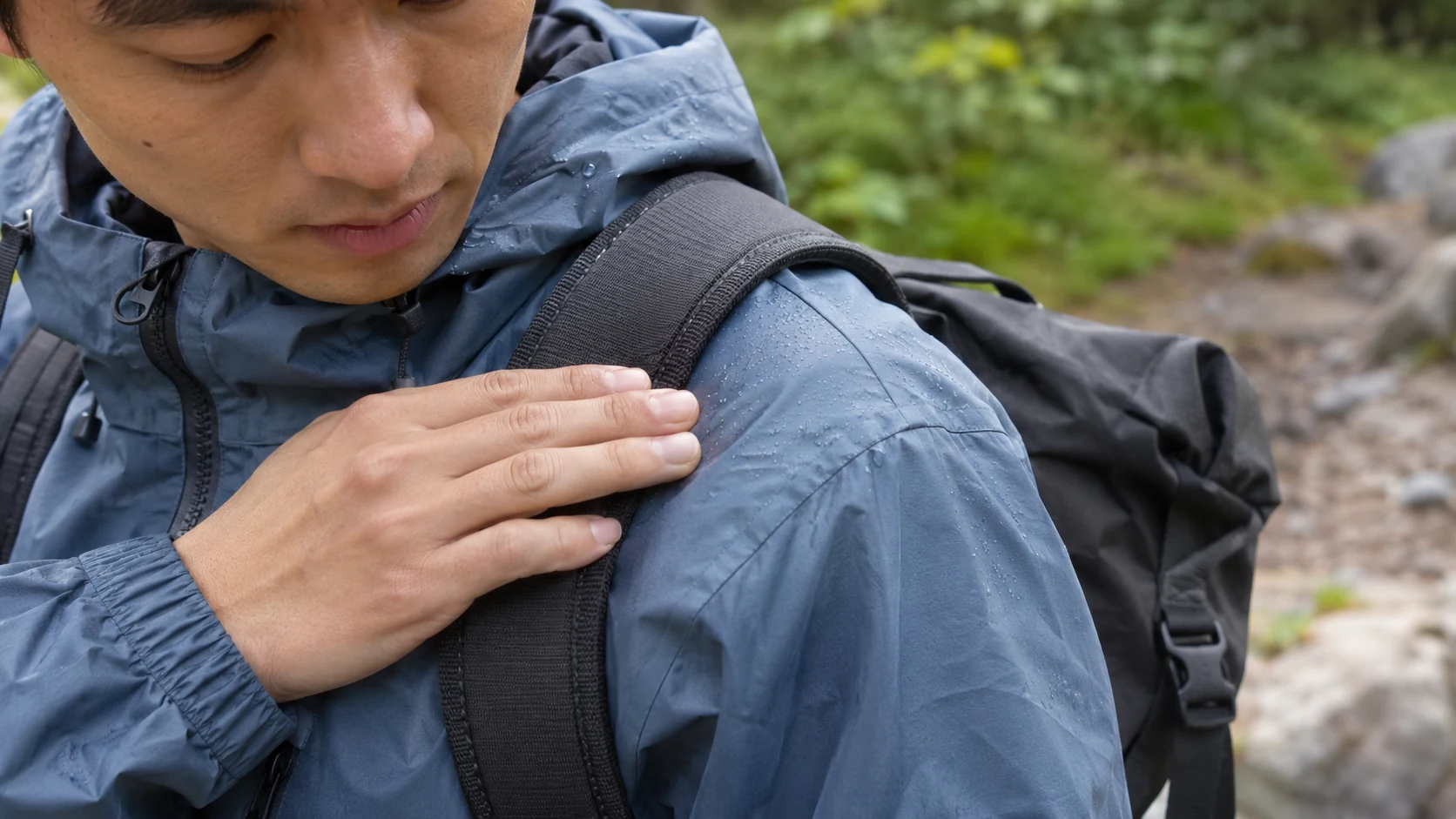
The cost of an ultralight waterproof jacket includes any extra care, repair difficulty and early replacement. If two candidates serve different use frequencies, comparing their purchase prices alone is misleading. Separate occasional travel backup from regular outdoor use in the assortment and product description.
For a wear trial, document the bag carried, activity and contact points. Avoid describing a short, informal trial as a certified abrasion test. Its value is identifying practical weaknesses before the buyer commits to stock, not creating a laboratory claim.
Can a compact shell remain waterproof and breathable?
Yes, provided its material and construction support those claims. ISO 811:2018 measures fabric resistance to water penetration using hydrostatic pressure. Neither low garment weight nor small packed size establishes that result, and fabric testing does not evaluate every finished seam or opening.
Check seam sealing, the front fastening, hood adjustment and cuff closure. A water-resistant windbreaker can be extremely compact but may be unsuitable for sustained rain. A packable waterproof jacket should be identified by its verified weather protection, not by the fact that it fits in a pocket.
ISO 11092:2026 measures thermal and water-vapour resistance under defined conditions. A breathability claim should state its method and material assembly. Different laboratory approaches are not interchangeable, and a lightweight shell can still feel damp during hard walking or humid weather.
Ventilation may be worth a small weight penalty for an active traveller. Check whether vents remain usable with a backpack and whether opening them exposes the inner clothing to rain. The lightest waterproof jacket is only a sensible choice if the omitted features are genuinely unnecessary.
Which trade-offs matter more than the lowest weight?
| Design choice | Potential benefit | What to verify | Cost consequence |
|---|---|---|---|
| Minimal emergency shell | Low carried weight and small package | Rain protection and adjustment range | May not suit frequent abrasion |
| Everyday packable shell | Balanced storage and convenience | Pocket access, hood and bag compatibility | More components to maintain |
| Light technical shell | Compact design with active-use features | Documented fabric and seam construction | Material choice can raise initial price |
A useful ownership comparison divides purchase, care and repair expense by expected wear days, using the buyer’s own assumptions. Do not promise a fixed lifespan from weight alone. A low-cost backup worn occasionally and a daily shell have different jobs and should have different acceptance criteria.
How should the travel routine change the target?
| Routine | Main priority | Practical check |
|---|---|---|
| Occasional city showers | Convenient carry | Fits an accessible bag compartment |
| Daily travel with a backpack | Repeated-contact durability | Shoulder, back and belt fit |
| Hiking during a trip | Weather coverage and ventilation | Hood and vents with the loaded pack |
| Trips with little drying space | Easy airing and storage | Can the shell hang open overnight? |
Which specifications belong in the purchase record?
Record garment size, complete weight, packing method, construction and the supporting waterproof or breathability reports. ISO 811:2018 and ISO 11092:2026 are test methods, not product certifications. A report should identify the supplied material and any conditioning or pretreatment.
For EU consumer ranges, textile composition claims must follow Regulation (EU) No 1007/2011 where applicable. Unsupported “fully waterproof,” recycled-content or performance wording should not be copied from a generic supplier brochure into every style description.
What should buyers ask before choosing the lightest sample?
- Weigh the same size with the same included parts.
- Compare packed volume using a repeatable, realistic method.
- Keep the hood, cuffs and ventilation needed for the intended use.
- Match durability expectations to daily use or occasional backup.
Yuelei Sports lists a breathable lightweight waterproof shell among its outdoor offerings. Buyers can use the listed style as a discussion starting point, then request current sample weights, construction details and size-specific confirmation before placing an order.
Frequently asked questions
Are packable waterproof jackets fully waterproof or only water resistant?
Either construction can be packable. Check the actual waterproof claim, fabric evidence, seams and openings. Packability alone describes how the jacket stores and does not establish rain protection.
How small should a packable rain jacket fold down?
Small enough to fit the intended bag without excessive compression. Compare actual samples using the same packing method; there is no universal packed-volume requirement for all travel jackets.
Is a lightweight packable jacket durable enough for regular use?
Some are, while others are designed mainly for occasional backup. Inspect contact areas and request construction information. Regular backpack use deserves more scrutiny than a jacket carried mostly unused.
What waterproof rating works for travel and city rain?
No single rating suits every itinerary. Exposure duration, garment construction and condition matter alongside the fabric result. Check a functioning hood and sealed seams before treating a higher number as necessary.
Can a packable waterproof jacket be breathable on a hike?
Yes, but breathability has limits and varies with conditions. Compare stated test methods and ventilation. A compact shell may still become clammy during strenuous walking.
How should I store a packable jacket between trips?
Clean it as instructed, dry it completely and store it without prolonged tight compression. The travel pouch is useful during transport; it should not become permanent storage for a damp garment.
References
- REI: How to Choose Rainwear
- ISO 811:2018: fabric water penetration testing
- ISO 11092:2026: thermal and water-vapour resistance
- EU textile fibre labelling regulation
The most useful weight saving is one that leaves the jacket’s real job intact. Contact Yuelei Sports about a packable waterproof jacket brief that specifies carried weight, usable packed space and the expected pattern of wear.