 Xiamen Yuelei Sports Co., Ltd
When a technical engineer in Bergen encountered a cold lower back during a winter parka fitting, she had already chosen the thickest sample in the range. Sitting on a bench lifted its short hem above her layers. This illustrative case shows why apparent thickness cannot compensate for inadequate coverage.
Summary: The warmest waterproof jacket for a particular wearer depends on insulation, coverage, closures, fit, rain protection and moisture control. ISO 11092:2026 separates thermal resistance from water-vapour resistance; neither result alone gives a universal temperature limit. Buyers should examine these six features against the time spent standing, walking and sitting outside.
A winter purchasing brief needs more detail than “warm and waterproof.” A commuter who waits at a windy platform needs a different balance from a walker climbing steadily. REI’s rainwear guidance also distinguishes waterproof insulated garments from water-resistant puffers, so a thick winter jacket should never be assumed suitable for persistent rain.
What makes the warmest waterproof jacket suitable for slow winter activity?
The first feature is insulation appropriate to the activity. Down can offer substantial warmth with low bulk when dry; synthetic insulation is often more practical where dampness and repeated drying are expected. Cotswold Outdoor’s layering guidance makes this distinction while emphasizing that warmth needs rise when movement stops.
Request the insulation type, distribution and amount, then examine the finished garment. Fill power describes down loft under a specified test, not the total warmth of a jacket. Similarly, a synthetic fill figure does not reveal whether the shoulders, sleeves and torso use the same amount or how much the fit compresses it.
The second feature is useful coverage. A parka extends protection below the waist and can be comfortable during low-output winter use. A shorter jacket may be easier for frequent climbing, driving or cycling. Neither shape is automatically warmer in every posture: compare the hem while standing and seated.
Use two positions during a sample check and record where the hem finishes relative to the underlying layers. This is a suggested fitting method, not a temperature test. ISO 11092:2026 can characterize the thermal resistance of an assembly, but its published scope explicitly avoids assigning comfort specifications for particular situations.
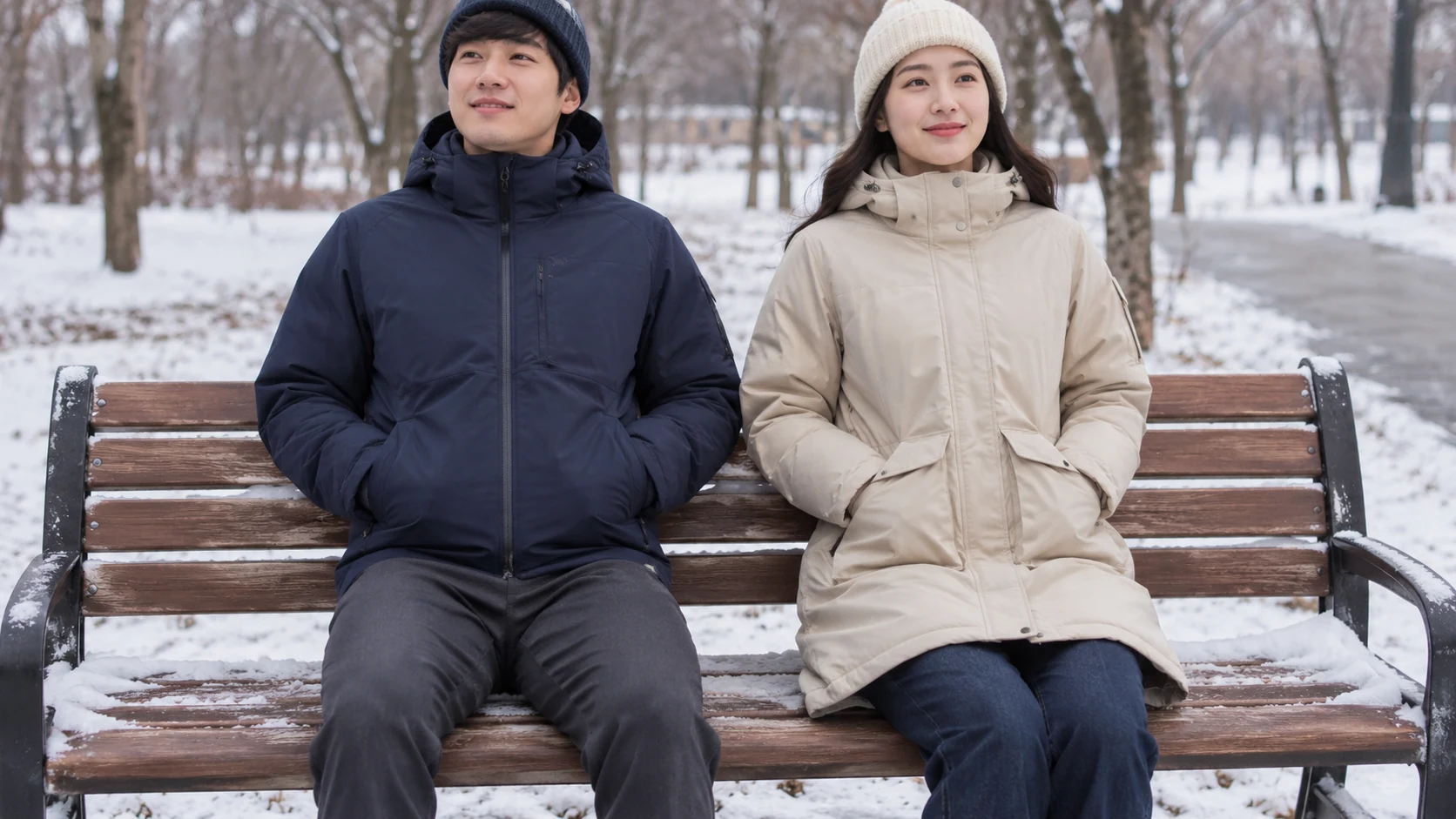
For buyers comparing a waterproof jacket for cold weather, length should be part of the size specification. Chest measurements alone miss a major reason customers report that a warm-looking garment feels cold outdoors.
How do the hood, cuffs and fit retain warmth?
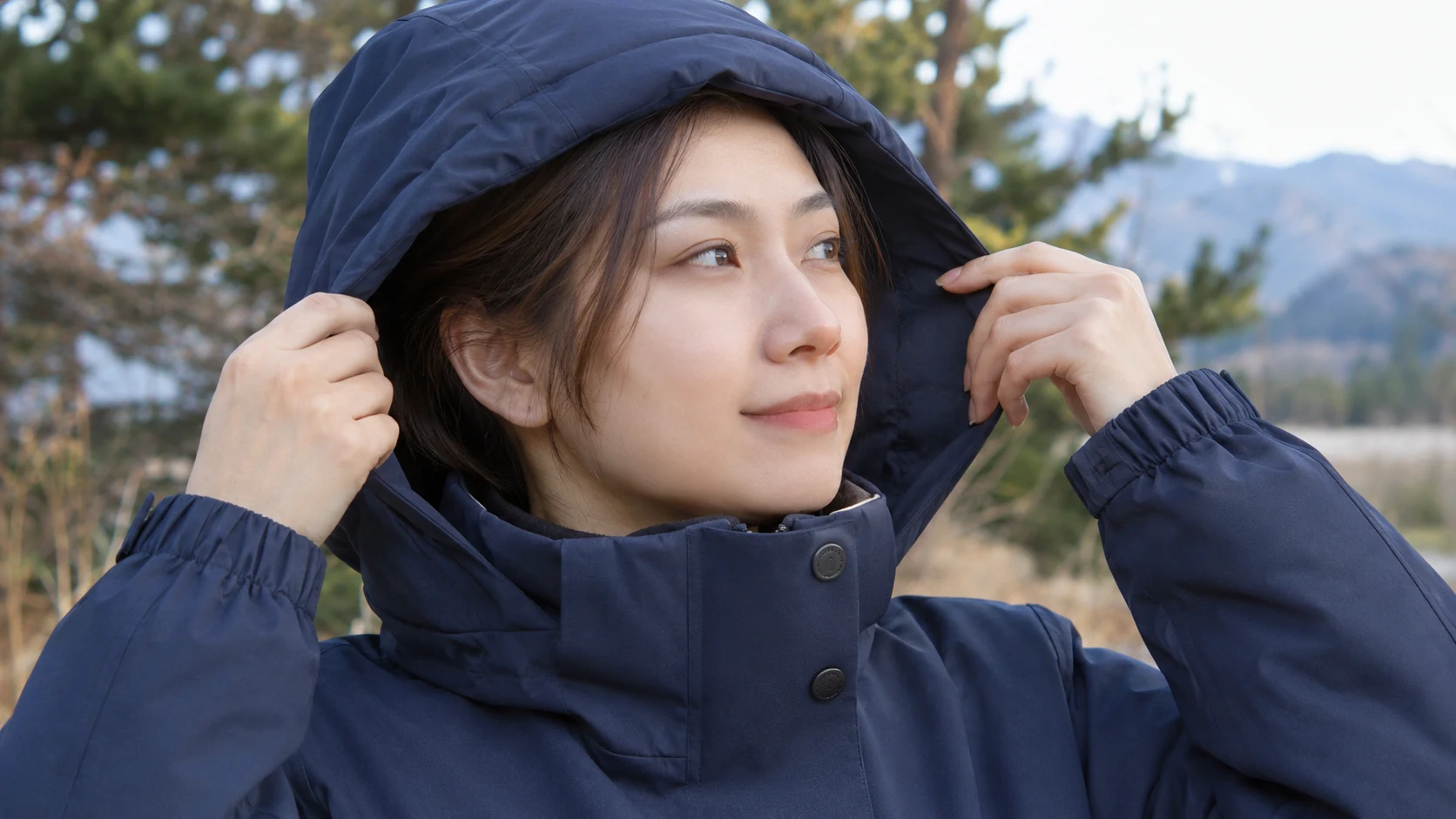
The third feature is control at openings. Cold air can enter through a loose hem, open cuff or poorly fitted collar even when the main fabric blocks wind effectively. A winter hood needs to accommodate the intended hat without becoming so large that the wearer loses side vision.
REI describes three important adjustment areas: hood, wrists and hem. Check all three on the sample with gloves on. A small adjuster that works indoors with bare fingers may be inconvenient during rain; an awkward closure is also more likely to be left partially open.
The fourth feature is fit that preserves loft and movement. Tightness across the shoulders or elbows can compress filling and discourage normal movement. Too much spare volume can interfere with bags, seat belts and pocket access. A larger nominal size is useful only when the whole pattern remains suitable.
A fitting group should include the actual size range and layering combinations sold to customers. Check reaching, sitting and turning the head; note whether the front fastening pulls or the back hem lifts. These observations explain comfort problems more directly than calling one sample “premium” and another “basic.”
The waterproof hood adjustment guide is a useful companion when choosing collar height and brim shape. In particular, a hood that holds its opening in place while the wearer turns is more practical than one that merely looks large enough.
What waterproofing and ventilation are needed in freezing rain?
The fifth feature is a complete rain-protection construction. A puffer waterproof jacket needs more than a water-repellent face fabric: the barrier, seams and openings must work together. Ask how quilting and seam sealing are arranged, and whether the pockets have the same intended protection as the body.
ISO 811:2018 measures a fabric’s resistance to water penetration under hydrostatic pressure. A 20,000mm fabric result is a pressure-related value, not a promise of twenty hours in a storm. It does not establish how rain behaves at a moving hood, an opened vent or a partially closed front zip.
The sixth feature is moisture control. A warm waterproof jacket can become damp inside when exertion produces more moisture than the system can release. ISO 11092:2026 measures water-vapour resistance separately; request the test method and assembly rather than compare unrelated marketing numbers.
Useful winter ventilation is controllable. A wearer may need to release heat during a walk and close openings before waiting outside. Check that vents remain accessible and that any opening can be used without directing rain toward inner layers. Breathability helps, but no fabric removes the need to regulate effort and insulation.
Freezing rain also creates hazards that clothing cannot solve, including slippery surfaces and deteriorating travel conditions. A clothing guide should not imply that choosing a warmer jacket makes every outdoor plan appropriate. Route, shelter and turnaround decisions remain separate from garment selection.
Is a puffer waterproof jacket or a separate shell more practical?
| Design | Useful strength | Fit or comfort concern | Ownership consideration |
|---|---|---|---|
| Long insulated waterproof parka | Lower-body coverage during slow activity | Hem can restrict a long stride or seated position | Larger garment to dry and store |
| Short insulated waterproof jacket | Convenient mobility and everyday handling | Lower-back exposure when reaching or sitting | May need complementary lower-body protection |
| Waterproof shell with separate insulation | Adjustable warmth over changing activity | Overlapping hoods, cuffs and zips | Individual layers can be replaced |
The cost comparison should include care, stock complexity and returns. A simple model is acquisition plus maintenance plus replacements over the intended service period. Do not assign a longer life to a parka merely because it is heavier; use actual wear records or an agreed trial.
For a retail assortment, distinguish the stationary-use option from the active-use option in plain language. Customers can understand “more coverage while waiting outside” and “easier heat release during walking.” A single unsupported “warmest” ranking makes those useful distinctions harder to see.
How should the routine change a waterproof jacket for cold weather?
| Winter routine | Priority | What to inspect |
|---|---|---|
| Waiting for transport | Coverage and closed openings | Seated hem, collar and glove overlap |
| Repeated indoor-outdoor transitions | Easy temperature adjustment | Front opening and removable midlayers |
| Brisk walking | Moderate insulation and ventilation | Vent access with a bag in place |
| Long wet days with limited drying | Practical moisture recovery | Care method and complete drying time |
What evidence supports a claim about the warmest waterproof jacket?
Fabric reports to ISO 811:2018 and assembly reports to ISO 11092:2026 answer different questions. Keep sample identification and test conditions with each result. Neither standard creates a universal “warmest jacket” designation, and test results from a different construction should not be transferred to the ordered style.
Regulation (EU) No 1007/2011 addresses textile fibre names and composition labelling within its scope. Buyers should check that descriptions of shell, lining and filling are supported. Any occupational cold-protection or safety claim needs its own applicable assessment; ordinary winter appearance is not evidence of certified protection.
What should a winter sample approval include?
- Write down whether the main use is stationary, active or mixed.
- Compare the six features with the same base layers and gloves.
- Confirm the actual waterproof construction and supporting test reports.
- Check a complete wash-and-dry routine before finalizing care instructions.
Yuelei Sports offers outdoor apparel and custom waterproof rain jackets. A winter enquiry should include the target climate, garment length, insulation brief and size set. The requested performance should be confirmed for the sample rather than inferred from a product photograph.
Frequently asked questions
What features make the warmest waterproof jacket suitable for freezing rain?
Look for appropriate insulation, coverage, a protective shell, sealed construction, adjustable openings and practical ventilation. The right combination depends on how long the wearer remains outside and how much they move.
Is down or synthetic insulation warmer when conditions are wet?
Synthetic insulation is generally more forgiving when damp. Down’s warmth depends strongly on retaining loft, so a wet-weather down garment needs effective protection and careful drying. Compare complete constructions rather than fill names alone.
How much waterproofing do I need for winter storms?
There is no universal rating that guarantees storm protection. Assess fabric evidence alongside seams, openings, exposure and garment condition. A higher hydrostatic-head number cannot compensate for poor hood fit.
Should I choose a parka or a shorter insulated rain jacket?
A parka offers additional coverage during slower activity. A shorter jacket may suit more movement. Compare seated comfort, stride and lower-back coverage with the intended clothing underneath.
Can a warm waterproof jacket still be breathable?
Yes, but insulation and the whole assembly influence moisture movement. Breathable fabrics and adjustable vents can help; neither guarantees that a heavily insulated wearer will remain dry during hard exercise.
How do I layer under a warm waterproof jacket without overheating?
Start with moisture-managing layers appropriate to the activity and avoid unnecessary bulk. Reduce insulation or open suitable vents before sweating heavily, then restore warmth when movement stops.
References
- ISO 811:2018: hydrostatic pressure testing
- ISO 11092:2026: thermal and water-vapour resistance
- REI: How to Choose Rainwear
- Cotswold Outdoor: The Layering System Guide
- EU textile fibre labelling regulation
A winter jacket earns its place when its warmth remains useful through the wearer’s whole day. Contact Yuelei Sports to discuss a winter waterproof jacket brief built around actual coverage, movement and weather requirements.