 Xiamen Yuelei Sports Co., Ltd
A soft fleece lining can feel warm as soon as a jacket is tried on. A filled jacket may look more substantial. Neither impression settles which will be warmer during a cold, wet commute. The answer depends on what is inside the garment, where that insulation is placed and how the jacket fits over the clothes underneath. Walking briskly and waiting at a bus stop also make different demands on the same coat.
A women’s insulated waterproof jacket is not automatically warmer than a fleece-lined one. Fleece is insulation too. In product descriptions, “insulated” often means a separate fill, while “fleece-lined” describes the lining material. Those labels are useful starting descriptions, but they do not rank warmth. Compare the actual construction and intended use before choosing between them.
Is fleece lining different from insulation?
Fleece is an insulating material. The apparent comparison between “insulated” and “fleece-lined” is therefore usually a comparison between two ways of adding warmth, not between an insulated jacket and an uninsulated one.
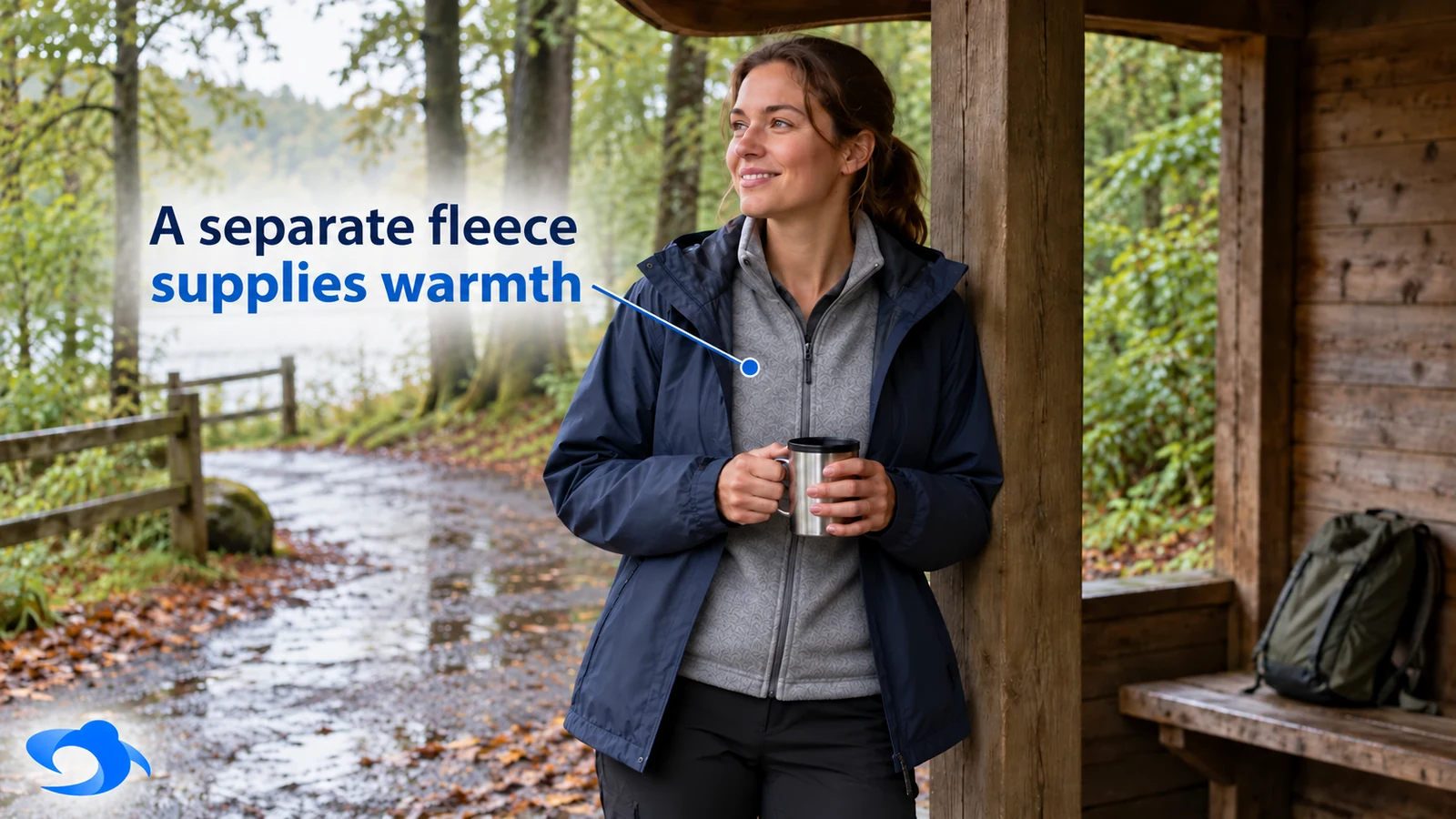
A jacket with separate fill needs details about the fill, its quantity and its coverage. A fleece-lined jacket needs details about the fleece construction and where it is used. A substantial fleece lining may provide more insulation than a lightly filled design. The product names alone cannot settle the question.
| Construction | Where warmth comes from | What the label leaves unanswered |
|---|---|---|
| Shell with separate insulating fill | The specified fill and its distribution | Fill type, quantity and coverage |
| Fleece-lined rain jacket | The fleece lining | Fleece construction, thickness and lining coverage |
| Shell over a separate midlayer | The clothing worn underneath | Combined fit and the warmth of the chosen layers |
What actually determines which jacket is warmer?
Compare the insulation across the areas that need it. Ask whether the body, sleeves and hood have the same construction. A description of the body lining does not establish the warmth of a lightly lined sleeve or an uninsulated hood.
Fill weight can help describe a construction, but it cannot rank different materials on its own. Confirm what a stated mass refers to and avoid treating it as a temperature rating. A minimum-temperature promise needs a defined assessment and wearing conditions, not just a lining name.
ISO 11092 addresses thermal and water-vapour resistance under controlled steady-state conditions. Any result needs its specimen and conditions explained. A material result is not a promise that every wearer will feel comfortable at the same temperature.
For a practical comparison, wear the samples over the same underlayers. Check shoulder movement and whether the insulating layers are compressed. A jacket that is tight enough to restrict reach is not a better fit simply because it feels close to the body.
Which is more comfortable for walking and waiting?
Cold outdoor waiting can favour a warmer integrated jacket. During brisk walking, the same warmth may become unwanted. The length and activity of the commute matter more than deciding that one lining is universally better for winter.
A women’s fleece-lined waterproof jacket offers warmth that stays attached to the shell. A filled waterproof jacket does the same unless its insulation is removable. A separate shell and midlayer allow the warmth to change without replacing the outer rain layer.
| Routine | Option worth trying | Reason to reconsider it |
|---|---|---|
| Cold waits with gentle walking | Integrated fleece or fill suited to the conditions | It becomes too warm on transport |
| Brisk walking and changing temperatures | Shell with separate layers | There are few convenient chances to adjust clothing |
| Cool everyday errands | A lining matched to the intended warmth | The actual exposure is longer or colder than expected |
| Travel through mixed conditions | A removable or separate midlayer | The wearer prefers fewer pieces to manage |
Try the complete routine during assessment: the jacket should work while sitting and carrying a bag, not only while standing outdoors. The commuting rain-jacket guide covers those fit and movement checks.
Does fleece lining make a jacket more waterproof?
No. The shell fabric, seams and openings need to resist rain entry independently of the lining. More warmth cannot compensate for an exposed front opening or water entering at the neck.
ISO 811:2018 measures resistance to water penetration in the tested specimen. A shell-fabric result does not establish the protection of the complete garment. Check the seam-sealing scope, front fastening, pockets and hood-to-collar junction.
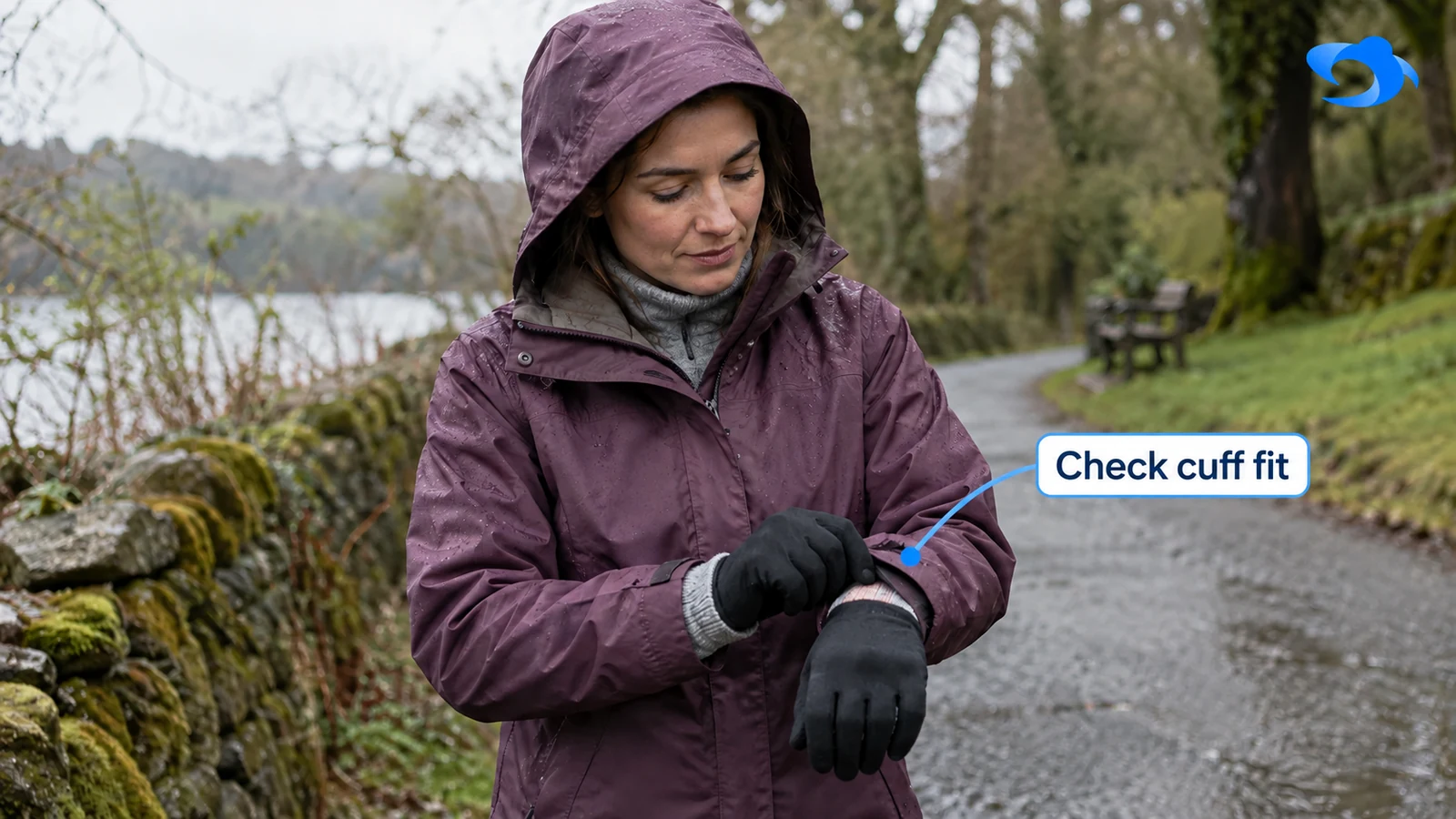
Fasten the jacket fully and turn the head. The hood should remain positioned without blocking side vision. Then reach forward to check sleeve coverage and cuff closure over the intended gloves or sweater sleeves. Winter bulk can change the way those details fit.
Would a separate shell and fleece be easier to use?
A women’s lightweight waterproof jacket with hood gives more freedom to choose warmth underneath. It can suit someone who already owns a comfortable midlayer or whose activity changes during the day. The trade-off is managing separate pieces.
Care is part of that comparison. A fixed lining means the shell and insulation are cared for as one garment. Separate pieces can be washed independently, following their own labels. Do not assume every fleece or filled jacket accepts the same drying method or treatment.
Compare the whole garment’s instructions and the space available for drying it. A lining’s appearance alone does not establish how quickly the complete jacket will be ready to wear again.
What should a sample reveal about the lining?
For a private-label range, specify the shell, lining or fill and coverage in the body, sleeves and hood. Keep those details tied to the approved sample. A change of lining or fill during development may change the basis of the warmth comparison.
Yuelei Sports’ hooded waterproof outdoor jacket is a shell reference. Its photograph does not reveal fill type, thermal resistance or a temperature limit. Those details need confirmation for a proposed winter version.
The custom rain-jacket options provide another starting point for discussing construction. Do not assume that a shell listing includes insulation. For EU retail, labels should identify the supplied textile composition correctly; ordinary private-use rainwear does not become certified PPE because a fabric was tested.
Which lining suits a winter commute?
What makes an insulated jacket suitable for winter rain?
It needs both suitable warmth and rain-protective construction. Check insulation coverage and layered fit alongside seams, closures, the hood and cuffs.
Should a commuter choose a shell or an insulated jacket?
A shell is easier to adjust with separate layers. Integrated warmth can be simpler for cold, less active journeys with substantial outdoor waiting.
Does winter rain require a different waterproof rating?
No universal winter-rain threshold is established here. Assess the likely exposure and complete construction rather than linking warmth directly to a hydrostatic number.
Which hood and cuff details matter with winter layers?
Check secure hood adjustment and cuffs that close comfortably over the intended sleeves or gloves. Repeat the check while turning and reaching.
How much room should be left for a sweater?
Enough to reach and lift the arms without compressing the layers or pulling the hem upward. Test the sweater that will actually be worn.
Is a filled jacket always warmer than fleece lining?
No. Compare material construction, thickness or fill quantity, coverage and fit. A lining label is not a measured ranking of warmth.
References
- ISO 811:2018: hydrostatic-pressure water-penetration testing
- Regulation (EU) No 1007/2011: textile composition labelling
- Regulation (EU) 2016/425: PPE scope and exclusions
Which jacket should be chosen for warmth?
Choose the construction that suits the wearer’s routine, not the label that sounds warmer. Compare what is inside the jacket, where the insulation sits and how the whole garment fits over the intended layers. A fixed warm lining can simplify a cold wait; a separate shell and midlayer give more adjustment during active travel. Keep the waterproofing decision separate, because a warm lining cannot repair gaps in rain protection. Yuelei Sports’ waterproof jacket range offers shell starting points for a winter collection. Confirm the required lining or fill on a sample before attaching warmth claims to the finished style.