 Xiamen Yuelei Sports Co., Ltd.
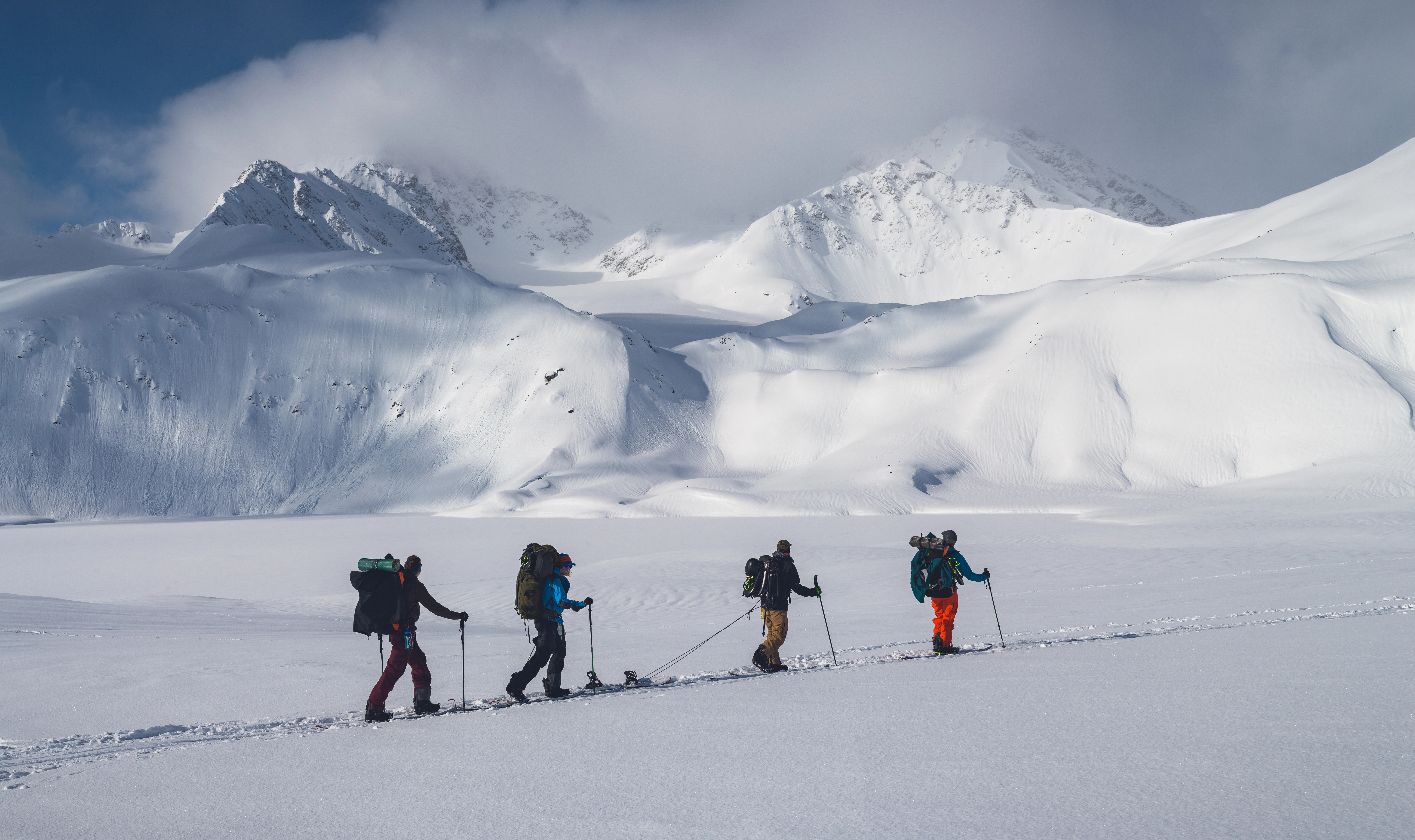
When a technical engineer in Rotterdam prepared a paddling school’s new women’s program, she converted each participant’s height and chest measurement into a unisex size and approved the order. At the first pool session, users struggled to crouch, suits pulled across the seat during rescue drills, and upper-body bulk interfered with personal flotation device adjustment. A structured refit reversed the initial quality concern: the selection method had ignored torso length, hip circumference, reach, underlayers, and task-specific movement.
Zusammenfassung: A women’s dry suit should remain dry and seal correctly without restricting overhead reach, deep crouching, seated rotation, or layering. Procurement teams should record at least seven relevant body measurements, evaluate the suit with intended underlayers, and run a movement trial before approving production. ISO 8559-1 provides standardized anthropometric definitions, while protective-clothing and immersion-suit standards help buyers separate fit evaluation from verified performance claims.

Female-specific fit is a pattern-engineering approach that redistributes volume across the bust, waist, hips, rise, thighs, and torso while keeping functional components correctly positioned. Women vary widely, and some will fit a unisex block better than a nominally women-specific one.
Why body proportions change dry-suit fit
Height and chest alone cannot describe three-dimensional fit. ISO 8559-1 defines anthropometric measurements and landmarks for clothing size designation; it enables measurement consistency, not a promise that a women’s dry suit size will fit. A useful worksheet records at least seven inputs: height, chest or bust, waist, hip, girth or torso loop, inseam, and shoe size. Neck and wrist circumferences may also be needed for configurable seals.
Torso, hip, and rise allocation
Insufficient torso length can pull the crotch upward and load the shoulders during reach. Too little hip or rise allowance restricts a squat, yet sizing up to clear the hips may add excess material at the chest, sleeves, or lower leg. A well-selected dry suit for women balances the controlling dimensions without uncontrolled folds beneath a buoyancy aid or harness.
ISO 13688, the general requirements standard for protective clothing, covers matters including ergonomics and size designation. It does not certify a recreational suit by itself, but its ergonomic framework supports a practical question: can the intended user perform the intended task without the garment creating a new hazard? That question matters more than whether the label says “women’s.”
How much allowance is needed for layering and movement?
A dry suit is a shell, so its working fit must be judged over the insulation system expected in the coldest approved use. When evaluating a dry suit for women, measurements taken over street clothes can underestimate bulk at the seat, knees, shoulders, and forearms. Buyers should define one representative base layer and one representative insulating layer, then record whether measurements are body-only or taken over that system. Mixing the two methods across a size survey produces unreliable grading data.
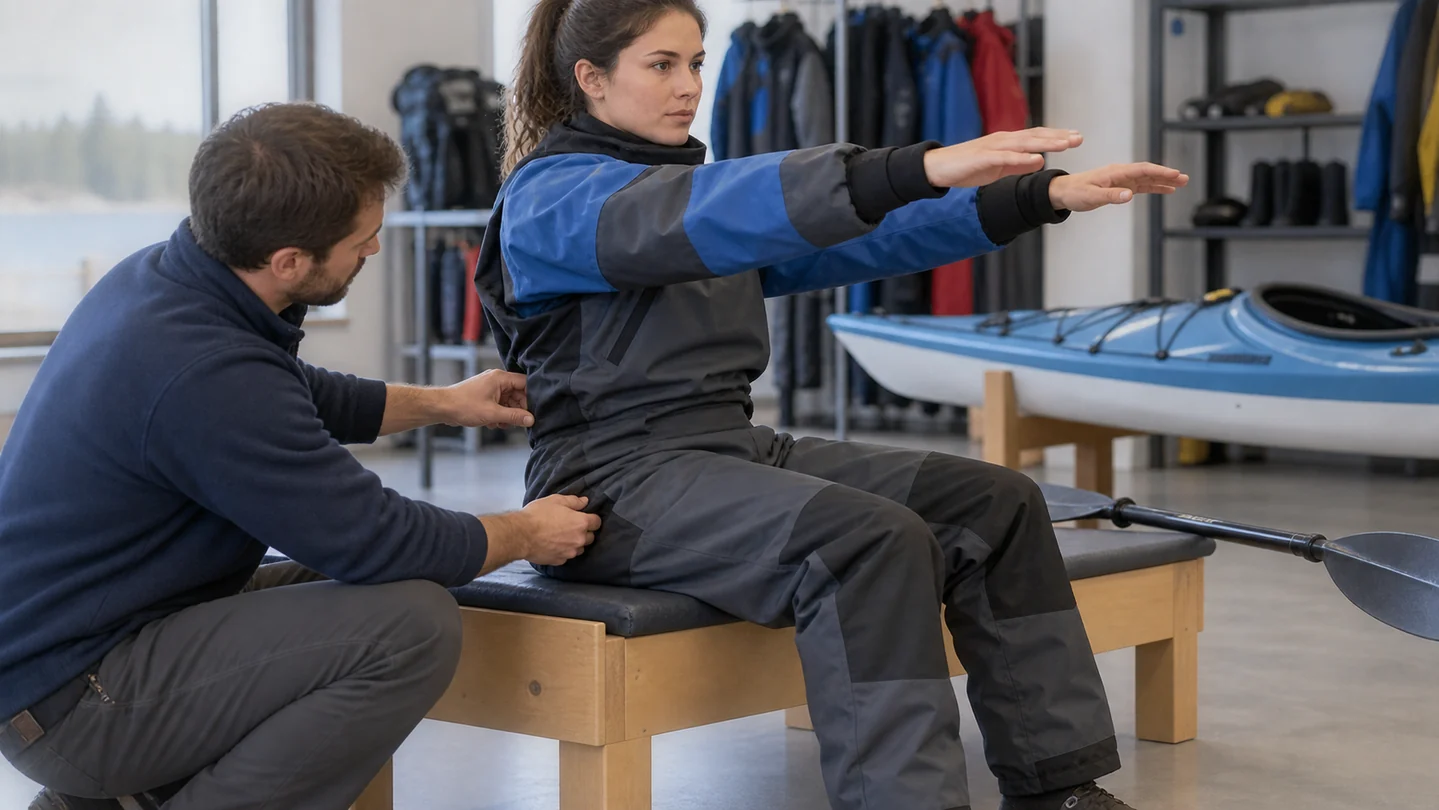
Use a repeatable five-position fit trial
Static checks miss operational problems. A test fitting should include at least five positions: arms overhead, arms crossed to opposite shoulders, a deep squat, a high step or kneel, and a seated working posture with rotation. The wearer should also operate zippers and adjustments with program gloves. This protocol is a procurement acceptance method, not a certification test.
Shell ease should not be confused with a loose seal. Neck and wrist seals contact the skin, while the shell needs volume for motion and insulation. Teams can review this latex neck seal fit guidance. A painful, damaged, or incompatible seal requires correction; excess shell volume will not solve it.
ISO 15027-3 specifies test methods for immersion suits, including procedures associated with leakage and thermal protection. These answer different questions from a fit trial: buyers need evidence for claimed performance and wearer-specific mobility in the real clothing system.
Mobility, zippers, and access must work as one system
Pattern geometry and component placement interact. A women’s dry suit may use an entry-zipper layout that affects reach differently, while relief access must remain operable without seated distortion. Evaluators should test two states—fully dressed before entry and wet-operation simulation—because buoyancy aids, spray skirts, harnesses, and gloves can change access.
Relief-zipper options should reflect user needs, privacy, accessibility, and environment, not gender alone. Document zipper type, orientation, guard, underlayer compatibility, and inspection instructions. In a female-specific fit program, prototypes should reveal any pressure points during crouching or prolonged sitting.
EN 14225-2 addresses dry diving suits and includes requirements and test methods; it should not automatically be applied to every surface-watersports garment. Likewise, ASTM D751 contains laboratory methods for coated fabrics, but a fabric hydrostatic test is not proof that a completed suit, its seams, or its zipper system meets an immersion-suit claim. Procurement documents should name the product category, destination market, intended activity, and exact evidence required.
Fit errors create hidden costs beyond the purchase price
The cheapest nominal size set may be expensive to operate. Poor fit creates exchanges, freight, staff time, delayed training, idle inventory, abrasion at folds, and low user confidence. Total cost of ownership (TCO) should also include inspection, maintenance, repair access, documentation, and expected service conditions.
Consider an illustrative 100-suit program. If eight suits require exchange and each consumes two staff hours plus two freight movements, the result is 16 staff hours and 16 freight legs. This is a scenario, not market data; buyers should substitute their own return, labor, freight, downtime, and repair records.
| Procurement approach | Mobility and comfort | Operational effect | Unit-cost tendency | Likely TCO pattern |
|---|---|---|---|---|
| Height-and-chest size conversion | Variable at torso, hip, and rise | Fast initial allocation; more fit exceptions | Lower setup effort | Higher exposure to exchanges and idle inventory |
| Expanded measurement matrix | Better control of key proportions | More administration before ordering | Moderate setup effort | Can reduce avoidable refits and handling |
| Prototype plus movement approval | Validates layering and task mobility | Longer preproduction stage | Higher validation effort | Often more predictable for repeat programs |
| Custom or split sizing for exceptions | Targets outlier proportions | Requires clear records and lead-time control | Higher per-unit tendency | May be economical where standard-size failure is costly |
| Application | Primary fit risk | Fit/application check | Specification priority |
|---|---|---|---|
| Recreational kayaking | Torso pull and hip restriction when seated | Rotate with PFD and spray-skirt system fitted | Seated reach, sock position, entry access |
| Rescue or instruction | Restriction during kneeling, towing, and re-entry | Complete all five positions plus a rescue sequence | Mobility, visibility, reinforcement placement |
| Cold-weather fishing | Insulation bulk and prolonged seated pressure | Test the maximum approved layer package | Layering volume, relief access, pocket clearance |
| Commercial or technical work | Conflict with harnesses and task equipment | Run a job-specific compatibility assessment | Risk assessment, documentation, market compliance |
Standards and compliance: define what the evidence proves
- ISO 8559-1: defines anthropometric measurements for clothing. It supports repeatable sizing data; it is not a dry-suit performance certification.
- ISO 13688: states general requirements for protective clothing, including ergonomics and size designation. It is normally used with a product-specific standard rather than alone.
- ISO 15027-1 and ISO 15027-3: cover constant-wear immersion-suit requirements and related test methods. Applicability depends on the product’s intended use and claims.
- EN 14225-2: covers dry diving suits. Diving scope should not be implied for a surface-use garment without appropriate evidence.
- EU Regulation 2016/425: governs PPE placed on the EU market when the product falls within its scope. Classification, conformity assessment, technical documentation, marking, and instructions must match the actual product and claims.
Unsupported certification language can trigger relabeling, listing rejection, shipment delay, disputes, or regulatory action. A report should identify the sample, method, edition, laboratory, date, and result; it should not be generalized to another construction without a documented basis.
A four-step selection guide for program buyers
- Map the user population. Collect consistent measurements, identify outliers, and treat female-specific fit as a measurable pattern requirement rather than a substitute for actual dimensions.
- Freeze the clothing and equipment system. Specify underlayers, PFDs, harnesses, footwear, gloves, and access needs before fit approval. This under-dry-suit layering guide helps frame the insulation discussion.
- Approve representative samples. Test at least one wearer near each important size boundary and record the five-position trial, component access, and exceptions.
- Request claim-specific evidence. Match standards, reports, labeling, inspection instructions, repair support, and change control to the destination market and intended use.
Yuelei Sports can support B2B teams with a women’s dry suit sourcing brief covering size inputs, configurable product details, intended application, and documentation needs. Final suitability should still be confirmed through buyer-led risk review and wearer trials.
Allgemeine Fragen
How is a dry suit supposed to fit?
It should allow full task movement over the intended insulation without pulling at the crotch, shoulders, seat, or knees. Some shell ease and folds are normal, but uncontrolled bulk should not obstruct a PFD, harness, zipper, or line. Confirm fit through a movement trial, not standing appearance alone.
How tight is a dry suit?
The shell should not fit like a wetsuit; it needs room for air movement, insulation, and reach. Neck and wrist seals are intentionally closer to the skin, but they should be correctly sized, undamaged, and tolerable for the wearer. Persistent pain, numbness, or breathing difficulty requires immediate removal and reassessment.
What size dry suit am I?
Use the supplier’s current chart and compare height, bust or chest, waist, hip, torso girth, inseam, and shoe size rather than choosing from a single measurement. If key dimensions cross size boundaries, arrange a test fitting or ask whether split sizing or pattern adjustment is available.
Can you wear normal clothes under a drysuit?
Ordinary clothing may fit physically, but the layer system must manage moisture and provide insulation appropriate to the water, weather, activity, and rescue plan. Cotton can retain moisture and lose insulating effectiveness when wet, so programs commonly specify purpose-selected base and insulating layers. Test the complete system before purchase and operational use.
Hinweise
- International Organization for Standardization — ISO 8559-1, Size designation of clothes: anthropometric definitions
- International Organization for Standardization — ISO 15027-1, Constant wear suits: requirements
- International Organization for Standardization — ISO 15027-3, Test methods
- EUR-Lex — Regulation (EU) 2016/425 on personal protective equipment
The memorable rule is simple: fit the person, the layers, and the task—not the size label.
For a program-specific review, compare Yuelei Sports’ dry suits for women and other users, then contact the technical sourcing team with your measurement matrix, application, destination market, and required evidence.