 Xiamen Yuelei Sports Co., Ltd.
When a technical engineer in Portland checks a hunting-jacket sample over a thick fleece, the size chart can look perfectly acceptable. In this illustrative fitting scenario, the trouble appears as soon as the wearer reaches forward: the shoulders tighten, the hem rises and the sleeves scrape loudly against the body. The fabric has not failed. The sample was approved while standing still, without checking the movements that matter outdoors.
Zusammenfassung: A good waterproof jacket for hunting balances fabric noise, finished-garment rain protection and movement over the intended layers. Compare at least two samples using the same movements; request the waterproof test method, such as ISO 811, and examine seams separately. A high fabric rating alone does not establish quietness, comfortable fit or protection through an entire wet day.
Hunting rainwear serves different jobs. A shell carried for sudden showers faces a different brief from one worn through wet woodland or a long stationary watch. Outdoor Life’s comparative testing illustrates this distinction: it assessed waterproofness, exertion comfort and field use separately, and reported substantial differences in noise and warmth. Those findings support a more useful buying question than which jacket has the largest number on its label.
What makes a waterproof hunting jacket quiet?
The face fabric, its stiffness and the way panels rub together all influence noise. A softer or brushed surface may rustle less than a crisp lightweight shell, but the construction still needs waterproof evidence. A quiet softshell without a suitable barrier should not be presented as an all-day rain shell simply because water initially beads on it.
Compare two candidates in the same room, over the same layers. Raise the arms, turn the torso, brush a sleeve against the chest and open a pocket slowly. Repeat after the samples have been handled outdoors. These are practical purchasing checks, not a standardized acoustic test; ISO 811 measures resistance to water penetration and says nothing about garment noise.
For a distributor, the useful specification is an approved reference sample plus a repeatable handling procedure. Descriptions such as “silent” promise more than an ordinary fabric comparison can demonstrate. Ask whether later production uses the same face fabric and finish, since a visually similar replacement can feel and sound different.
How waterproof does hunting rain gear need to be?
A hydrostatic-head result describes the pressure a fabric specimen withstands under a particular test. For scale, 10,000mm means a water column 10 metres high; it does not mean ten hours of rain. ISO 811 supplies a test method, not a universal minimum for every hunting environment. Request the result, specimen identification and any conditioning or laundering before testing.
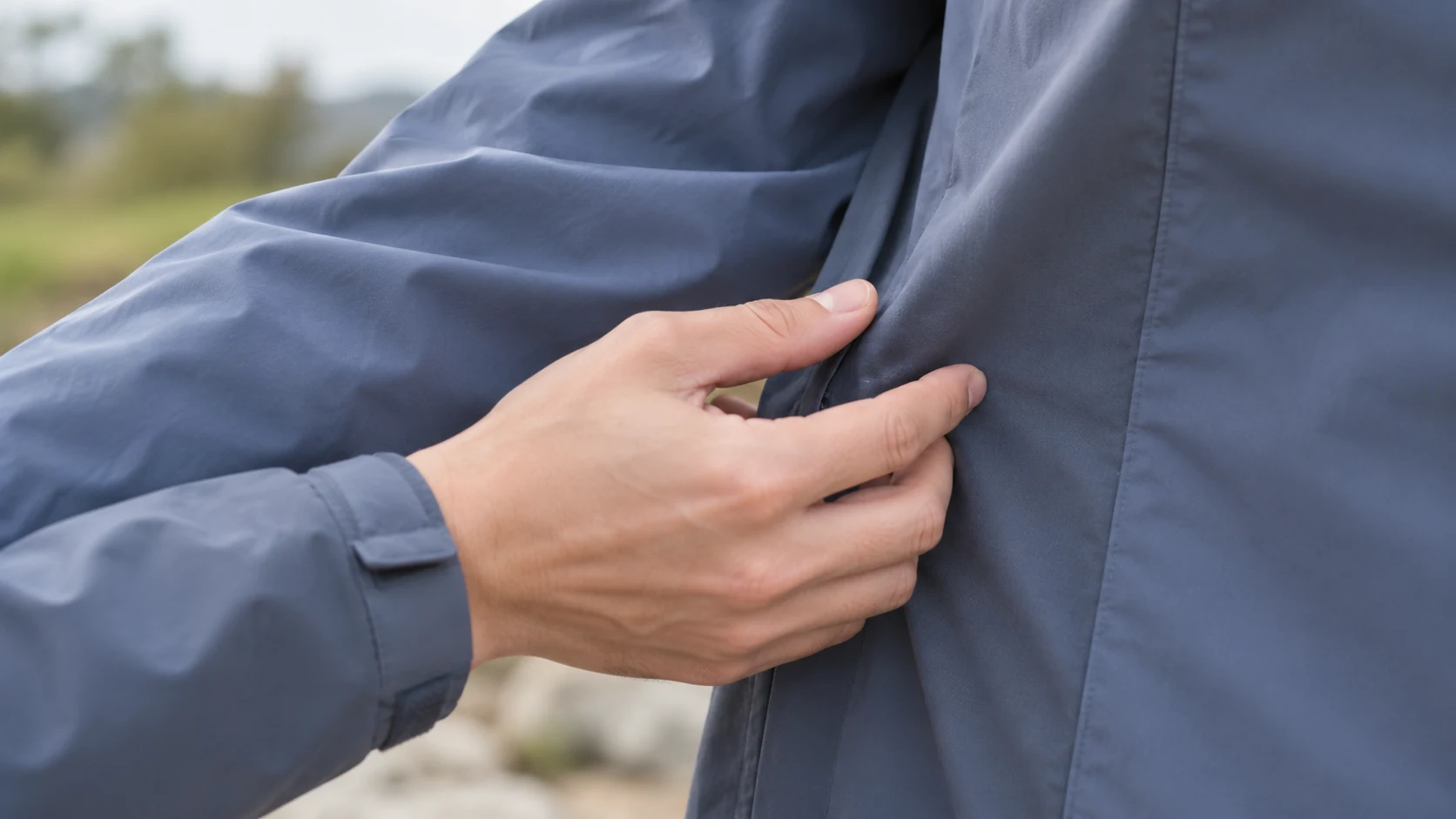
Next inspect the finished jacket. Shoulder seams, pocket openings, front closure and the hood-to-collar junction can let water through even when the main fabric performs well. Water can also enter at the cuffs or neck without passing through the fabric. Ask whether the supplier has assessed the complete construction, and distinguish that evidence from a swatch report.
A hunting waterproof jacket should be selected alongside the trousers and footwear it will meet. A short front hem may expose the waist when sitting. Pocket openings that face upward can collect rain. None of these shortcomings is resolved simply by selecting a higher-rated membrane.
Will a breathable hunting jacket prevent sweating?
Breathability helps moisture escape, but it cannot guarantee a dry interior during hard walking. ISO 11092:2026 measures thermal and water-vapour resistance under defined conditions. It does not predict personal comfort for a particular hill, pack or weather forecast. Compare two quoted results only when their methods and units are compatible.
The practical solution is to manage insulation before the approach becomes strenuous. A thin base layer and adjustable vents may suit the walk in; a separate insulating layer can be added after stopping. A heavy brushed face may be welcome during a cold wait yet feel excessive on a warm climb. The intended activity sequence should drive the purchase.
Check whether ventilation remains usable with a pack. An underarm zip hidden behind straps or difficult to operate with gloves may contribute little in practice. The breathable waterproof jacket guide explains why moisture transfer, ventilation and rain protection need separate consideration.
Which hood and pockets work with hunting layers?
Use three fitting positions: standing, seated and reaching forward. This is a suggested sample-check sequence, not a prescribed standard. Repeat it with the thickest intended midlayer and the actual pack. Fabric testing to ISO 811 cannot establish these fit results, so a complete purchasing brief needs both laboratory evidence and garment trials.
The hood should turn with the head without obstructing side vision. A fixed hood removes one detachable junction to manage, while a removable design offers flexibility; neither construction automatically proves better waterproofness. Check peak stability, collar comfort and whether cords remain controlled. A large hood designed around a helmet can be frustrating for a wearer using only a cap.
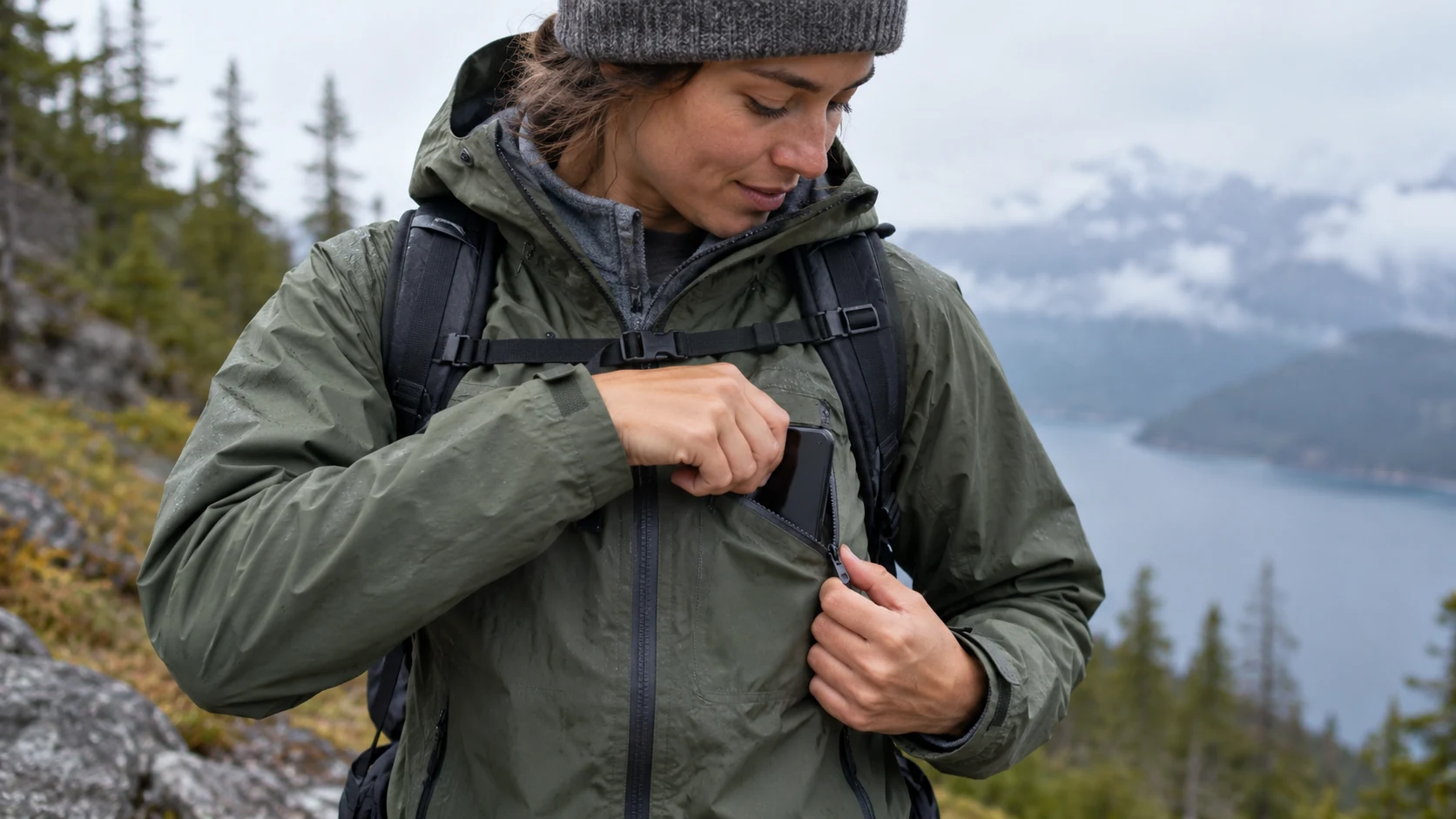
Place essential pockets where the wearer can reach them while seated or wearing a waist belt. Quiet zip pulls and controlled flap closures may matter more than the total pocket count. Camouflage should match the environment and intended use, while any legally required hunter-visibility clothing remains a separate local requirement.
Which rainwear construction makes the better purchase?
| Bauarbeiten | Useful advantage | Trade-off to check | Buying evidence |
|---|---|---|---|
| Lightweight rain shell | Easy to carry for changing weather | Rustle, abrasion and coverage | Fabric report and loaded-pack fitting |
| Soft-faced waterproof shell | Potentially quieter handling | Weight, drying and warmth during exertion | Same-condition sample comparison |
| Water-resistant softshell | Comfortable movement in suitable conditions | May lack sustained rain protection | Accurate claim scope and intended use |
The cheapest unit price can become expensive if sizing errors or unsuitable fabric lead to returns. Compare purchase price, fitting samples, care requirements, repairs and expected replacement needs. No credible return-on-investment figure exists without actual order and service data; a useful starting point is to track the reasons returned garments were rejected.
How should the jacket change with the hunting environment?
| Use pattern | Priority | Sample check |
|---|---|---|
| Long walk before a stationary wait | Ventilation and removable insulation | Operate vents with the pack fitted |
| Frequent wet vegetation contact | Face-fabric durability and seam condition | Inspect high-contact panels after a trial |
| Seated use in steady rain | Waist coverage and accessible pockets | Sit with normal trousers and layers |
| Emergency shell carried in a pack | Packed size and quick dressing | Put it on over the complete outfit |
Which standards and claims should buyers verify?
ISO 811 addresses fabric water penetration; ISO 11092 addresses thermal and water-vapour resistance. Neither makes a garment certified hunting equipment. EN 343 concerns protective clothing against rain when that use and market require it, while ordinary private-use weather clothing is excluded from the EU PPE Regulation’s scope. Buyers should establish intended use before requesting a mark or certificate.
A fishing waterproof jacket may share useful weather features, but its cut, pocket placement and fabric noise still need checking for hunting. A category label does not establish equivalence. Unsupported certification or scent-control claims can create misleading listings and customer disputes.
What should go into a supplier’s sample brief?
- Specify the activity sequence, typical layers and pack rather than only a season.
- Approve noise and movement on a finished sample, with the reference sample retained.
- Request traceable fabric and construction evidence for the exact proposed materials.
- Agree care instructions and the procedure for reporting leaks or seam damage.
Yuelei Sports offers outdoor rainwear for B2B enquiries. A individuelle wasserdichte Regenschale enquiry should include these practical requirements; any claim about a particular model’s certification, quietness or performance should depend on its supporting documents. The best hunting waterproof jacket is the one that meets the agreed use brief, not an unsupported universal ranking.
Allgemeine Fragen
What makes a waterproof jacket for hunting quieter than a standard rain shell?
A softer face, less panel friction and quieter closures can reduce rustle. Compare complete samples during movement; a soft feel alone does not establish either waterproofness or measured acoustic performance.
How waterproof should hunting outerwear be for all-day rain?
There is no universal rating that guarantees an entire day dry. Check the fabric test, sealed seams, openings, coverage and intended field conditions together.
Is a breathable hunting jacket important for walking to a stand?
Yes, but ventilation and suitable insulation remain important. Open appropriate vents before overheating and add warmth after stopping when conditions require it.
Which camouflage or neutral colours work best for the hunting environment?
Match vegetation, light and the intended activity. Local requirements for visible hunter clothing take priority; camouflage is not a reason to omit required safety colours.
Should hunting rain gear have a detachable hood or a fixed hood?
A fixed hood is convenient in persistent rain. A detachable hood provides flexibility but adds a junction to inspect. Fit, coverage and construction quality decide the result.
How do I keep a hunting waterproof jacket clean without adding scent?
Follow its care label and use a compatible unscented cleaner where permitted. Avoid fragrance additives and fabric softener unless approved. Cleaning does not establish that a garment becomes scent-free.
Hinweise
- ISO 811: resistance to water penetration
- ISO 11092: Wärmebeständigkeit und Wasserdampfdichtigkeit
- Outdoor Life: comparative hunting rainwear testing
- EU Regulation 2016/425 on personal protective equipment
A dependable hunting shell earns its place during the movements between standing still and staying dry. Contact Yuelei Sports with the intended conditions, layers and sample requirements to discuss a waterproof jacket for hunting specification.