 Xiamen Yuelei Sports Co., Ltd.
A beginner’s biggest clothing risk is not simply feeling cold. It is arriving with a thick but inflexible outfit, sweating during the lesson, then cooling rapidly while waiting or riding an exposed chairlift. Another common failure is treating rental availability as a certainty and discovering at pickup that base layers, gloves, or suitable sizes are not included. A reliable day-one plan therefore starts with decisions: what touches the skin, what adds removable warmth, what blocks wind and snow, and what must fit with boots, helmet, and gloves. This guide provides that path, including fabric choices, shell-versus-insulated trade-offs, ownership and rental boundaries, a packing table, and evidence checks for buyers specifying beginner ranges.
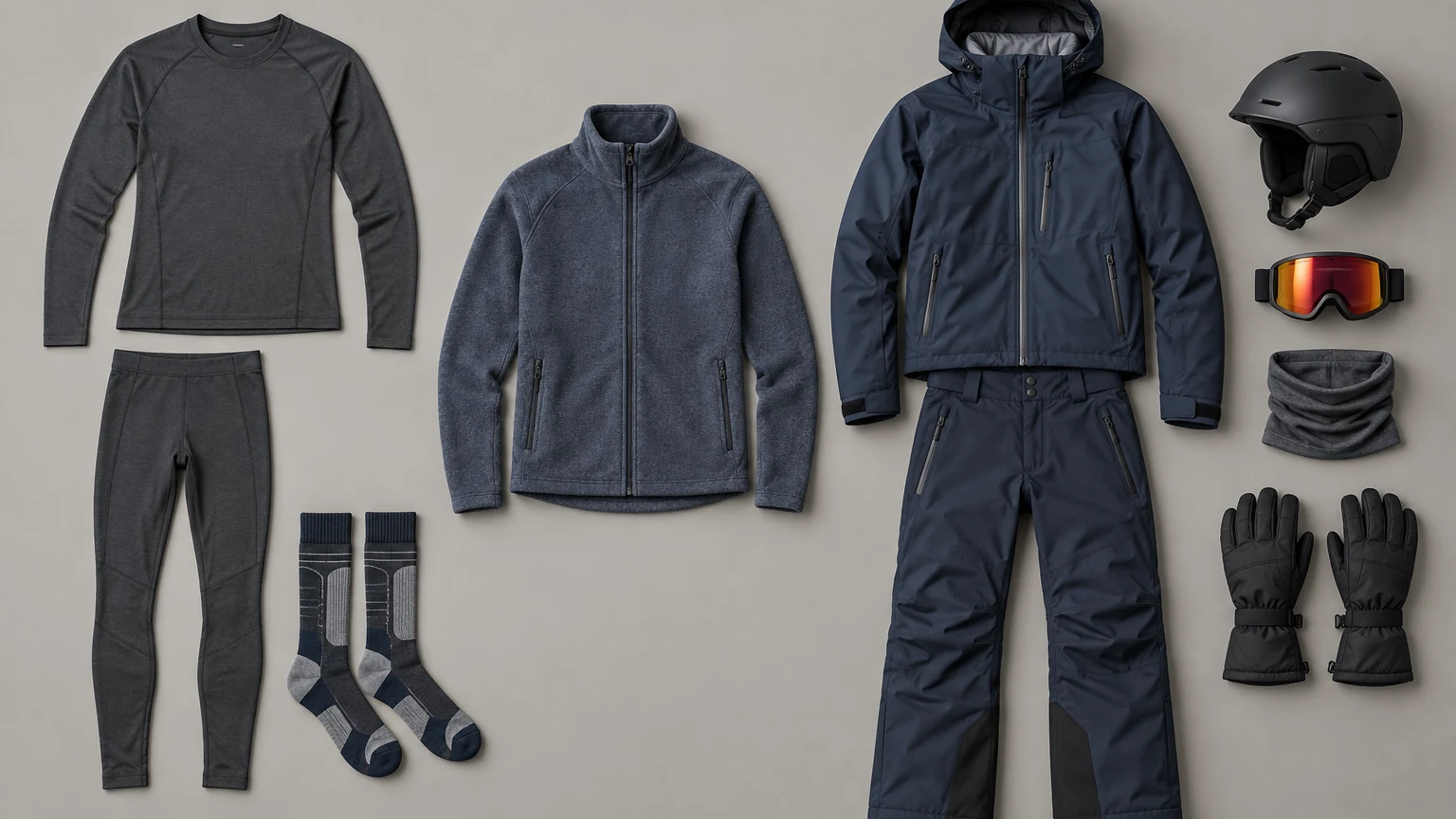
Quick answer: A first-day system needs a moisture-managing base top and bottom, an adjustable midlayer, weather-protective jacket and pants, one pair of ski socks, gloves or mittens, a low-bulk neck gaiter, goggles, and a helmet. The practical choice is an adjustable skiing clothes set, not the thickest available outfit. A shell plus removable insulation covers the widest activity range; an insulated jacket can be simpler for consistently cold, slower days. Check the forecast and rental inventory, then try the complete system in a squat, forward reach, seated posture, and overhead reach before leaving home.
What Should Beginners Wear on Their First Ski Day?
The search for clothes for skiing beginner often produces a long list, but each garment needs one job. The base manages skin-side moisture, the midlayer adds removable insulation, and the outer layer limits wind and precipitation. A breathable base cannot prevent dampness if excessive insulation traps heat, and a good shell cannot restore warmth if wet cotton is held against the skin.
Which Base-Layer Fabric Should a Beginner Choose?
Select a fitted long-sleeve top and full-length bottom in merino wool, polyester, or a suitable blend. Merino can buffer moisture and odor; many synthetics dry quickly. Check fabric weight, seam placement, stretch, drying instructions, and skin feel rather than fiber name alone. Cotton is a weak default because it can retain moisture and dry slowly.
ISO 11092 uses a sweating guarded-hotplate method to measure thermal and water-vapour resistance under steady-state conditions. It can compare stated specimens, but it does not assign an outdoor temperature or certify that finished skiing clothes will keep every skier comfortable. A useful report identifies the specimen, conditioning, edition, result, and units.
When Should a Beginner Add or Remove a Midlayer?
A low-bulk fleece or light synthetic layer is easier to manage than two thick sweaters. It should retain loft, allow full shoulder motion, and come off easily. Start slightly cool rather than hot indoors; early ventilation is easier than drying sweat later. Pack a dry base top for uncertain conditions, but do not wear duplicate base layers by default.
How Should Outerwear Handle Changing Activity Levels?
A shell separates weather protection from insulation, so the midlayer can be added or removed. It suits mixed temperatures and active lessons. An insulated jacket combines warmth and protection; it can suit cold conditions, long lift periods, or slower beginners. Neither design is inherently warmer without details about insulation, wind, moisture, fit, ventilation, and activity.
| Outerwear route | Best fit for day one | Adjustment range | Fit and care risk | Cost tendency |
|---|---|---|---|---|
| Uninsulated shell plus midlayer | Variable weather or active lesson | High; insulation can be removed | Needs room for the intended layer stack and aligned vents | More separate pieces, but broad reuse potential |
| Insulated jacket and ski pants | Consistently cold, slower-paced day | Moderate; vents help, but insulation stays in place | Overheating and slow drying are possible if insulation is excessive | Simpler issue process; fewer garments to track |
| Rented outerwear | One-off visit with verified stock and sizing | Depends on provider’s range | Unknown care history, late fitting, or limited sizes | Low ownership burden; repeat fees accumulate |
| Ordinary winter streetwear | Only if construction, movement, and weather protection are suitable | Often limited | Cotton, exposed gaps, restricted movement, or poor boot interfaces | Low immediate spend, with higher mismatch risk |
What Should You Adjust Before a Chairlift Ride?
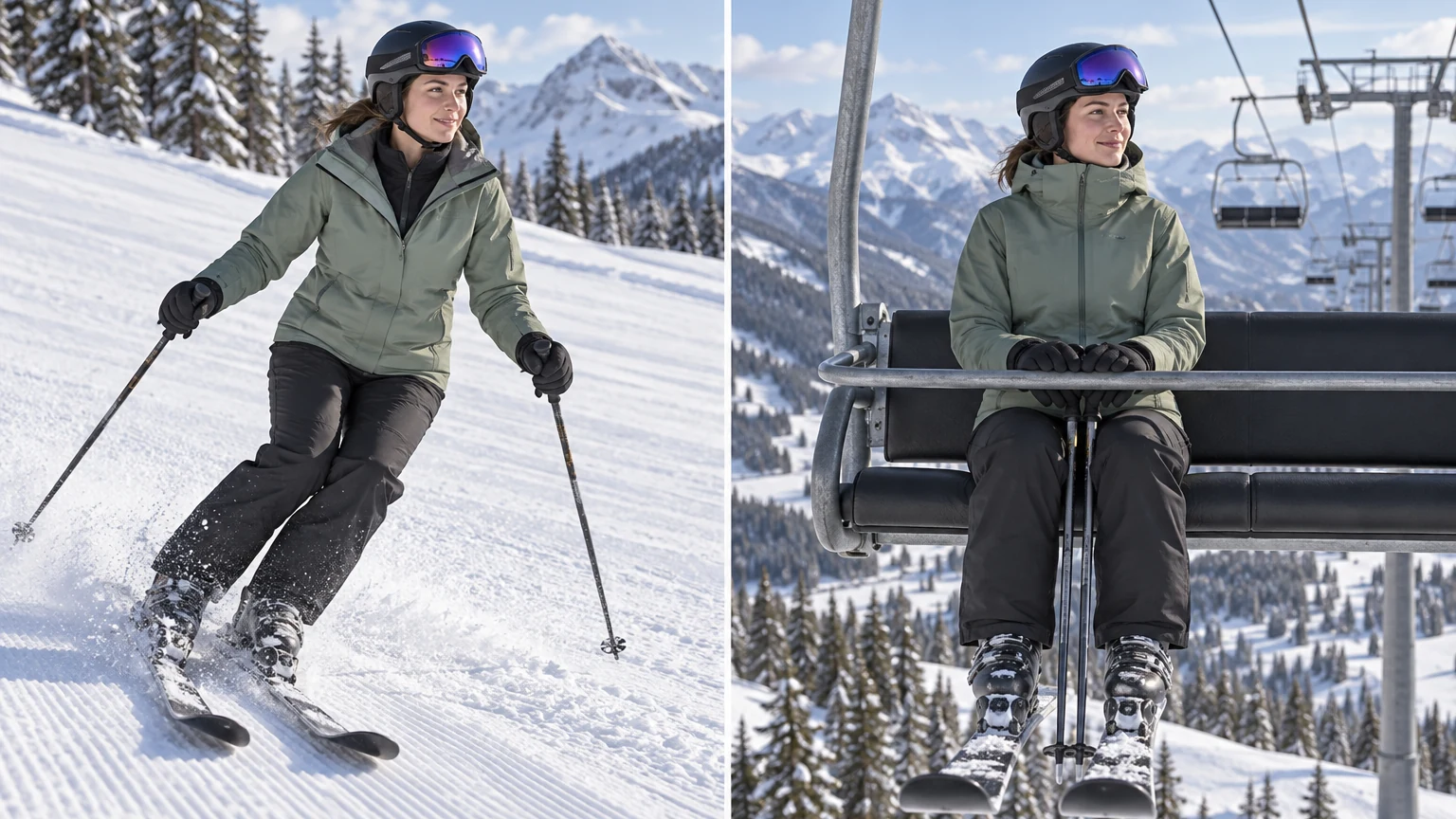
Turns generate heat; queues and chairlifts remove that heat source while wind exposure continues. Before an active run, open vents or remove a midlayer before sweating. Before the lift, close vents, restore neck and wrist coverage, and replace the layer if needed. This transition is why modular clothes for skiing can outperform one heavy garment with no adjustment path.
How Do You Protect Hands, Feet, and Neck Without Adding Bulk?
Wear one smooth wool or technical-blend ski sock per foot. Doubling socks can create folds, pressure, and less boot space. Keep base-layer hems above the boot cuff. A dry pair is useful after skiing, not as an extra layer inside the boot.
Gloves offer dexterity; mittens can reduce exposed surface area around the fingers. Either should allow a full fist, overlap the cuff, and operate zippers. A low-bulk neck gaiter closes the collar gap without loose scarf ends. These items belong in a complete skiing clothes set because one wet or poorly fitted interface can undermine the jacket.
NIOSH identifies wetness, wind, inadequate clothing, and exhaustion as cold-stress risks and recommends layered clothing plus protection for the ears, face, hands, and feet. This is occupational guidance, not ski-apparel certification. Keep layers dry, provide warming opportunities, and act on numbness, uncontrolled shivering, confusion, or loss of coordination.
How Should the Full Outfit Fit?
Base layers should sit close, midlayers should retain loft, and outerwear should leave movement ease. Test the full clothes for skiing beginner stack with helmet, goggles, gloves, and socks. Perform an overhead reach, deep knee bend, boot-buckle stance, and seated posture. Reject pulling shoulders, binding knees, exposed waists, blocked head movement, or separated cuffs.
Which Ski Clothing Items Should Beginners Buy or Rent?
Skis, boots, poles, and helmets are commonly rented, while outerwear availability varies. Treat base layers, socks, gloves, and neckwear as personal items. Confirm the package, size range, fitting time, exchange process, and whether goggles are included; “ski package” is not specific enough.
| Day-one item | Own or rent? | Decision check before travel | Common wrong choice |
|---|---|---|---|
| Base top and bottom | Own | Confirm non-cotton fabric, fit, seams, and care instructions | Jeans, cotton leggings, or a bulky hoodie |
| Midlayer | Own or borrow | Ensure it can be removed and still fits under the jacket | Stacking several thick layers |
| Camisa y pantalones | Rent for one-off use if sizes and condition are verified; own for repeat use | Check weather protection, vents, mobility, cuff overlap, and drying plan | Assuming ordinary streetwear is sufficient |
| Socks, gloves, and neck gaiter | Own | Check dry spares, boot room, cuff overlap, and low-bulk collar fit | Double socks or a loose scarf |
| Helmet, skis, boots, and poles | Rent for a first day | Reserve the correct package and allow time for professional fitting | Accepting pressure points or helmet movement to save time |
| Goggles | Own or rent only if explicitly included | Check helmet compatibility, visibility, and lens condition | Assuming sunglasses cover all wind and snow conditions |
Pack clothes for skiing as one wearable unit, plus a dry base top and ordinary dry socks for the trip home. Keep après clothing separate so travel layers do not become an improvised slope solution.
What Can Test Methods and Care Labels Actually Prove?
ISO 11092 compares thermal and water-vapour resistance under steady-state conditions; it does not certify garment comfort. ISO 6330 specifies domestic washing and drying procedures for textile testing; paired with a stated assessment, it can support dimensional-stability or appearance evaluation, not a durability guarantee. Specify the edition, specimen, cycles, evaluation criterion, and report source.
For products sold in the United States, the FTC Care Labeling Rule requires covered manufacturers and importers to attach care instructions and have a reasonable basis for them. Care wording should align with the fabric, insulation, trims, seams, and finishes. Test methods, reports, and legal labeling obligations answer different questions; none is an automatic product certification.
What Should Buyers Include in a Beginner Ski-Wear Brief?
Yuelei Sports supports B2B buyers developing beginner outerwear programs, but the brief should begin with use conditions rather than a generic warmth claim. Treat a coordinated wholesale ski clothing program as a system whose fit, evidence, care, and issue process are approved together.
- Define the day. Record forecast range, wind, precipitation, lesson intensity, chairlift time, indoor access, and rental coverage.
- Congela la pila de capas. Identify the base and midlayer that will be worn during shell fitting; do not approve outerwear over a T-shirt alone.
- Choose modularity deliberately. Compare separate jackets and pants with integrated trajes de esquí according to dressing speed, weather range, restroom access, fit, drying, repair, and inventory needs.
- Verify every claim. Match thermal, water-vapour, dimensional-stability, or care statements to the exact test method and product scope.
- Pilot representative sizes. Approve the smallest, middle, and largest planned sizes using the full layer stack and movement sequence before scaling an order.
If a search brief uses the phrase clothes for skiing beginner, translate it into measurable requirements: body measurements, layer allowance, activity pattern, weather exposure, accessory interfaces, care process, and claim evidence. That conversion prevents a vague consumer phrase from becoming a vague purchase specification.
Preguntas frecuentes
What is the best layering system for skiing clothes?
The best skiing clothes system uses a fitted moisture-managing base layer, removable low-bulk insulation, and a weather-protective outer layer with usable ventilation. The exact weights depend on wind, moisture, activity, lift time, and personal physiology, so verify the forecast and test the complete stack in motion.
What should I wear under skiing clothes in a beginner’s first day?
Wear a merino, synthetic, or suitable blended base top and bottom, then add one fleece or light synthetic midlayer if conditions require it. Avoid cotton, bulky hems inside boots, and extra pieces that restrict movement; under clothes for skiing, every layer should have a defined moisture or insulation role.
Do I need an insulated jacket or a shell for a beginner’s first day?
A shell plus a removable midlayer offers the widest adjustment range for changing activity and weather. An insulated jacket is reasonable for a consistently cold, slower day when simplicity matters, provided the complete outfit has enough ventilation and movement room.
How can I avoid choosing the wrong layers while skiing?
Start with conditions and activity, not garment thickness. Dress slightly cool, vent before sweating, restore coverage before the lift, carry a dry base top, and reassess at the first sign of dampness or restricted movement; this keeps the skiing clothes set adjustable throughout the day.
Are ski clothes and snowboard clothes interchangeable?
They can be when weather protection, mobility, coverage, and equipment interfaces work for the intended activity. Snowboard cuts may be roomier or use different reinforcement and cuff placements, so test stance, seat and knee coverage, boot interface, and pocket access rather than relying only on the product label.
How should ski clothing fit so it is warm but still easy to move in?
The base layer should remain close without constriction, the midlayer should retain loft, and the shell should accommodate the full stack without pulling across the shoulders, hips, or knees. A well-fitted skiing clothes system also maintains jacket-pant overlap and glove-cuff coverage during a squat, reach, and seated posture.
Referencias
- International Organization for Standardization, ISO 11092:2026, Textiles—Physiological effects—Measurement of thermal and water-vapour resistance under steady-state conditions.
- International Organization for Standardization, ISO 6330:2021, Textiles—Domestic washing and drying procedures for textile testing.
- U.S. Federal Trade Commission, Clothes Captioning: Complying with the Care Labeling Rule.
- CDC/NIOSH, Cold and Work: Types, Causes, Preparation.
- NOAA National Weather Service, Cold Weather Safety.
Final Buying Rule for Beginner Ski Clothing
The beginner decision is not “warm or light”; it is how to stay dry, protected, mobile, and able to adjust across a stop-start day. Confirm the weather and rental package first, select the base fabric and removable insulation second, and fit the outerwear over that exact stack. Do not skip the movement test, accessory interfaces, care instructions, or claim evidence for the sake of convenience. A sound system protects exposed gaps without crowding the boots or compressing insulation. For resort, rental, distributor, or private-label planning, Yuelei Sports can help translate those use conditions into a sample and documentation brief; review the ski jacket category and contact the team with the intended climate, size range, layer stack, and care requirements.