 Xiamen Yuelei Sports Co., Ltd.
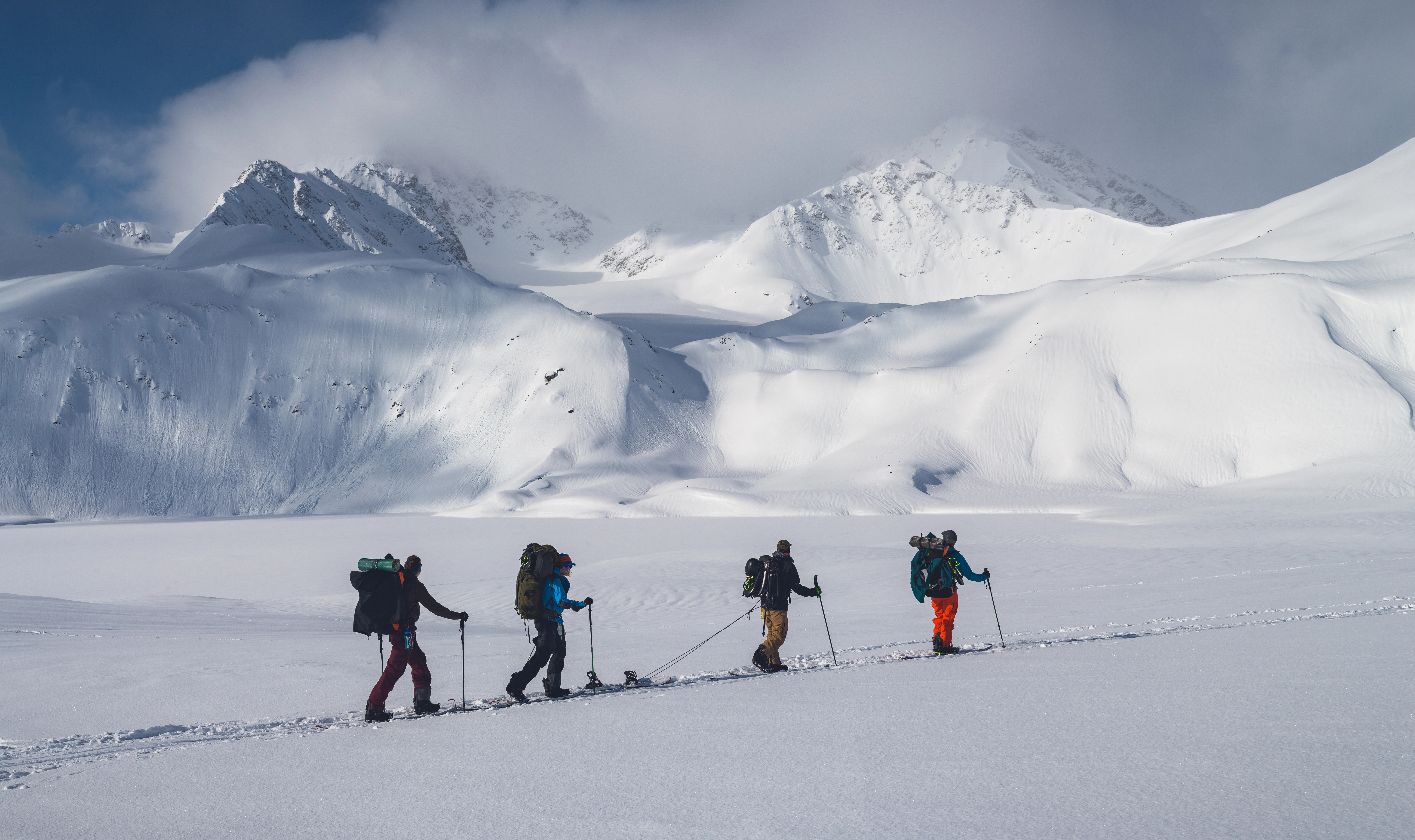
When a technical engineer in Charleston, South Carolina, encountered a summer sizing decision for a paddling collection, she reviewed fabric claims, approved a roomy sample, and joined a two-hour sea-kayak trial. After 40 minutes, the paddler’s base layer was soaked with sweat, the oversized torso pooled heat under the PFD, and testers blamed the waterproof shell. The reversal was revealing: the dry suit for kayaking was not necessarily too hot—the specification had ignored vapor resistance, solar load, clothing layers, and exertion.
Resumen: A summer drysuit can be practical when cold water makes immersion dangerous, but a heavy non-breathable shell or excessive insulation can cause heat stress. ISO 11092 measures thermal and water-vapor resistance; ISO 811 addresses waterproofness. Buyers should select a lightweight 3-layer breathable shell, minimize unnecessary insulation, design task-specific ventilation and fit, and publish clear “when not to wear” guidance. Water temperature—not air temperature alone—should drive the decision.
The honest answer is conditional: a Caída de kayak con traje de neopreno system manages cold-water exposure, while the human body still produces heat. A paddler working at 400–600 W metabolic output can overwhelm poor moisture transport even on a mild day. Breathability reduces condensation; it does not create active cooling or make high heat harmless.

1. Why Can a Summer Drysuit Feel Hot?
Heat moves through conduction, convection, radiation, and evaporation. A waterproof garment blocks evaporative cooling unless its membrane transports water vapor. ISO 11092 reports water-vapor resistance (Ret); lower Ret generally indicates easier vapor transfer under the test conditions.
- A dark shell can absorb more solar radiation than a light shell.
- A PFD covers a large torso area and reduces local vapor transfer.
- High humidity narrows the vapor-pressure difference that drives moisture outward.
- Cotton holds moisture; synthetic or wool base layers move it away from the skin.
A breathable dry suit should therefore be qualified with an agreed ISO 11092 result, not only a fabric trade name. Finished-garment seam tape and reinforcement can occupy enough surface area to change real comfort.
2. Waterproof vs. Breathable: What Should Buyers Test?
ISO 811 measures resistance to water penetration under hydrostatic pressure; it does not measure comfort. ISO 11092 measures thermal and evaporative resistance; it does not guarantee waterproof seams. A robust brief uses both.
| Metric | What it answers | Acción de adquisición |
|---|---|---|
| ISO 811 hydrostatic result | Does fabric resist liquid water? | Set initial and after-aging values |
| ISO 11092 Ret | How strongly does fabric resist vapor? | Compare like-for-like conditioned specimens |
| Seam leakage | Does construction defeat the fabric? | Test seam intersections and seat |
| Wear trial | Can users paddle without heat/mobility failure? | Run 60–120 minute task trials |
| Care aging | Does performance survive laundering? | Agree ISO 6330 cycles before retest |
Marketing numbers such as “20K/20K” are not comparable unless the method, units, conditioning, and laboratory are the same. We recommend keeping raw reports in the technical file.
3. What Design Features Reduce Summer Heat?
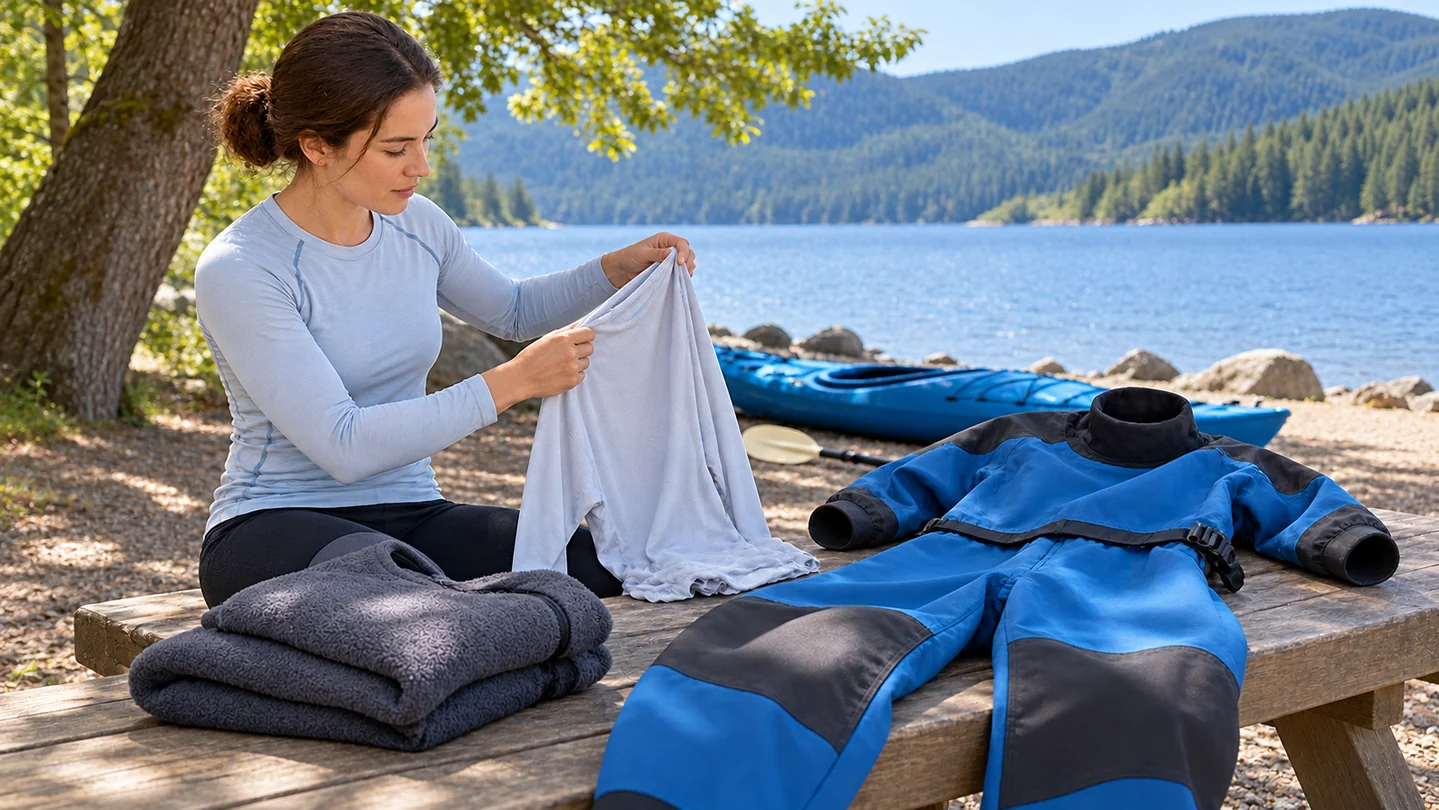
A well-specified kayak dry suit uses a lightweight 3-layer shell, articulated shoulders, minimal but strategic reinforcement, and enough pattern ease for rotation without creating billowing folds. The double waist tunnel must work with the spray deck, while the relief zipper and entry zipper should avoid pressure points under a PFD.
Useful design controls
- Light exterior colors for exposed panels;
- Breathable socks instead of unnecessarily heavy integrated boots;
- Reinforcement restricted to seat, knees, and high-wear zones;
- A PFD-compatible torso pattern with no oversized air pocket;
- Adjustable cuffs over waterproof wrist seals—but never open vents that compromise immersion protection.
4. Drysuit, Wetsuit, or Splashwear?
| Conditions | Likely system | Main risk |
|---|---|---|
| Cold water, warm air | Light dry suit for kayaking + thin base layer | Overheating on land |
| Moderate water, frequent immersion | Thin wetsuit or breathable drysuit after risk assessment | Cold shock vs. heat balance |
| Warm water, low consequence | Splashwear or quick-dry apparel | Sun and weather exposure |
| Remote/cold current | Drysuit with task-specific insulation | Under-insulation after capsize |
The U.S. National Weather Service warns that cold water can rapidly impair breathing and movement. A warm afternoon does not make cold water benign; local forecasts, route, rescue time, and individual condition matter.
5. Hidden Cost and ROI for Summer Programs
Breathable laminates usually cost more than coated non-breathable shells, but field complaints can reverse the apparent saving. For an illustrative 800-unit retail order, reducing heat/fit returns from 7% to 4% prevents 24 cases. At a hypothetical $45 handling and write-down cost, the avoided direct loss is $1,080.
| Cost driver | Low-cost shell risk | Breathable system control |
|---|---|---|
| Returns | Sweat mistaken for leakage | Test data and user education |
| Warranty | Coating delamination | Aging and wash validation |
| Inventory | One heavy model for all seasons | Segment summer and cold SKUs |
| Brand risk | “Too hot” reviews | Temperature/activity guidance |
6. Standards, Labels, and Safety Boundaries
- ISO 11092: thermal and water-vapor resistance.
- ISO 811: hydrostatic water penetration.
- ISO 15027-1: constant-wear immersion-suit requirements where applicable.
- ISO 3758: standardized textile care symbols.
- EU Regulation 2016/425: applicable when sold as PPE in the EU.
A breathable dry suit must not be promoted as heat-proof, and a garment should not carry unsupported CE, survival-time, or immersion claims. Commercial consequences include relabeling, chargebacks, recalls, and lost distributor trust.
7. How Should Buyers Specify a Summer Model?
- Record water temperature, air temperature, humidity, sun exposure, activity, and rescue time.
- Request ISO 11092 and ISO 811 reports for the intended laminate and aged material.
- Wear-test with the intended base layer, PFD, spray deck, and cockpit.
- Publish a layering matrix and a clear decision boundary for extreme heat.
- Inspect seam tape, socks, seals, and zippers under ISO 2859-1 sampling plans.
Yuelei Sports provides OEM/ODM paddling drysuit programs with buyer-specified laminates, sizing, reinforcement, and test plans. The kayak dry suit platform supports cockpit-oriented patterns, while a lightweight waterproof model supports active programs; evidence must be confirmed for each market.
FAQ
Can you wear a dry suit for kayaking in summer?
Yes, when cold-water risk justifies it and the shell, base layer, route, and rest plan control heat. It may be inappropriate in extreme heat.
What should you wear under a dry suit in warm weather?
A light synthetic or merino base layer that moves moisture; never assume the drysuit provides cooling.
Does a breathable dry suit stop sweating?
No. It lets some vapor escape, but exertion can exceed the transport rate—especially under a PFD or in high humidity.
Is a wetsuit cooler than a drysuit?
Often on land, but water temperature and immersion time determine protection. A wetsuit permits water entry and works by trapping a thin warmed layer.
How can a paddler tell sweat from a leak?
Condensation is often diffuse; leaks create localized wet paths near seams, seals, socks, or zippers. A controlled leak test should confirm the cause.
Referencias
- ISO 11092 — Thermal and water-vapour resistance
- ISO 811 — Resistance to water penetration
- U.S. National Weather Service — Cold Water Hazards and Safety
- EUR-Lex — Regulation (EU) 2016/425
Summer comfort is not created by one membrane number; it comes from aligning cold-water protection with the body’s real heat load.
Yuelei Sports builds every dry suit for kayaking program for that balance. Buyers can contact the team to translate climate, activity, fit, and test requirements into a repeatable summer specification.