 Xiamen Yuelei Sports Co., Ltd.

When a technical engineer in Portland encountered a size-selection dispute, he followed a general waterproof-clothing tutorial and confidently put a newly received wader sample through a 60°C machine cycle. By the next morning, the boot interface felt tighter, the lining had puckered, and the sample no longer matched the approved fit. The product was not simply “the wrong size”; the washing method had ignored the garment’s care label, seam construction, and mixed materials. That failure raised the real search question: can machine washing be safe for Breathable Waders?
Resumen: The honest answer is: only when the manufacturer’s care label expressly permits it. Simms tells users to hand-wash waders in water up to 105°F/40°C, while GORE-TEX allows many membrane outerwear garments to be machine-washed at 40°C. Buyers should therefore treat the label—not a generic tutorial—as the controlling instruction; use liquid technical cleaner, avoid bleach and softener, rinse twice, and validate waterproofness after repeated care cycles.
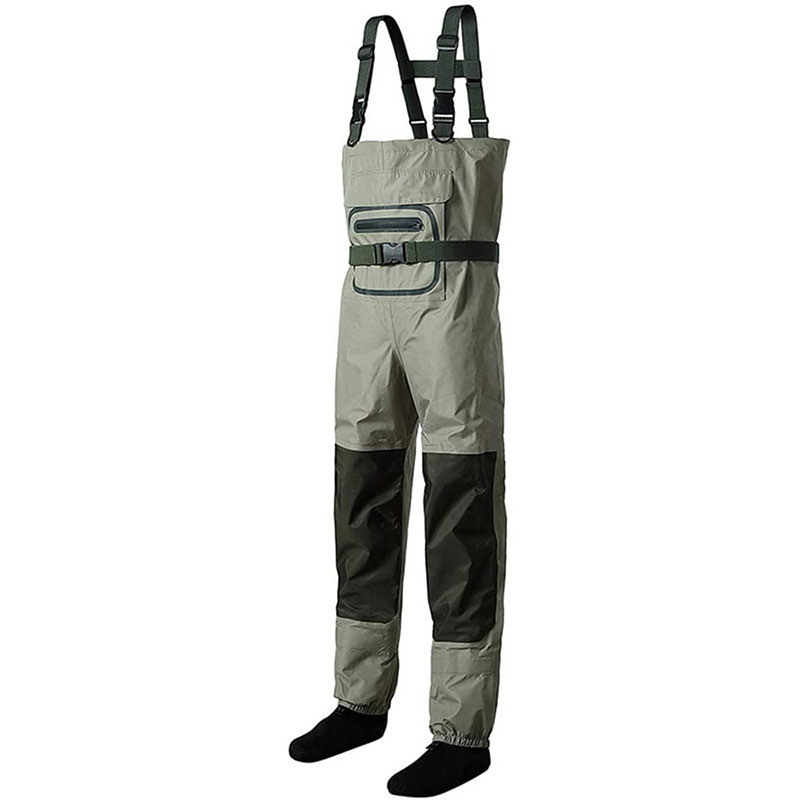
Breathable Waders use a membrane or microporous coating to block liquid water while moving water vapor outward. Dirt, body oil, salt, and detergent residue can reduce that vapor transfer; however, aggressive washing can damage seam tape, coatings, buckles, boots, or insulation. Regular cleaning protects performance only when the complete garment—not merely the shell fabric—can tolerate the process.
Why Washing Instructions Differ Between Wader Constructions
A 3-layer laminate typically combines a face fabric, waterproof-breathable barrier, and protective backer. The shell may tolerate 40°C washing, yet glued boots, neoprene feet, seam tape, suspenders, and waterproof zippers can have lower limits. ISO 6330:2021 supplies standardized domestic washing and drying procedures for textile testing, but it does not declare every assembled wader machine-washable.
- Stockingfoot shell: usually lighter, but neoprene feet and taped joins require gentle handling.
- Bootfoot shell: bulky footwear can unbalance a drum and repeatedly strike the laminate.
- Insulated construction: heat and agitation may shift or compress the thermal package.
- Welded PVC or neoprene: membrane-garment instructions do not automatically apply.
When Is a Washing Machine Acceptable?
Machine washing is acceptable only if the sewn-in label specifies a machine cycle. In that case, we recommend a front-loading washer, a gentle program at no more than the labeled temperature, low spin, a small dose of liquid technical wash, and two rinses. GORE-TEX specifies 105°F/40°C for its outerwear and prohibits powder detergent, bleach, stain remover, and fabric softener. Those chemicals can leave hydrophilic residues, attack adhesives, or impair durable water repellent (DWR) behavior.
If the label says hand wash—or is missing—hand washing is the conservative decision. That is especially important for breathable insulated waders y insulated breathable waders, whose insulation, boot adhesive, and shell may respond differently to heat and motion.
How to Clean and Dry Breathable Waders Safely
- Rinse mud, salt, and organic debris immediately after use.
- Close zippers and pockets; fasten buckles without overtightening straps.
- Inspect the label. Hand-wash unless machine washing is explicitly permitted.
- Use warm water up to 40°C and a small amount of liquid technical cleaner.
- Wash alone and rinse twice; residue can obstruct moisture transfer.
- Dry both sides completely in moving air, away from direct sun and high heat.
- Use low-heat tumble drying only when the label allows it; GORE-TEX suggests 20 additional minutes to reactivate DWR, while the specific wader limit still takes priority.
After cleaning, ISO 811 hydrostatic-pressure testing can compare water resistance before and after care cycles; ISO 15496 can track water-vapor permeability. A pass after one wash is not enough for a retail program—a buyer can specify 5, 10, or 20 labeled care cycles according to expected use.
Machine Wash vs Hand Wash: Performance and TCO
| Factor | Label-Approved Machine Wash | Hand Wash | B2B Implication |
|---|---|---|---|
| Labor | Lower; repeatable program | Higher; operator-dependent | Machine cycles suit controlled validation |
| Mechanical stress | Higher at boots and hardware | Lower when handled gently | Mixed-material failures may increase returns |
| Residue control | Good with two rinses | Good if water is changed | Residue can reduce breathability |
| Compatibility | Only as the label permits | Safest default for most builds | One care claim cannot cover every SKU |
| Hidden cost | Possible seam, DWR, or drum-damage claim | More cleaning time | TCO includes returns, support, and reputation |
For an illustrative 500-unit order with an $80 landed unit cost, a preventable 3% care-related return rate exposes $1,200 in product cost before freight, handling, and customer support. Testing the labeled process is inexpensive compared with correcting a misleading care claim after launch.
Care Matrix by Wader Type and Application
| Type | Likely Soil Load | Preferred Care Route | Procurement Check |
|---|---|---|---|
| breathable fishing waders | Salt, algae, body oil | Rinse after use; label-led wash | Seam and vapor tests after cycles |
| breathable hunting waders | Mud, vegetation, organic matter | Pre-rinse; gentle hand wash | Abrasion panels and odor control |
| breathable chest waders | Mixed field contamination | Hand wash unless label permits machine | Stockingfoot/bootfoot compatibility |
| outbound neoprene chest wader | Mud and perspiration | Cool hand wash; air dry | Foam, glue, and seam limits |
| pvc chest wader | Heavy surface dirt | Wipe or hand wash | Plasticizer, weld, and crack resistance |
Standards and Compliance Buyers Should Specify
- ISO 6330:2021: reproducible domestic washing and drying procedures for textile tests.
- ISO 811:2018: hydrostatic-pressure resistance before and after care cycles.
- ISO 15496:2018: water-vapor permeability for quality control.
- FTC 16 CFR Part 423: care-label instructions for textile wearing apparel sold in the United States.
An inaccurate label can turn normal maintenance into delamination, leakage, warranty disputes, or regulatory exposure. Test reports should identify the exact fabric, seam system, components, wash procedure, temperature, detergent, and number of cycles; a fabric-only result does not validate the assembled garment.

Selection Guide: Avoiding Care and Sizing Mistakes
- Approve fit before and after at least 5 labeled care cycles; measure chest, hip, inseam, and boot interface.
- Specify one care protocol per construction instead of copying a shell-fabric instruction across every SKU.
- Ask for post-wash ISO 811 and ISO 15496 results, seam photographs, and dimensional-change records.
- Leave layering allowance in cold-weather sizes; a care complaint can conceal an original fit error.
- Place the care label and QR-linked instructions where distributors and end users can find them.
Yuelei Sports provides custom Breathable Waders programs with construction-specific size development and testing documentation selected for the destination market. Because no blanket certification covers every wader, responsible sourcing relies on verified test methods and buyer-approved care claims—not an unsupported certification statement.
Preguntas frecuentes
Are breathable waders really breathable?
Yes. Breathable waders use waterproof-breathable membranes that allow sweat vapor to escape while blocking outside water. However, they are not as airy as normal clothing, and breathability can drop in humid, cold, or high-exertion conditions.
Should I get neoprene or breathable waders?
Choose neoprene waders for cold water, winter fishing, or low-movement activities. Choose breathable waders for warmer weather, long walks, hiking, or year-round layering flexibility.
Are breathable waders worth it?
Yes, breathable waders are worth it for most anglers who want comfort, lighter weight, and better mobility. They cost more than PVC or basic neoprene options, but they are usually more comfortable for long fishing sessions.
What is better, neoprene or breathable waders?
Neither is always better. Neoprene is warmer and more insulating, while breathable waders are lighter, more comfortable, and better for active use. The best choice depends on weather, water temperature, and activity level.
Do breathable waders keep you dry?
Yes, breathable waders keep outside water out if the seams, membrane, and boots or stockingfeet are intact. They also help reduce sweat buildup, but you may still feel damp inside if you overheat or wear poor base layers.
Are breathable waders good for cold weather?
Yes, breathable waders can work well in cold weather if you wear proper insulating layers underneath. Unlike neoprene, they do not provide much warmth by themselves, so cold-weather comfort depends on layering.
Are neoprene waders breathable?
No, neoprene waders are generally not breathable. They trap body heat well, which makes them warm in cold water, but they can feel sweaty or uncomfortable in mild or active conditions.
What is the best material for chest waders?
For most users, waterproof-breathable fabric is the best all-around material for chest waders because it balances comfort, dryness, and mobility. Neoprene is better for cold water, while PVC is usually cheaper but less comfortable.
Are PVC waders breathable?
No, PVC waders are not breathable. They are waterproof and affordable, but they trap sweat and heat, making them less comfortable for long use, warm weather, or active fishing.
{ "@context": "https://schema.org", "@type": "FAQPage", "mainEntity": [ { "@type": "Question", "name": "Are breathable waders really breathable?", "acceptedAnswer": { "@type": "Answer", "text": "Yes. Breathable waders use waterproof-breathable membranes that allow sweat vapor to escape while blocking outside water. However, they are not as airy as normal clothing, and breathability can drop in humid, cold, or high-exertion conditions." } }, { "@type": "Question", "name": "Should I get neoprene or breathable waders?", "acceptedAnswer": { "@type": "Answer", "text": "Choose neoprene waders for cold water, winter fishing, or low-movement activities. Choose breathable waders for warmer weather, long walks, hiking, or year-round layering flexibility." } }, { "@type": "Question", "name": "Are breathable waders worth it?", "acceptedAnswer": { "@type": "Answer", "text": "Yes, breathable waders are worth it for most anglers who want comfort, lighter weight, and better mobility. They cost more than PVC or basic neoprene options, but they are usually more comfortable for long fishing sessions." } }, { "@type": "Question", "name": "What is better, neoprene or breathable waders?", "acceptedAnswer": { "@type": "Answer", "text": "Neither is always better. Neoprene is warmer and more insulating, while breathable waders are lighter, more comfortable, and better for active use. The best choice depends on weather, water temperature, and activity level." } }, { "@type": "Question", "name": "Do breathable waders keep you dry?", "acceptedAnswer": { "@type": "Answer", "text": "Yes, breathable waders keep outside water out if the seams, membrane, and boots or stockingfeet are intact. They also help reduce sweat buildup, but you may still feel damp inside if you overheat or wear poor base layers." } }, { "@type": "Question", "name": "Are breathable waders good for cold weather?", "acceptedAnswer": { "@type": "Answer", "text": "Yes, breathable waders can work well in cold weather if you wear proper insulating layers underneath. Unlike neoprene, they do not provide much warmth by themselves, so cold-weather comfort depends on layering." } }, { "@type": "Question", "name": "Are neoprene waders breathable?", "acceptedAnswer": { "@type": "Answer", "text": "No, neoprene waders are generally not breathable. They trap body heat well, which makes them warm in cold water, but they can feel sweaty or uncomfortable in mild or active conditions." } }, { "@type": "Question", "name": "What is the best material for chest waders?", "acceptedAnswer": { "@type": "Answer", "text": "For most users, waterproof-breathable fabric is the best all-around material for chest waders because it balances comfort, dryness, and mobility. Neoprene is better for cold water, while PVC is usually cheaper but less comfortable." } }, { "@type": "Question", "name": "Are PVC waders breathable?", "acceptedAnswer": { "@type": "Answer", "text": "No, PVC waders are not breathable. They are waterproof and affordable, but they trap sweat and heat, making them less comfortable for long use, warm weather, or active fishing." } } ] }
Referencias
- Simms Fishing — Wader & Product Care
- GORE-TEX — Outerwear Care Instructions
- ISO 6330:2021 — Domestic Washing and Drying Procedures
- ISO 811:2018 y ISO 15496:2018 — Waterproofness and Water-Vapor Tests
The best care instruction is not the most convenient one; it is the one proven on the complete garment that will reach the water.
Good maintenance protects more than a membrane—it protects fit consistency, seam life, user confidence, and the buyer’s total cost. Yuelei Sports builds Breathable Waders for that moment; procurement teams can contact the company to discuss construction, size grading, care-label validation, and a sample testing plan.