 Xiamen Yuelei Sports Co., Ltd.
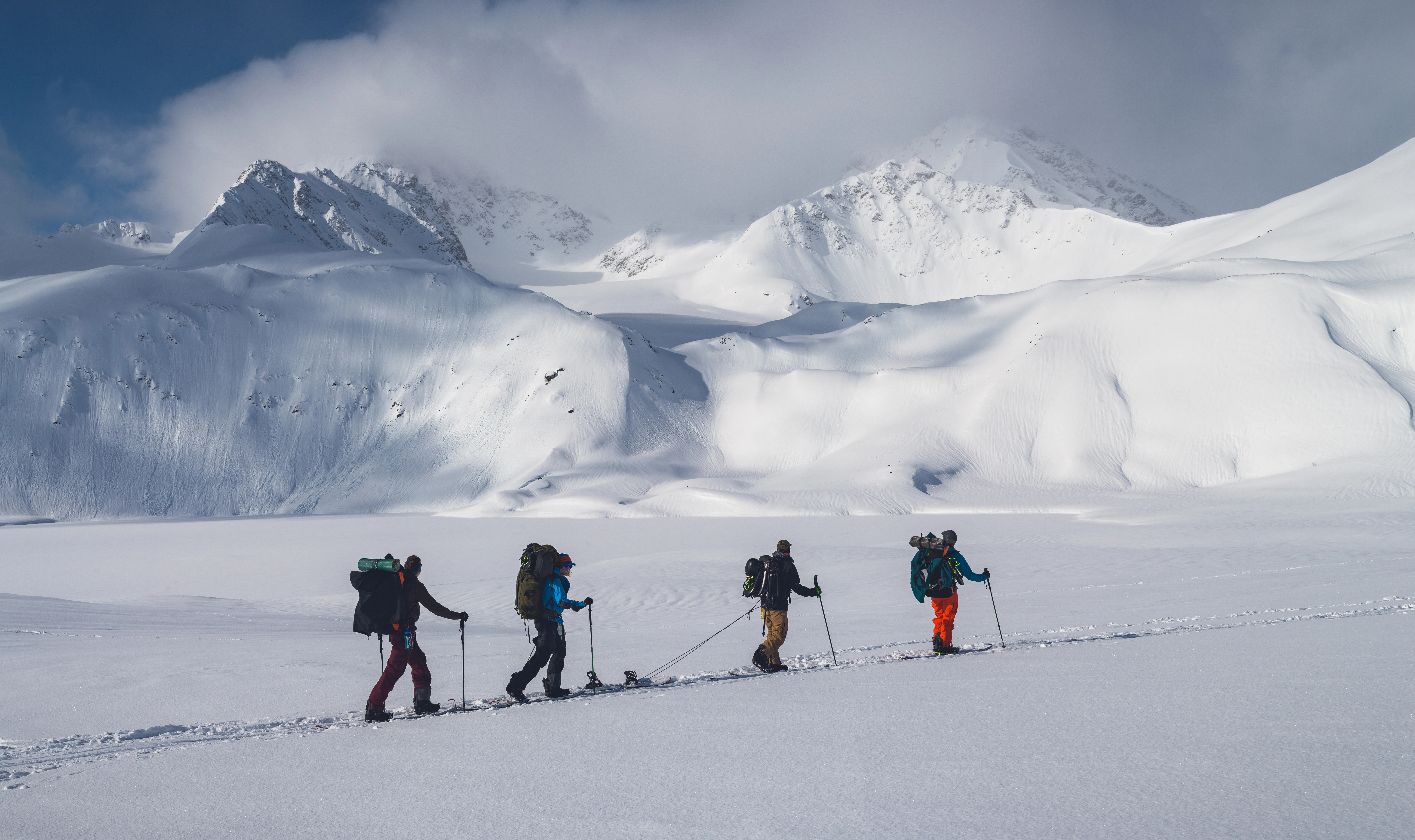
When a technical engineer in Hamburg encountered heavy dampness inside a dry suit for kayaking, he had selected the suit from the mild air forecast, then watched the paddler’s base layer become visibly wet within minutes of a hard launch. The first verdict was a defective membrane. The reversal came from the use conditions: cold-water immersion risk still required a dry barrier, while excessive insulation, high exertion and weak vapor transfer had created more moisture than the clothing system could move. This is an illustrative troubleshooting scenario, not a customer case study.
Résumé : Feeling hot is not, by itself, evidence that a dry suit has failed. ASTM E96/E96M measures water-vapor transmission under defined laboratory conditions, but no single result guarantees on-water comfort. Specify protection around water exposure rather than air temperature; then tune underlayers, workload and pre-launch cooling. A dry suit also does not replace a correctly fitted personal flotation device (PFD).

A dry suit uses a waterproof shell and sealed openings to reduce water entry during immersion. Comfort remains a system outcome: underclothing, fit, humidity, solar load, paddling intensity and cooling opportunities all interact. Buyers should separate leakage from internal condensation before approving a return.
Why waterproof protection can still feel clammy
Waterproofness and vapor transfer answer different questions
A waterproof barrier limits liquid water penetration; a breathable fabric allows some water vapor to pass when conditions create a driving force. That driving force is the vapor-pressure gradient between the warm, humid microclimate inside the suit and the environment outside. When both sides are warm and humid, or the face textile is saturated, the gradient can shrink and transfer can slow.
ISO 811 evaluates water-penetration resistance under hydrostatic pressure; ASTM E96/E96M covers gravimetric vapor-transmission procedures, including desiccant and water methods. They answer different questions, and results depend on method and conditions. One laboratory value cannot promise that every paddler will remain dry from perspiration.
Condensation is not the same as leakage
Leakage often follows a localized seam, seal, zipper or damaged panel; condensation is usually broader and tracks sweat, cold surfaces and trapped humid air. Map the dampness, record activity and weather, then inspect seals and seams separately. Any controlled water-entry test should follow the manufacturer’s procedure.
How underlayers, fit and workload create excess heat
The base layer must move liquid away from skin
A moisture-wicking synthetic or suitable wool base layer spreads perspiration over a larger area. Cotton is a poor default for immersion clothing because it holds water and insulates poorly when wet. AATCC TM195 measures wetting, absorption, spreading and one-way transport; it is a textile method, not a finished-suit comfort guarantee.
Insulation should be adjustable: two lighter layers offer more combinations than one thick garment. Preserve room for movement without folds that press into seals. A tight or bulky system reduces reach, increases effort and raises heat production.
Work rate can exceed the shell’s transfer capacity
Hard carries, rescues and sprint paddling can produce sweat faster than vapor leaves. Comfort depends on both generation and removal. ISO 11092 uses a sweating guarded hotplate to determine thermal and water-vapor resistance at steady state; paddling adds spray, wind, PFD compression and changing effort.
Specify the whole clothing system and duty cycle. A guide, safety operator and rental customer may need different insulation guidance even when the same shell is appropriate.
Cooling should begin before launch
Start cool rather than warm. Add the final insulating layer near launch, avoid waiting fully zipped in direct sun, and finish boat setup before sealing the suit where safe. Ventilation must follow product instructions: a waterproof zipper left open near the water compromises immersion protection, so close and check it before boarding.
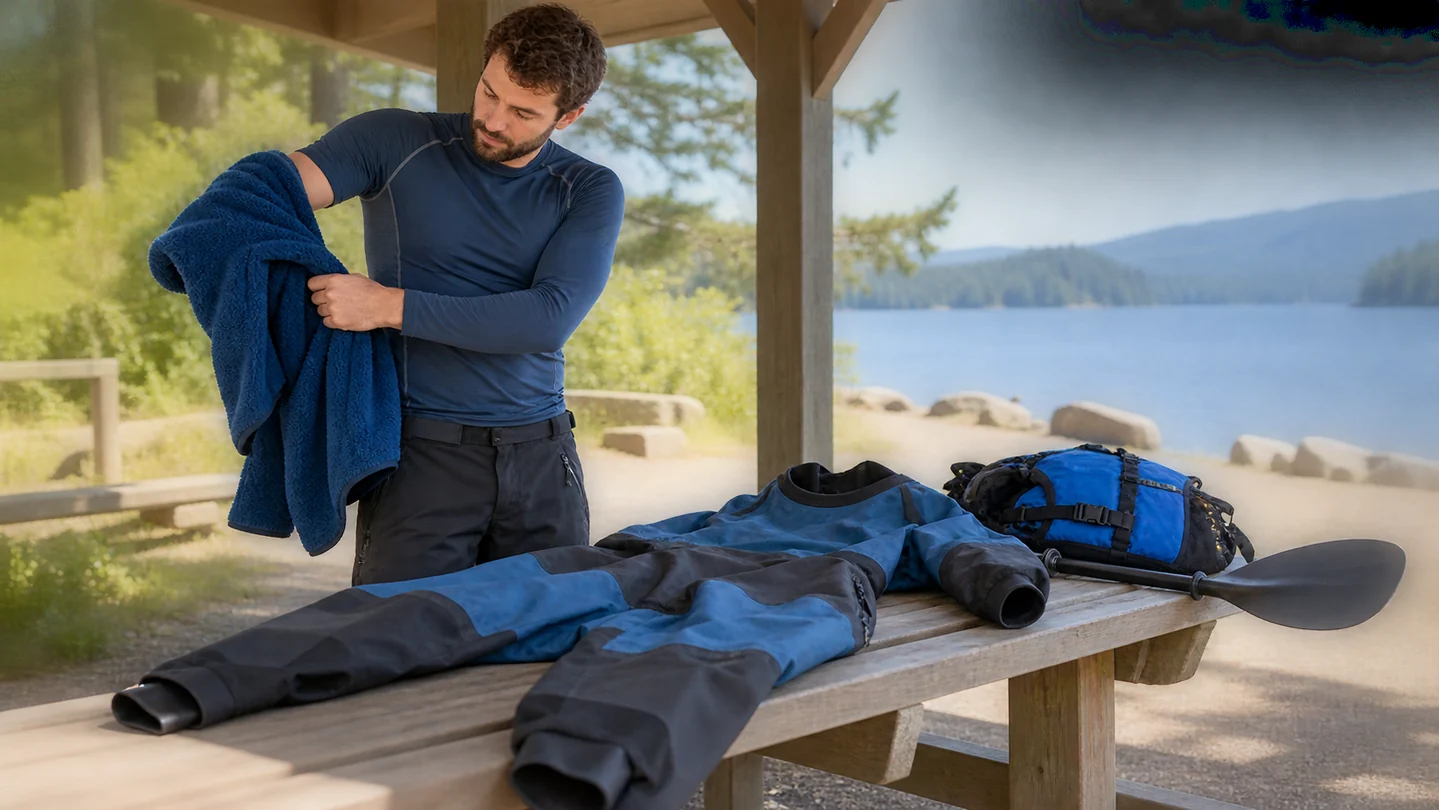
Heat management also requires water, rest and shade—the three-part OSHA framework for occupational heat prevention. Operators can adapt these controls to trip duration, medical needs and landing access, but OSHA guidance is not a kayaking-specific exposure limit.
Do not abandon cold-water protection from a warm air reading. A capsize changes exposure immediately. Plan from water temperature, wind, remoteness, rescue time and likely immersion; then reduce insulation or effort in controlled steps. This guide to a dry suit for kayaking in summer provides a companion checklist.
Which change solves the problem at the lowest total cost?
| Option | Comfort effect | Risk or limitation | Tendance des coûts unitaires | TCO implication |
|---|---|---|---|---|
| Adjust underlayers | Fastest way to reduce retained heat | Must still cover planned immersion exposure | Low to moderate | May prevent avoidable suit returns and complaints |
| Improve pre-launch cooling | Reduces heat stored before paddling | Depends on site discipline and shade access | Low | Training and staging changes can scale across a fleet |
| Select a better-matched shell construction | May improve vapor transfer under suitable conditions | Performance remains conditional; compare like-for-like tests | Often higher | Can reduce discomfort but does not correct poor layering |
| Change fit or size allocation | Can improve mobility and reduce effort | Excess volume can snag or complicate seals | Usually neutral if planned early | Better size mapping can lower exchanges and downtime |
| Remove the dry barrier | May feel cooler before immersion | Can create unacceptable cold-water exposure | Potentially lower | Safety consequences can overwhelm any purchase saving |
Total cost includes specification time, size exchanges, training, downtime, care, warranty handling and replacement. Illustratively, if 100 suits generate 10 avoidable “leak” returns that are actually condensation or layering problems, a fit-and-use briefing could reduce inspection and shipping. This is a decision model, not a reported supplier result.
| Observed condition | Likely contributor | Action before changing the suit | Evidence to record |
|---|---|---|---|
| Broad dampness after hard work | Sweat generation exceeds transfer | Reduce insulation, pace the launch and reassess | Work phase, humidity, layer list |
| Wet patch at one seam or closure | Possible entry path | Inspect and test to the maker’s procedure | Location, photos, repeatability |
| Clammy only while waiting ashore | Solar load and sealed staging | Use shade and delay final closure | Wait time and air conditions |
| Restricted stroke or rapid fatigue | Fit, PFD interaction or bulky insulation | Run a mobility check with the complete kit | Size, reach, layering and PFD model |
| Face textile stays saturated | Wetting or contamination | Clean and restore water repellency as instructed | Care history and surface behavior |
Standards and claims buyers should separate
- ASTM E96/E96M: a test-method framework for water-vapor transmission of materials. Method, specimen and test conditions must accompany a result; it is not a dry-suit certification.
- ISO 11092 : a sweating-guarded-hotplate method for thermal and water-vapor resistance of textiles and textile assemblies. It characterizes material performance under controlled conditions, not whole-garment comfort in every climate.
- ISO 811 : a hydrostatic-pressure method for textile resistance to water penetration. It does not by itself validate seams, zippers, seals or the assembled garment.
- AATCC TM195: a liquid moisture-management test for textile fabrics. Buyers should distinguish liquid transport in an underlayer from vapor transfer through a shell.
- ISO 12402 series: requirements and guidance for personal flotation devices. A dry suit does not replace a PFD selected for the activity and destination-market rules.
Applicability depends on destination, use and claims. Unsupported standards language can trigger rejected tenders, relabeling and returns. Buyers should identify whether each citation covers a material, component or finished product and request reports for the offered construction.
A five-step procurement and selection guide
When specifying a dry suit for kayaking, turn the operating scenario into evidence requests and a repeatable wear trial.
- Define the exposure envelope. Record water conditions, wind, remoteness, rescue plan, user competence and likely immersion; do not select only from air temperature.
- Specify the clothing system. List base-layer material, adjustable insulation and prohibited choices. This guide explains what to wear under a kayak drysuit.
- Verify fit with the complete kit. Test paddling reach, squat, entry, PFD interaction and seal comfort across the size range.
- Compare evidence on the same basis. Ask for the named method, report date, tested layer or garment, conditions and result units; do not compare marketing labels alone.
- Pilot and document care. Use a representative group, record complaints by condition, and train users on closure, cleaning, drying, storage and field checks.
Yuelei Sports can support B2B buyers with configurable construction, size planning and test-document discussions. Start with a requirement sheet that separates immersion protection, fit and comfort targets.
Foire aux questions
Do you sweat in a dry suit?
Yes. The body still produces heat and perspiration, and a sealed shell limits direct air exchange. A breathable fabric can transfer vapor under favorable conditions, but sweat can accumulate when effort is high, the outside is humid or wet, or insulation is excessive.
How can I stay cool in a drysuit?
Use the lightest insulation that remains appropriate for the planned water exposure, stage in shade, hydrate, pace heavy setup work and delay final closure until launch where safe. Keep all closures fully secured before boarding, and never use ventilation practices that defeat required immersion protection.
What should you wear under a kayak drysuit?
Start with a moisture-wicking synthetic or suitable wool base layer, then add adjustable non-cotton insulation according to the water exposure and activity. Check mobility and seal interfaces with the full ensemble; moisture management depends on the base, insulation and shell working together.
What should you not wear when kayaking?
Avoid cotton next to the skin for cold-water plans, restrictive garments, sharp items that may damage the suit, and layers that bunch under seals or the PFD. Do not treat a dry suit as flotation: wear an appropriate, correctly fitted PFD and follow local boating requirements.
Références
- ASTM International — ASTM E96/E96M, Water Vapor Transmission of Materials
- International Organization for Standardization — ISO 11092:2014
- International Organization for Standardization — ISO 811:2018
- U.S. Occupational Safety and Health Administration — Water, Rest, Shade
- U.S. Coast Guard — Life Jacket Wear / Wearing Your Life Jacket
Closing principle: Dress for the water, then engineer heat out of the system through layers, fit, pacing and disciplined preparation.
For a program-level review, compare Yuelei Sports’ dry suit for kayaking programs et contact the team with your water conditions, size profile, annual volume and documentation needs.