 Сямыньская спортивная компания с ограниченной ответственностью «Юэлей»
When a ski-program purchasing manager in Denver reviewed a new outerwear shipment, the first lift-day inspection looked fine; within an hour, instructors reported snow entering at the waist during kneeling drills. A fit audit found the cause: the buyer had specified a loose snowboard cut without checking the jacket-to-bib interface or powder-skirt construction. This typical buyer scenario shows why “waterproof” alone is a weak specification. Cut, movement, layering room and snow-sealing details also determine returns.
Резюме: A ski jacket generally prioritizes a trimmer articulated cut, pole-ready sleeves and resort features; a snowboard waterproof jacket often gives more torso and sleeve room for a crouched stance, although brands overlap. For resort snow, ask suppliers how waterproofing was tested under ISO 811, how seams are sealed, and whether the quoted 10K or 20K figure is a fabric result or a finished-garment claim. Choose insulation or a shell after mapping climate and activity, then confirm hood, powder-skirt and cuff fit on actual layers.
How do ski and snowboard jacket designs differ?
The sports share cold, wind and snow exposure, so there is no universal dividing line. Ski garments commonly use a closer torso and pre-shaped elbows; snowboard garments often allow more room through the body and sleeves for a lower stance. These are tendencies, not guarantees. Compare the finished pattern rather than the category name.
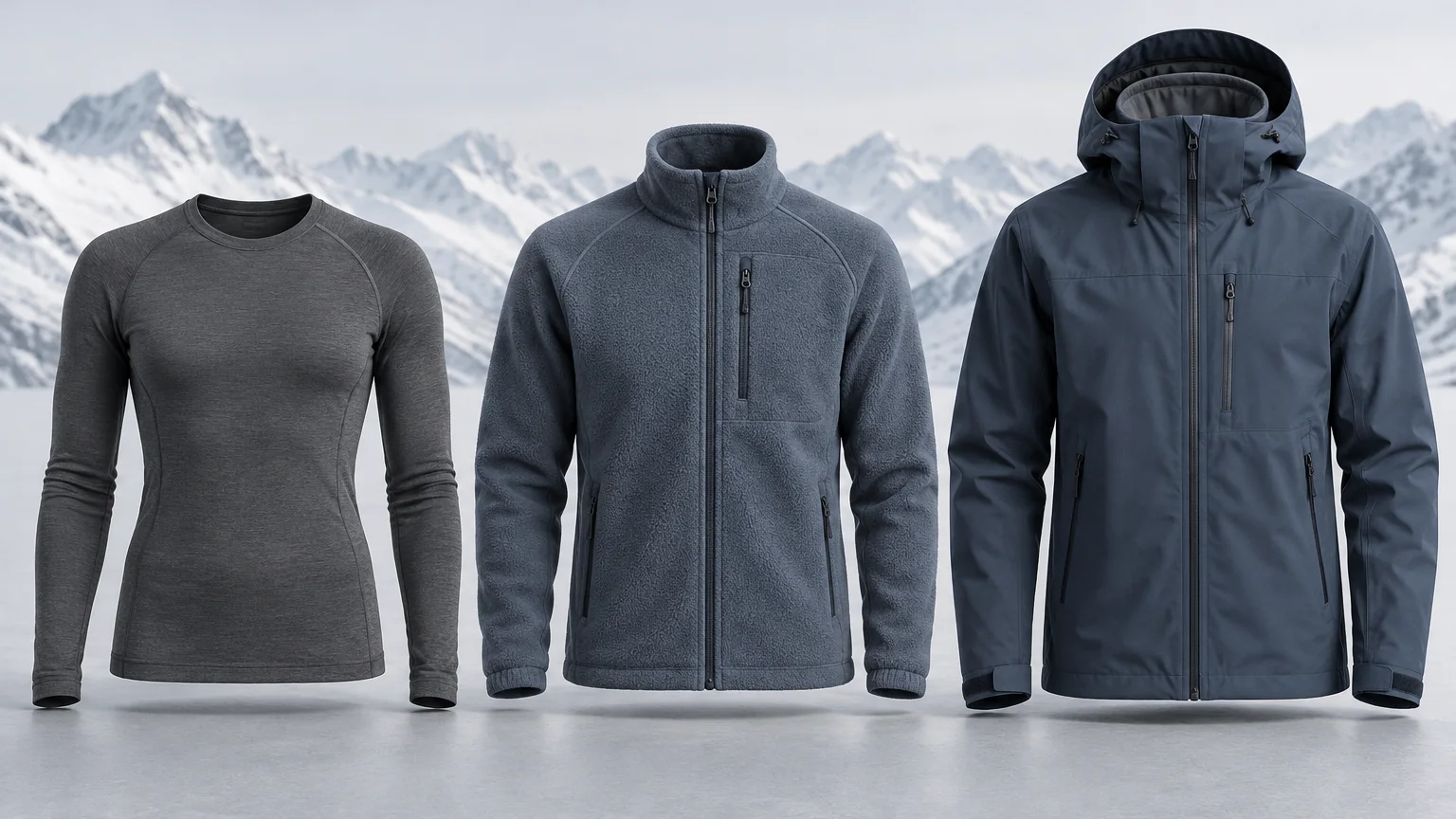
Request a movement sample: arms forward, deep knee bend, seated lift position and reach above the head. Check hem overlap, wrist coverage and pocket access with the target bib, harness or pack. A two-way zip, adjustable hem and internal snow barrier can matter more than a small face-fabric weight difference.
| Размер решения | Typical ski-jacket tendency | Typical snowboard-jacket tendency | Buyer verification |
|---|---|---|---|
| Pattern | Trim, articulated for edging and pole work | Roomier, often longer for a crouched stance | Measure chest, back length and sleeve in the intended posture |
| Snow control | Powder skirt and waist adjustment for lift and fall protection | Deep hem, skirt or jacket-to-pant connector depending on model | Test overlap with the target bib or trouser |
| Ventilation | Pit zips and pocket placement for active climbs or resort laps | Pit or side vents sized for layered riding | Open vents while wearing gloves and a pack |
| Водоустойчивый | Helmet-compatible with compact adjustment | Helmet-compatible with more volume on some patterns | Turn the head with helmet and goggles fitted |
| Commercial risk | Too tight can limit layering and raise size-related returns | Too loose can add bulk or expose the waist in ski movements | Approve a graded size set, not a single showroom sample |
How waterproof should a jacket be for resort snow?
Waterproof ratings are useful only when the method and product scope are clear. ISO 811 raises hydrostatic pressure against a textile specimen until penetration; it is a test method, not a universal certification label. Retail “10K” and “20K” shorthand can refer to fabric, laminate or finished panels tested under different conditions. Request the report, specimen description and seam-treatment notes before comparing numbers.
For resort skiing, a documented shell, sealed critical seams and a durable face finish are usually more valuable than the highest headline number. A snow waterproof jacket or ski waterproof jacket can still fail if the hood leaks, the pocket zip is exposed or the hem rides above the bib. Ask whether zipper, hood, cuff and seam construction were included in the finished-garment evaluation. Care instructions also affect beading as contamination and abrasion accumulate.
Compare the waterproof rating guide before translating a fabric number into a jacket claim.
Breathability is separate. ISO 11092 measures thermal and water-vapour resistance under controlled conditions; vent placement, base layer, pace and humidity change comfort. Treat “breathable” as a prompt to ask for method and conditions.
The трехслойный инструктор по катанию на лыжах helps buyers test a jacket over the intended base and midlayers.
Should buyers choose an insulated jacket or a shell?
An insulated jacket simplifies outfitting for cold, low-intensity users, but fixed warmth is less adaptable. A shell separates weather protection from warmth, supporting more layer combinations and easier midlayer replacement, while requiring user training and more SKU decisions.
Total cost includes size depth, care, spare inventory and returns. A shell range may share outer sizes across insulation options; an insulated range can simplify packing. Treat comparisons as illustrative because fabric, trims, order quantity, testing, freight and replacement policy vary. Venting also affects comfort returns.
| Потребность в использовании | More suitable starting point | Why | Specification checkpoint |
|---|---|---|---|
| Cold resort days, moderate activity | Insulated jacket | Warmth is available without extra midlayer decisions | Confirm insulation description and room for a base layer |
| Variable weather or high-output skiing | Shell plus adjustable midlayer | Vents and layer changes manage heat better | Check pit-zip access and sleeve mobility |
| Rental or school fleet | Simple, durable system | Fewer user decisions can reduce misuse | Prioritize repairable trims, clear care labels and size grading |
| Frequent resort-to-town use | Moderately insulated, restrained shell | Works across snow and everyday winter settings | Review pocket access and appearance requirements |
What do powder skirts, vents and helmet hoods actually do?
A powder skirt is an internal barrier that reduces snow entry when the wearer falls or sits. It works only when its circumference and fastening match the trousers or bib. Removable skirts suit town wear; permanent barriers simplify some rental programs. Verify closure layout on a size set.
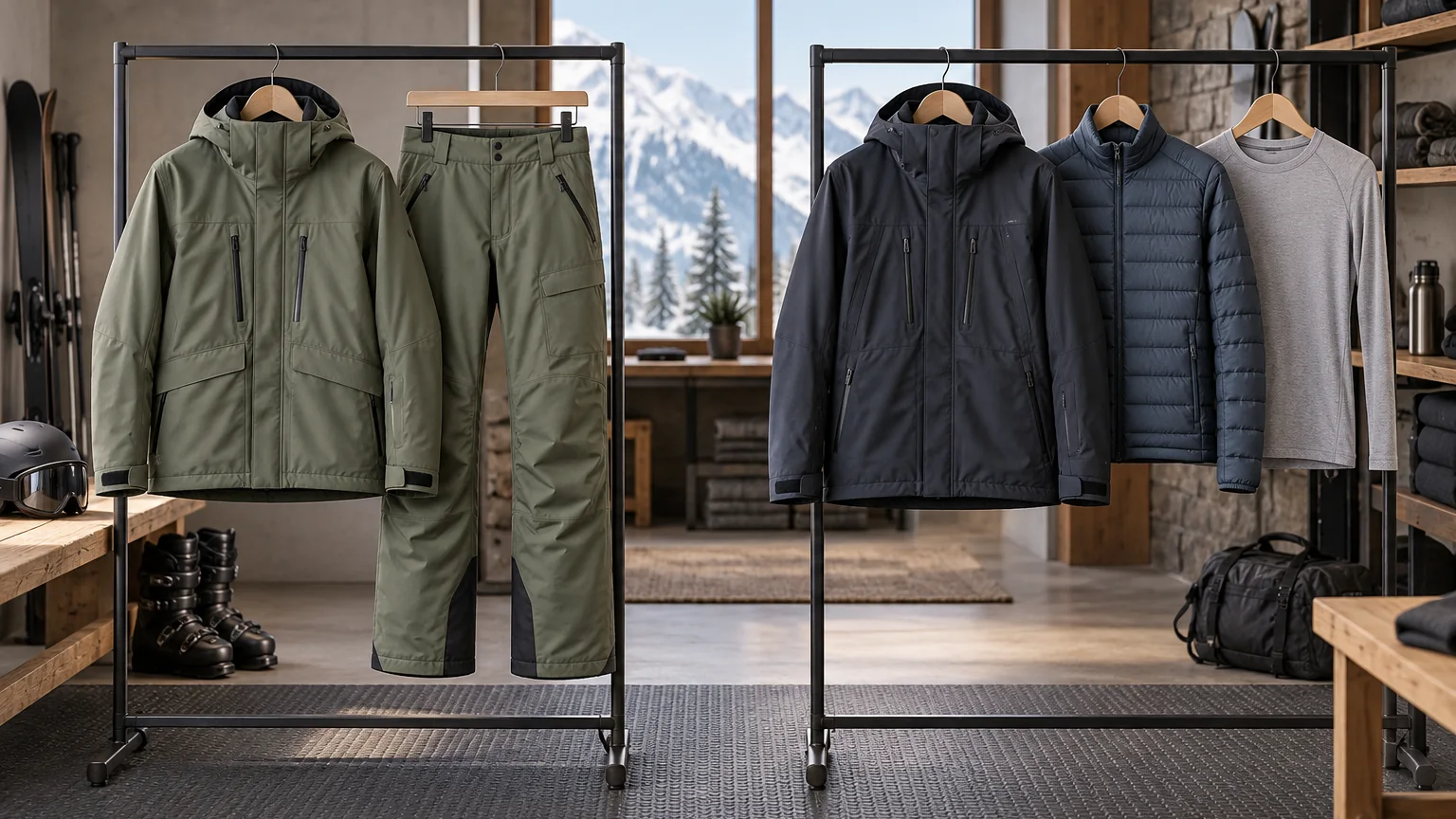
Pit vents release heat during active movement. Check that gloved hands can operate them and pack straps do not block them. A helmet-compatible hood needs volume to move over the helmet without blocking vision, with face and rear adjustments to resist wind pull. Review it with helmet, goggles and neckwear in place.
What standards and compliance checks belong in the purchase file?
Record the method, laboratory, sample construction and date for waterproof and vapour claims. ISO 811 and ISO 11092 are laboratory methods; they do not automatically make a garment personal protective equipment (PPE). In the EU, Regulation (EU) 2016/425 applies when apparel is placed on the market as PPE for a defined risk. Confirm intended use, destination, labeling and technical file with the importer or compliance adviser.
Unsupported “certified” or “guaranteed waterproof” claims create retailer corrections and liability exposure. Keep reports, care instructions, fiber and trim declarations, and approved copy together. Quiksilver, Trespass and Mountain Warehouse guidance can explain consumer terminology, but cannot replace supplier evidence.
How should a B2B buyer specify the jacket?
- Define the movement profile. State ski, snowboard, mixed resort, instruction or rental use; include helmet, bib, pack and glove assumptions.
- Write a testable weather brief. Request ISO 811 method details, finished-garment seam coverage, hood and zipper construction, and ISO 11092 data when comfort is a selling point.
- Choose the warmth architecture. Decide whether a fixed insulation package or a shell-and-layer system best fits climate, user skill and inventory strategy.
- Approve fit across sizes. Use a graded sample set and record back length, sleeve reach, hem overlap, hood adjustment and powder-skirt closure.
- Close the after-sales loop. Include care labels, repair instructions, spare-trim policy and an inspection checklist for distributors.
Yuelei Sports presents ski and waterproof outerwear options through its product catalog. Its public site identifies Intertek tested and Alibaba verified status; buyers should still request model-specific construction details and reports before making a claim. Relevant starting points include the men’s waterproof ski jacket и custom insulated ski jacket страницы.
Часто задаваемые вопросы
What is the difference between a ski jacket and a snowboard jacket?
Ski jackets tend to use a trimmer, articulated pattern, while snowboard jackets often allow more room for a crouched stance; many models overlap. Compare the actual hem, sleeve, hood and snow-barrier measurements with the intended bib, helmet and layers before approving a category.
How waterproof should a ski jacket be for resort skiing?
Specify a documented hydrostatic test and sealed construction rather than choosing a headline number alone. ISO 811 explains the test method, while the finished garment’s hood, zips, cuffs and seams determine whether snow stays out in use.
Do I need insulation in a ski jacket or should I layer underneath?
Insulation simplifies cold, moderate-activity use; a shell with a midlayer adapts better to changing weather and high output. Choose after mapping climate, user pace, inventory complexity and the space required for the intended layers.
What is a powder skirt and do I really need one?
A powder skirt is an internal waist barrier that helps limit snow entry during falls or seated movement. It is valuable when its fastening and circumference match the trousers or bib; otherwise, a well-adjusted hem may be more useful.
How should a ski jacket fit over a helmet-compatible hood and layers?
The jacket should allow full arm reach and a comfortable base-plus-midlayer without pulling at the shoulders. Fit the hood over the actual helmet and goggles, then turn the head, raise the arms and sit as if on a lift to check vision and hem overlap.
Can I use a ski jacket for everyday winter wear?
Yes, if the cut, insulation and pocket layout suit walking and commuting. A highly technical jacket may feel bulky or overly warm in town, so buyers should decide whether removable snow features and a restrained appearance justify the added complexity.
Ссылки
- ISO 811:2018, Текстиль — Определение устойчивости к проникновению воды — испытание гидростатическим давлением.
- ISO 11092:2014, Textiles — Physiological effects — Measurement of thermal and water-vapour resistance under steady-state conditions.
- Регламент (ЕС) 2016/425 о персональных защитных средствах.
- Quiksilver snow outerwear guidance and product terminology.
- Trespass and Mountain Warehouse consumer guidance on waterproof ratings and layering.
Заключение
The useful distinction in a ski jacket versus snowboard jacket decision is the movement and sealing brief behind the label. Start with the user’s stance, bib, helmet, layers and climate; then verify waterproof method, seam coverage, insulation, vents and powder-skirt fit on a graded sample. Keep ISO methods separate from PPE certification, and keep public claims inside the evidence recorded in the purchase file. That sequence reduces returns and compliance edits while leaving room for practical town wear. Yuelei Sports can help buyers review configurable ski and snow outerwear; begin with the product catalog and contact the team for model-specific documentation.