 Xiamen Yuelei Sports Co., Ltd
When a technical engineer in Bristol encountered a wet collar during a rain-jacket sample check, he had already selected a fabric with a high waterproof rating. The oversized hood channelled water toward the open neck. This illustrative case shows why a strong fabric result cannot compensate for poorly controlled openings.
Summary: A waterproof jacket for heavy rain needs a suitable fabric barrier, sealed construction, protected closures and a hood that fits. ISO 811:2018 measures fabric water penetration; it does not certify every opening in the jacket. Check those entry paths, ventilation and garment condition before paying for a higher number.
Heavy rain exposes weaknesses that a short shower may not reveal. It also makes diagnosis harder: exterior wet-out and perspiration can feel like leakage. REI’s rainwear guide distinguishes the waterproof barrier from the water-repellent surface finish, helping buyers separate those problems instead of treating every damp garment as the same failure.
What does the waterproof rating actually say about a downpour?
A hydrostatic-head figure describes resistance to water pressure under a specified test. A 20,000mm result corresponds to a 20-metre water head, not twenty metres of rainfall and not a fixed number of hours outside. ISO 811:2018 provides a fabric hydrostatic-pressure method.
A higher comparable result can provide greater material pressure resistance, but only when the test method, sample condition and reporting basis are comparable. A new fabric result should not be treated as an after-washing result, and a material report should not become a promise that the assembled jacket cannot leak.
Duration, wind, garment movement and contact with a backpack complicate real exposure. There is no single rain-intensity threshold that turns every jacket below a particular marketing number into an unsuitable product. Choose the whole construction and supporting evidence around the intended activity.
The 10,000mm versus 20,000mm hiking jacket comparison discusses the rating trade-off in more detail. For a downpour, the immediate sample questions are whether seams are protected and whether the wearer can close the hood, cuffs and front properly.
Where can a waterproof jacket for heavy rain let water in?
Start with stitched seams, front and pocket closures, hood openings, cuffs and hem. Needle holes need an appropriate sealing construction where rain protection is claimed. A jacket with only selected seams treated should not be casually described as fully seam sealed.
REI’s rainwear guidance discusses coated zips, storm flaps and protection at the end of a zip track. Those details matter because a visually substantial zip is not automatically waterproof. Ask whether the closure is intended to resist rain, and whether it requires a flap or careful positioning.
Check three hood actions: tighten the face opening, adjust volume and turn the head. These are practical fitting checks, not a formal test protocol. A brim should help manage rain without obstructing vision, while the collar should remain comfortable when the front is fully closed.
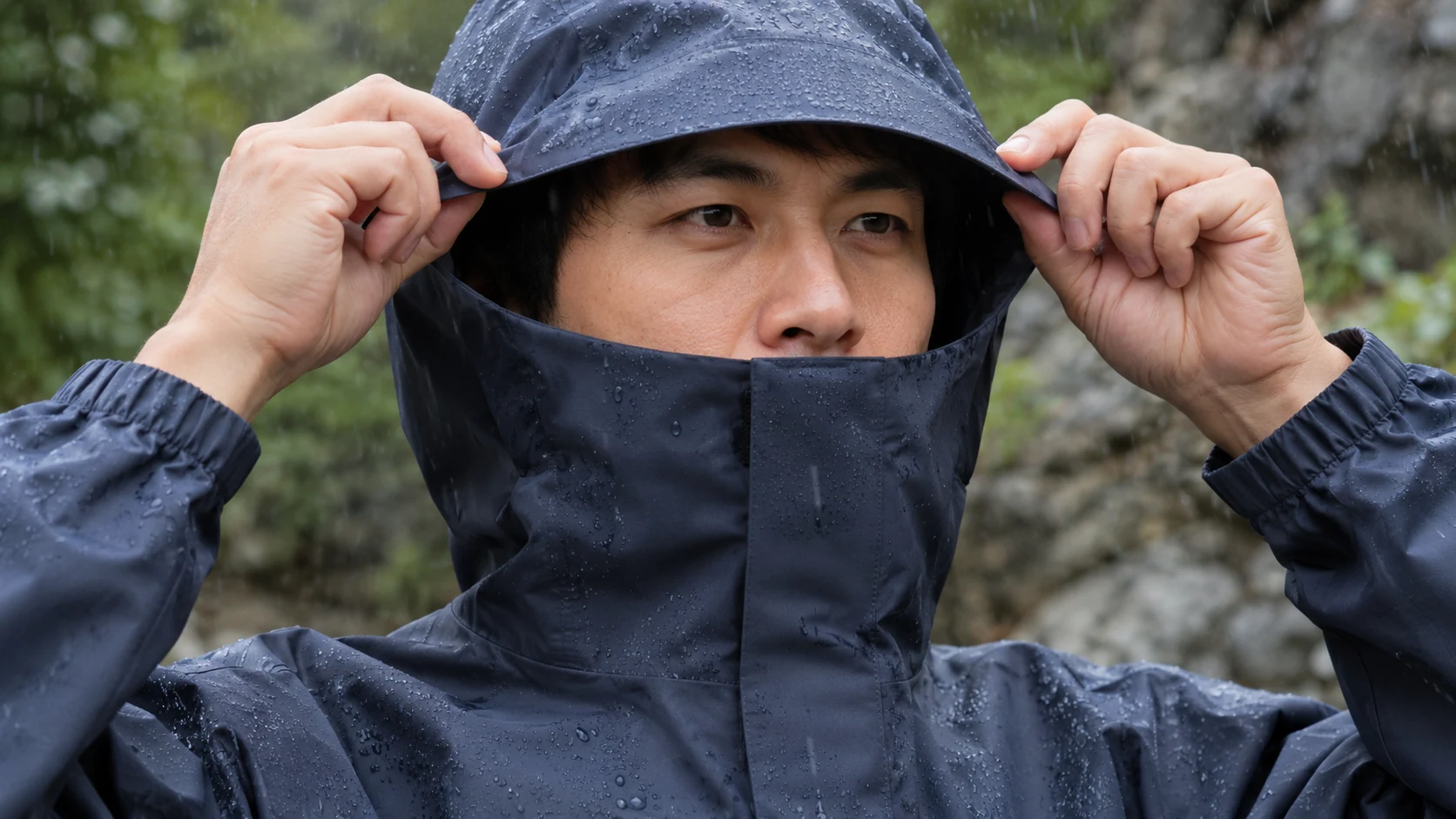
Cuffs must suit the hand position and gloves. When the wearer reaches upward, water can enter an opening that remained protected with arms down. Similarly, a backpack strap may pull the garment away from the neck. Sample evaluation should include movement rather than only a standing view.
A waterproof jacket for rain should also have clear pocket guidance. Phones and documents deserve separate protection where pocket performance is unspecified. The body fabric’s rating cannot establish the protection of every pocket bag and fastening.
Is the jacket leaking, wetting out or trapping sweat?
These are different problems with different responses. Leakage means water has passed through a material defect, seam or opening. Wet-out means the exterior fabric is becoming saturated as surface repellency declines. Condensation or retained perspiration comes from moisture generated inside the clothing system.
REI explains that a wetted face fabric can feel cold and clammy even while the underlying barrier continues to resist rain. Wet-out can also impair practical moisture transfer. Beading on the outside is therefore useful, but neither its presence nor absence is a complete test of waterproof integrity.
After drying the garment, inspect the location and pattern of the reported dampness. A repeated narrow wet line beside a seam deserves different attention from widespread clamminess during strenuous walking. This is initial triage, not proof of cause; persistent or unclear problems should go back to the manufacturer.
Use three records for a return assessment: where the dampness appeared, what the wearer was doing and the condition of the garment. Add photographs of the dry suspect area where helpful. Avoid household pressure or immersion experiments that exceed the product’s intended use or damage it.
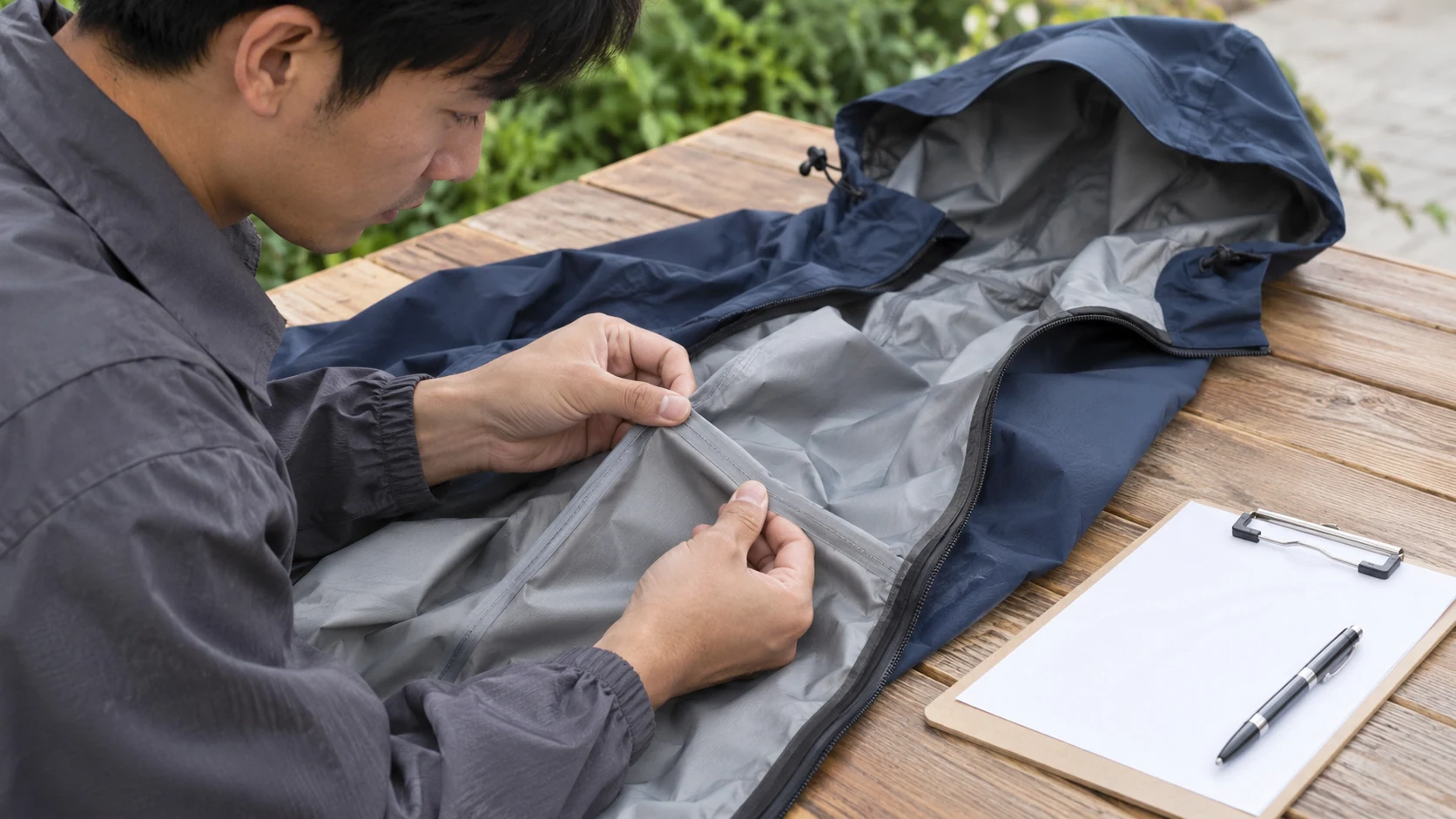
Care should follow the label. Cleaning may help restore performance affected by dirt or oils; an approved reproofing treatment may restore surface repellency. Neither action repairs a damaged membrane, detached seam tape or torn fabric. Do not keep reapplying a treatment to a fault that requires repair.
How can a waterproof jacket for heavy rain stay comfortable while walking?
Walking generates heat and moisture even when the air feels cold. ISO 11092:2026 measures water-vapour resistance under defined conditions, but does not promise comfort for every activity. A breathable jacket can still feel damp if perspiration exceeds what the system releases.
Choose manageable insulation and use designed ventilation when exposure permits. Opening a front zip directly into driving rain can solve overheating while creating another problem. Check the location and access of vents with a backpack, and whether they can be operated easily before the wearer becomes heavily damp.
A poncho may offer useful coverage at low activity and can sometimes cover luggage, but wind can make loose fabric difficult to control. A fitted jacket generally offers more controlled openings and movement. Neither option removes the need to consider trousers, footwear and the length of the outing.
The best waterproof jacket for heavy rain is the one whose complete construction suits the intended exposure and remains usable during movement. A buyer should resist upgrading only the fabric while keeping an unsuitable hood or inaccessible ventilation unchanged.
How do the main heavy-rain options compare?
| Option | Useful strength | Limitation | Ownership issue |
|---|---|---|---|
| Waterproof breathable shell | Rain protection with some vapour transfer | Exertion can still cause dampness inside | Cleaning, surface finish and seam care |
| Nonbreathable raincoat | Simple barrier for lower-output use | Perspiration can accumulate quickly | Choose cleaning and storage for its material |
| Poncho | Loose coverage and quick deployment | Wind and movement can expose openings | Manage loose fabric and snagging |
For procurement, include returns diagnosis in total cost. If every clammy jacket is treated as a failed membrane, replacements may not solve the customer’s problem. Clear instructions on ventilation, surface care and leak reporting can reduce unnecessary disputes without dismissing genuine defects.
Which details matter most for each wet-weather job?
| Use | Main concern | Priority check |
|---|---|---|
| Walking with a loaded bag | Movement and contact areas | Shoulders, hood, hem and accessible vents |
| Waiting outside | Persistent exposure with little body heat | Coverage, closures and appropriate layers |
| Urban commuting | Repeated opening and closing | Fastenings and easy heat release indoors |
| Repeated wet days | Condition and drying | Care instructions and visible seam condition |
Which standards support a rain-protection claim?
ISO 811:2018 concerns fabric water penetration. ISO 11092:2026 concerns thermal and water-vapour resistance. EN 343:2019 addresses protective clothing against rain; SATRA describes four classes for water penetration and four for water-vapour resistance, with requirements beyond a simple retail hydrostatic-head label.
Those references are not interchangeable. A consumer shell should not receive an occupational protection claim merely because one material was tested. Buyers need reports tied to the actual construction and the appropriate documentation for the intended market and use.
What should buyers check in a waterproof jacket for heavy rain sample?
- Confirm the material result, method and sample condition.
- Inspect seam-sealing scope and every weather-exposed closure.
- Fit the hood and cuffs with the intended layers, gloves and bag.
- Agree on care instructions and the process for investigating leaks.
Yuelei Sports lists custom waterproof rain jackets. A heavy-rain sourcing enquiry should identify exposure, closure design and required documentation. Performance should be confirmed for the supplied sample rather than assumed from the product category.
Frequently asked questions
What waterproof rating is best for a jacket for heavy rain?
There is no universal best number. Compare results using the same method and condition, then check seams, openings and fit. A higher material rating cannot fix an unprotected entry path.
Are taped seams essential in a jacket for a downpour?
Weather-exposed stitched seams need effective sealing for a waterproof claim. Seam tape is common, but other suitable constructions exist. Ask what is sealed and how, rather than relying on a vague description.
Why can a rain jacket leak at the zip or hood?
Water can enter through an unsuitable closure, a gap at the zip end or a poorly fitted hood and collar. Check operation and fit before assuming the main fabric has failed.
Is a poncho or a waterproof jacket better for heavy rain?
A poncho can offer convenient loose coverage, while a jacket usually gives better control during wind and movement. Choose around activity, exposure and the need to cover other clothing or luggage.
How breathable should a jacket be when walking in a downpour?
It should support the intended activity, but no single figure guarantees comfort. Compare the test method, ventilation and underlying layers. Heavy exertion can overwhelm even breathable rainwear.
How do I restore water repellency when heavy rain starts soaking the fabric?
Follow the garment’s cleaning and approved reproofing instructions. Surface treatment can help with wet-out, but cannot repair holes, damaged barriers or failing seam seals.
References
- ISO 811:2018: hydrostatic pressure test
- ISO 11092:2026: thermal and water-vapour resistance
- REI: How to Choose Rainwear
- SATRA: the EN 343 protective clothing standard
In a downpour, protection depends on the entire path between the rain and the clothing underneath. Contact Yuelei Sports to discuss a waterproof jacket for heavy rain with the construction, fit and care requirements made explicit.