 Xiamen Yuelei Sports Co., Ltd

The inside of a rain jacket feels damp, so the first assumption is that rain has come through. Sometimes it has. But a wet base layer, condensation on a cool lining and a saturated face fabric can create a similar experience. Replacing the jacket before identifying the moisture source may leave the problem unchanged. For retailers handling returns, calling every complaint “sweat” is equally unhelpful: a genuine seam or closure fault still needs investigation.
The short answer is that a breathable waterproof jacket can become damp inside when moisture production exceeds moisture transfer. Breathable does not mean unlimited ventilation or guaranteed dryness during exertion. Sealskinz identifies perspiration, condensation, damp inner layers and humid conditions as possible explanations even when a jacket is not leaking.[1] Check the location and timing of the wetness, then examine the fabric, seams and openings. A repeatable wet patch needs a different response from diffuse clamminess after an uphill walk.
How can waterproof fabric allow moisture to escape?
Waterproof/breathable systems are intended to resist liquid water while permitting water-vapour transfer. Different membranes and coatings achieve that in different ways, so a universal drawing of “holes smaller than raindrops” is not an adequate explanation for every fabric. The practical point is that transfer depends on both the material and conditions on each side of it.
REI describes the role of warmer, moist conditions inside the jacket and relatively cooler, drier conditions outside.[2] High external humidity can reduce the driving difference, while hard exercise can add moisture faster than the system removes it. No fabric label establishes that the wearer will remain sweat-free at every pace.
The skin sensation also matters. Sealskinz notes that a cold outer surface can feel similar to wetness.[1] Check whether the lining and underlying clothes are actually damp before concluding that water has crossed the barrier.
How can condensation be distinguished from a leak?
| Observation | Possible explanation | Next useful check |
|---|---|---|
| Broad clamminess after hard exercise | Perspiration and condensation | Review pace, layers and ventilation |
| Outer fabric becomes dark and saturated | Face-fabric wet-out | Check cleaning and water-repellency care |
| A recurring local wet patch | Possible seam, material or closure fault | Record location and seek a controlled assessment |
| Wetness begins at neck or wrists | Water entering through an opening or wet inner clothing | Check hood, cuffs and layer overlap |
| Cold sensation with dry inner clothing | Cooling rather than liquid ingress | Inspect directly rather than relying on sensation alone |
These patterns are clues rather than a home certification test. Water can travel along a lining or layer before the wearer notices it. Photograph the position, record the weather and activity, and note how long the jacket had been worn. A supplier can investigate more effectively with that information than with “not waterproof” alone.
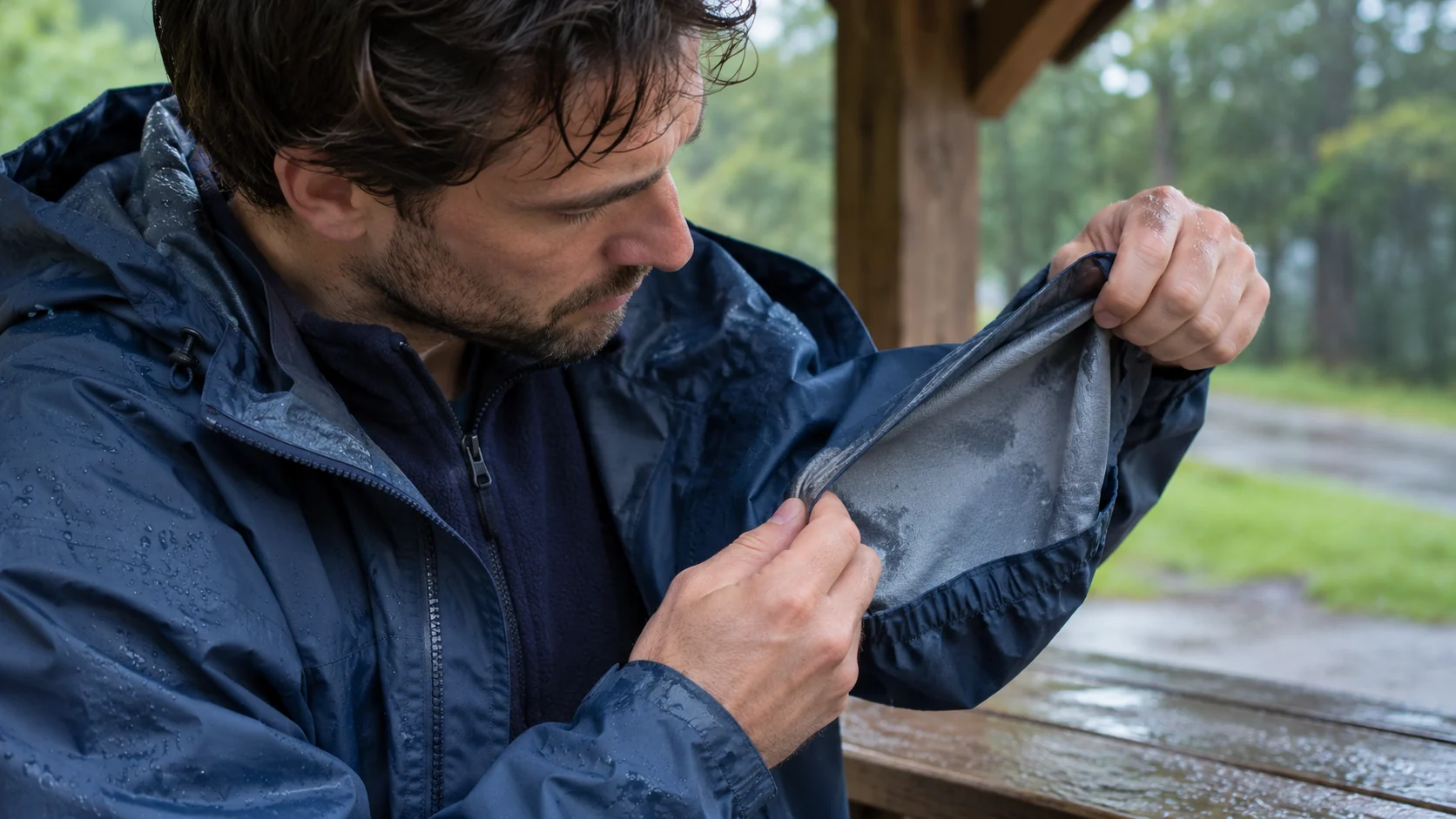
Inspect visible seam tape for lifting, splits or damage and check the front fastening. Avoid high-pressure hoses, aggressive rubbing or unapproved sealants, which can damage the garment and make the original problem harder to assess. A recurring local leak after correct use and care is a reason to contact the seller or repair service.
Does wet-out mean the waterproof membrane has failed?
Not necessarily. Durable water repellent, usually shortened to DWR, helps water shed from the outer surface. When that finish is dirty or worn, the face fabric may absorb water while the underlying barrier continues to resist ingress. REI explains that a soaked outer fabric can slow moisture transfer and make the inside feel colder or clammy.[2]
Cleaning and, when required, compatible reproofing may restore surface shedding. They do not repair a torn membrane, detached seam tape or a defective zip. This distinction prevents two common mistakes: throwing away serviceable clothing because the outside gets wet, and repeatedly adding treatment to a garment that needs repair.
A higher hydrostatic-head number is not a direct solution to condensation. The explanation of a 20000 mm waterproof jacket shows why water-penetration resistance and moisture comfort are different questions.
Do pit zips help when the fabric is already breathable?
They can. An open vent provides air exchange in addition to the transfer through fabric. That can be useful before a climb or during a sheltered pause, particularly when insulation and exertion would otherwise trap heat. Ventilation should be adjusted before clothing becomes saturated with sweat rather than only after discomfort develops.
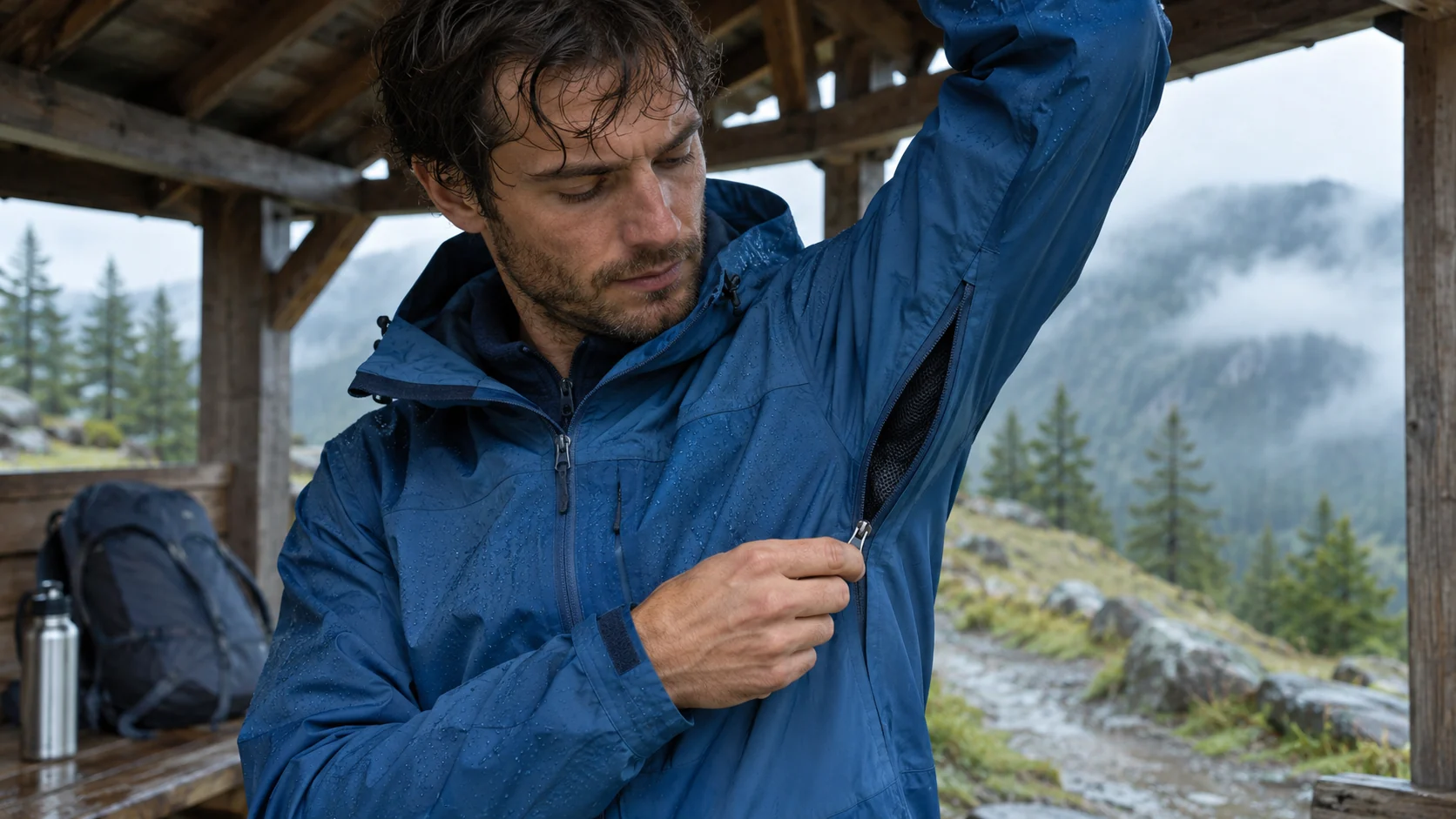
Opening a vent also creates a possible route for rain. The position, weather direction and activity determine whether it is sensible to use. A pack strap may block access, and some pockets are not designed as vents at all. A breathable waterproof jacket should be evaluated as a worn system rather than as a membrane sample alone.
Which breathability figures are useful when comparing jackets?
Two commonly encountered approaches report moisture-vapour transfer or resistance to water-vapour transfer. The units and direction differ: a larger transfer figure and a smaller resistance figure can each describe easier transfer within their respective methods. They cannot be compared as though they were the same scale.
ISO 11092:2026 measures thermal and water-vapour resistance under steady-state test conditions.[3] Its scope explicitly does not establish performance specifications for particular physiological comfort situations. Ask for the method, sample construction, conditioning and units. Do not turn an isolated result into a promise of a dry lining on every hike.
| Condition | Practical adjustment | What the adjustment cannot prove |
|---|---|---|
| Hard uphill effort | Reduce excess insulation and ventilate when appropriate | That the garment has no leak |
| Warm, humid rain | Manage exertion and expect limited evaporative comfort | That another membrane guarantees dryness |
| Dirty face fabric | Follow the label’s cleaning instructions | That structural damage is repaired |
| Repeated local ingress | Document the patch and request inspection | The exact fault without assessment |
What should retailers record before accepting or rejecting a return?
- The garment model, age and care history.
- The wet area, including whether inner layers were already damp.
- Weather, activity, duration and any pack or equipment worn.
- Visible damage or lifting seam tape.
- Any repeatable pattern after the garment was dried and used correctly.
That record supports a fair decision and helps distinguish a product problem from an unsuitable clothing combination. It should not be used to dismiss a claim without looking at the garment.
For sourcing, Yuelei Sports lists breathable waterproof jackets and a custom waterproof rain jacket option. Buyers should confirm the actual fabric, report method, vent arrangement and care instructions for the proposed sample. This guide makes no measured breathability claim for an untested configuration.
What else causes confusion about breathable rainwear?
How can a breathable waterproof jacket keep rain out and let sweat escape?
Its barrier is designed to resist liquid water while allowing water-vapour transfer. The mechanism and transfer rate depend on the material; liquid sweat does not simply pass out without limitation.
Why do I still feel wet inside a breathable rain jacket?
Possible causes include sweat, condensation, damp layers, water entering at openings or a genuine fault. Check the location and circumstances rather than deciding from the sensation alone.
What breathability rating is good for hiking or cycling?
A number is useful only with its test method and units. Compare like-for-like results and consider ventilation, effort and climate instead of relying on a universal activity threshold.
Do pit zips improve the performance of a breathable waterproof jacket?
They can improve heat and moisture management through ventilation. They do not increase the fabric’s measured waterproof rating and may admit rain when open.
How does humidity affect jacket breathability?
Humid outside conditions can reduce the driving difference for moisture transfer. The garment may feel clammy even while its rain barrier remains functional.
How do I wash a breathable waterproof jacket without blocking the membrane?
Use the garment’s specified cleaning process and compatible products, rinse as directed and avoid prohibited additives. Do not assume all membranes require identical wash or drying settings.
References
- Sealskinz: Why Might My Waterproof Jacket Feel Wet on the Inside When It Isn’t Leaking?
- REI: Rainwear technology, DWR and breathability.
- ISO 11092:2026: Thermal and water-vapour resistance. Sources reviewed November 16, 2026.
What should happen before replacing a damp-feeling jacket?
First identify where the moisture is coming from. A breathable waterproof jacket cannot remove unlimited perspiration, but that limitation should not be used to explain away a repeatable leak. Check inner layers, the outer surface, seams and openings, then follow the relevant care or repair route. For buyers, useful product evidence combines a clear fabric specification with a workable garment design and instructions customers can follow. That is more informative than a standalone breathability number. Yuelei Sports’ waterproof jacket range offers a starting point for discussing these requirements; a sourcing enquiry can include the activity, climate, construction preferences and test documentation needed for the proposed order.