 Xiamen Yuelei Sports Co., Ltd
When a technical engineer in Sheffield encountered conflicting jacket quotations, he had already shortlisted the supplier advertising “20K.” One report covered new fabric; the other included laundering before testing. This illustrative purchasing problem was not a difference that the headline number could explain: the evidence had to be compared on the same basis.
Summary: A 20000 mm waterproof jacket usually refers to fabric resistance equivalent to a 20-metre water head under a specified test. That is approximately 196kPa, not a rainfall forecast or guaranteed exposure time. Request the method, sample condition and result basis, then assess seams, openings and breathability separately.
ISO 811:2018 describes a hydrostatic-pressure method for determining fabric resistance to water penetration. It is a useful reference for understanding the claim, but a “20K” label does not automatically prove that this exact method was used. The supplier’s report must establish that connection.
What does the number on a 20000 mm waterproof jacket measure?
Millimetres of water head express pressure as the equivalent height of a water column. Converting 20,000mm to metres gives 20m. Using the approximation p = ρgh, with water density 1,000kg/m³ and gravitational acceleration 9.81m/s², gives about 196,200Pa, or 196kPa.
This conversion explains the unit; it does not describe how a particular laboratory instrument is built. A hydrostatic-pressure test can apply the equivalent pressure without a literal twenty-metre pipe. The result concerns the specimen and the test conditions, not the amount of rain that can fall on the wearer.
ISO 811:2018 applies to fabrics intended to resist water, including those with water-resistant or water-repellent finishes. Its scope is material testing. A report should identify the sample, method and outcome clearly enough for the buyer to know what the quoted value actually represents.
A hard shell waterproof jacket may use such a fabric, but the assembled garment contains seams, closures and openings. Those need separate consideration. A fabric number cannot establish waterproof protection for a phone pocket or an incorrectly adjusted hood.
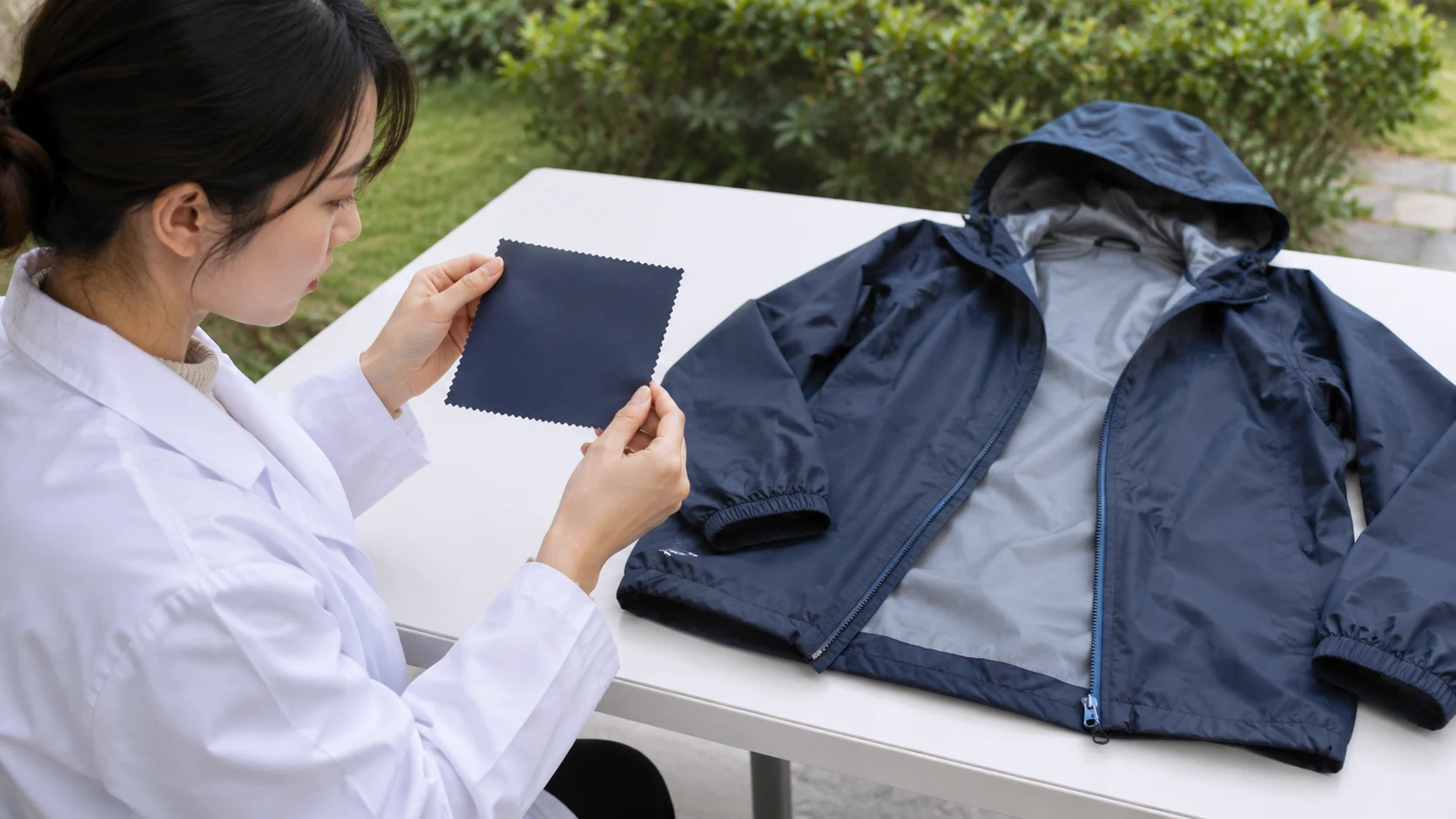
How does 20K compare with 10K and 15K?
When tested on a comparable basis, 20K indicates greater hydrostatic resistance than 15K or 10K. In the same simple pressure conversion, 10,000mm is approximately 98kPa and 15,000mm approximately 147kPa. These relationships describe pressure; they do not mean twice the dry wearing time or twice the service life.
Testing conditions matter. Ask whether the stated result is a minimum specification, a typical measurement, an average or an instrument-limited result. Also establish whether the fabric was new, washed, flexed or otherwise conditioned before the measurement. Two identical-looking numbers can represent different evidence.
The earlier 10,000mm versus 20,000mm hiking jacket guide examines the activity choice. Here, the purchasing priority is comparing reports: a 10000 mm waterproof jacket with a well-documented construction should not be dismissed solely because another listing prints a larger unsupported number.
ISO 811:2018 offers a named method, but the method’s name alone is insufficient. The report must correspond to the fabric being purchased. A supplier changing the laminate, coating or backing should explain whether the original evidence still applies to the revised material.
Does a higher waterproof rating reduce breathability?
Not necessarily. Water penetration resistance and water-vapour transfer are different properties. Materials can be engineered with different balances, so a higher hydrostatic-head result does not by itself predict how damp a wearer will feel during exercise.
ISO 11092:2026 measures thermal and water-vapour resistance under steady-state conditions. Water-vapour resistance and moisture-vapour transmission rates from other methods use different units and conditions. Do not compare an RET value directly with a grams-per-square-metre-per-day number as if they were the same scale.
A label such as “20K/20K” often combines two different properties, but buyers must obtain the definition of each number. The second figure should not be assumed to be another hydrostatic-head result. Request the full units and test method before placing either value on packaging.
REI’s rainwear guidance explains that ventilation remains useful because exertion can overwhelm moisture transfer. A 20k waterproof jacket with inaccessible vents may be less comfortable during hard walking than a well-designed alternative with a lower fabric rating. Fit, insulation and weather conditions remain part of the decision.
Why do seams and openings still matter with a 20K fabric?
Stitching, fastening systems and garment openings create routes that a flat fabric specimen does not represent. Check whether weather-exposed seams are sealed, how the front closure is protected and how the hood and cuffs fit during movement. A high-rated fabric cannot compensate for a persistent gap.
REI describes coated zips, storm flaps and protective details at zip ends. These are construction choices with their own limitations. The correct question is whether the closure suits the intended exposure, rather than whether it looks technical or has a familiar brand name.
Use two fitting conditions: with and without the bag or equipment normally carried. This is a practical sample check, not a pressure test. Observe whether shoulder straps move the collar, whether the belt raises the hem and whether pockets or vents remain usable.
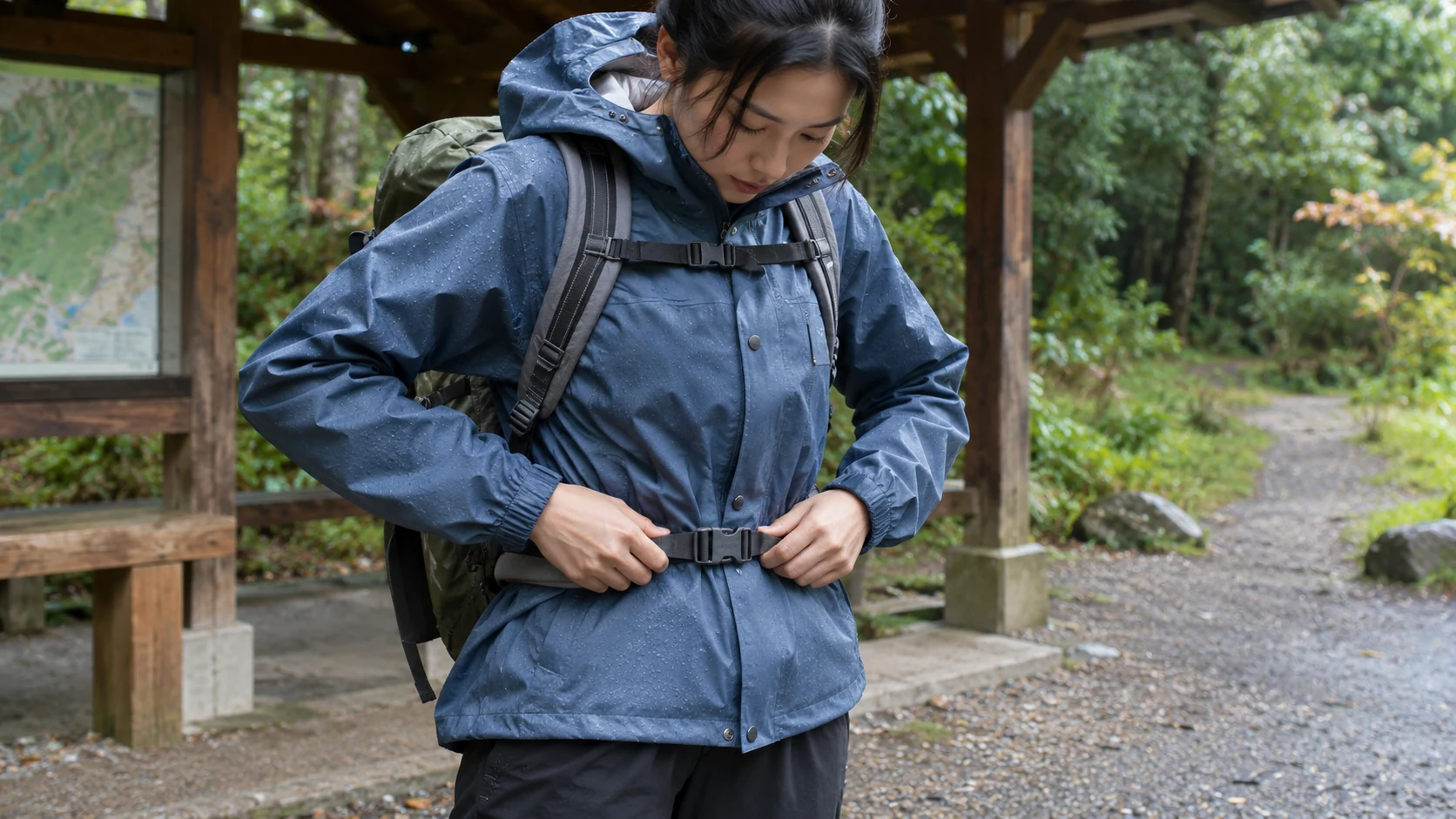
Care also matters. Surface water repellency can decline while the underlying barrier remains intact; visible wet-out should not automatically be interpreted as loss of the original hydrostatic rating. Conversely, restoring surface beading does not repair damaged seam tape or a punctured barrier.
For procurement, ask how the claim will be maintained across production lots and material substitutions. A lower purchase price may become expensive if the buyer must investigate inconsistent documentation, rework product descriptions or handle avoidable returns.
What can a waterproof jacket fabric rating comparison establish?
| Advertised head | Equivalent water height | Approximate pressure | What remains unproven |
|---|---|---|---|
| 10,000mm / 10K | 10m | 98kPa | Whole-garment leakage, comfort and lifespan |
| 15,000mm / 15K | 15m | 147kPa | Whole-garment leakage, comfort and lifespan |
| 20,000mm / 20K | 20m | 196kPa | Whole-garment leakage, comfort and lifespan |
The pressure figures are rounded unit conversions using the assumptions above, not new test results. A real comparison still requires compatible methods and sample conditions. Avoid turning the table into an activity certification chart: none of these numbers alone approves a jacket for every mountain, storm or worksite.
When is a higher rating worth considering?
| Use pattern | Reason to examine the specification | Other decisive checks |
|---|---|---|
| Short city journeys | Confirm genuine rain protection | Hood, closure convenience and care |
| Long walks with a loaded pack | Seek documented pressure resistance and durability | Contact areas, ventilation and seam construction |
| Frequent exposed wet outings | Compare evidence after relevant conditioning | Coverage, repairability and garment condition |
| Occupational protective use | Assess the applicable protective-clothing requirements | Intended-use documentation and complete conformity evidence |
The extra cost is worthwhile when it supports the buyer’s actual use requirements and comes with credible construction and evidence. It is less useful when “20K” is the only documented difference. A sample review should compare the complete garments before treating the number as an automatic upgrade.
Is a 20K rating a certification?
No. It is a performance claim that needs a defined basis. ISO 811:2018 is a test method; ISO 11092:2026 addresses different thermal and water-vapour properties. Neither reference alone establishes brand certification or finished-garment compliance.
EN 343:2019 addresses protective clothing against rain with its own classification and testing framework. SATRA explains that material, seams and pretreatments matter within that framework. A retail 20K claim should not be converted directly into an EN 343 class or an occupational protection statement.
What should buyers request with a 20k waterproof jacket quotation?
- The exact material identification and complete test method.
- The result basis, sample condition and any pretreatment.
- Separate breathability information with units and method.
- Seam-sealing scope, closure construction and a representative garment sample.
Yuelei Sports lists breathable waterproof shell options. Buyers requiring a specific 20K construction should request confirmation and supporting reports for the proposed material; no rating is assumed for a listed product merely because it appears in this guide.
Frequently asked questions
What does 20000mm waterproof jacket rating mean?
It normally refers to fabric resistance equivalent to a 20-metre water head under a specified test. Confirm the method and sample condition. It is not a promise about rainfall depth or hours of use.
Is 20,000mm waterproof enough for heavy rain and hiking?
It can provide substantial fabric pressure resistance, but suitability also depends on seams, openings, ventilation, fit and condition. The number alone cannot establish that a complete jacket suits every hike.
How does a 20K jacket compare with 10K and 15K waterproof ratings?
On a comparable test basis, 20K indicates higher hydrostatic resistance. It does not imply proportionally longer protection, greater breathability or a longer lifespan. Compare complete reports and garment construction.
Does a higher waterproof rating always mean less breathability?
No. The properties are related through material design but cannot be inferred from one another. Request a separate breathability result with its method, units and tested assembly.
Are taped seams still important on a 20,000mm jacket?
Yes, weather-exposed stitched seams need appropriate sealing. Seam tape is a common solution, but the actual construction and sealing scope must be checked independently of the main fabric rating.
What activity level really needs a 20K waterproof jacket?
No activity label universally requires that number. Long, exposed wet use may justify stronger documented specifications, while other situations may prioritize comfort or convenience. Evaluate exposure and construction together.
References
- ISO 811:2018: resistance to water penetration
- ISO 11092:2026: thermal and water-vapour resistance
- REI: How to Choose Rainwear
- SATRA: the EN 343 protective clothing standard
A useful rating is one that can be traced to the material, method and garment being purchased. Contact Yuelei Sports about waterproof jacket specifications with the target performance and evidence requirements included in the brief.