 Xiamen Yuelei Sports Co., Ltd

When a technical engineer in Rotterdam receives a bright rain-jacket sample for a maintenance team, the colour and reflective bands initially look suitable. In this illustrative approval scenario, the largest insulated uniform will not fit underneath, and a tool belt covers part of the visible trim. The sample has not suddenly become defective. The order was assessed as a jacket, without checking the complete working outfit or the required documentation.
Summary: A high visibility waterproof jacket needs separate evidence for visibility and rain protection. ISO 20471 covers high-visibility clothing; EN 343 addresses protective rainwear. ANSI currently lists ANSI/ISEA 107-2026 for US high-visibility apparel. Confirm the applicable market, garment class, size range and workplace requirements before approving the exact model.
These standards answer different questions. ISO’s published scope includes colour, retroreflection, minimum material areas and material placement. A photograph of a yellow jacket cannot prove those requirements have been met. Equally, compliance with a visibility standard does not establish waterproofness, flame resistance or suitability for every workplace.
Which high-visibility standard applies to the order?
The answer starts with the destination and the employer’s risk assessment. European specifications commonly reference EN ISO 20471; US specifications commonly reference ANSI/ISEA 107. The standards have their own classifications and design requirements. Buyers should not assume that an identical-looking garment has interchangeable compliance under both systems.
As checked in November 2026, ISO lists ISO 20471:2013 with its 2016 amendment, while a replacement remains under development. ANSI’s catalogue identifies ANSI/ISEA 107-2026 as the most recent edition, revising 2020. A new publication does not automatically change every legal or contractual requirement overnight. Identify the edition accepted by the purchaser and relevant authority.
Request the garment’s model identification, claimed classification, supporting test or conformity documents, size coverage and user instructions. For EU-market PPE, establish the applicable conformity-assessment route and declaration. A certificate for reflective tape alone cannot establish compliance of the jacket assembled around it.
What is the difference between reflective and high-visibility clothing?
Retroreflective materials return incident light toward its source. Fluorescent background materials improve conspicuity under suitable daylight conditions. These are two distinct mechanisms, and ISO 20471 addresses both material performance and their arrangement within protective clothing. Reflective piping on an ordinary leisure jacket does not establish the required garment classification.
A reflective waterproof jacket also depends on how it is worn. A backpack, tool belt, open front or covering outer layer may obscure important areas. Hood placement matters too: ANSI’s explanation of the 2026 revision specifically notes guidance on non-fluorescent hoods obscuring required high-visibility materials. Check the complete outfit in normal working positions.
Heavy rain, dirt, lighting geometry and wear can affect real-world conspicuity. Avoid promising a fixed visibility distance without appropriate evidence for the stated conditions. Selection of a suitable work waterproof jacket therefore needs more than a bright colour choice or a supplier’s description of its trim.
What does EN 343 add to a high-visibility jacket?
EN 343:2019 addresses protection against rain, including resistance to water penetration and water-vapour resistance. SATRA’s explanation describes four performance classes for each of those properties. The classifications should be read separately, because stronger rain resistance does not by itself show better moisture transfer.
Ask for the exact classification and supporting scope rather than a bare “EN 343” statement. Fabric, seams and relevant conditioning matter. An ISO 811 fabric report can be useful evidence of hydrostatic resistance, but it does not independently establish every requirement of EN 343 or the performance of the complete work outfit.
For long shifts, the practical question is whether the garment allows the necessary work without excessive heat buildup. Ventilation, workload and layers remain relevant alongside test results. The work rain-jacket selection guide covers these everyday fit and wear considerations.
How should a work jacket fit over uniforms and PPE?
Try three relevant positions: reaching, bending and seated work, adapting the sequence to the job. These are proposed fitting checks, not a substitute for a PPE assessment. The jacket should close correctly without stretching the front, restricting movement or compressing layers. Required visible areas must remain appropriately exposed in the intended configuration.
Test the smallest as well as larger ordered sizes. ISO 20471 includes minimum-area requirements, so an approved appearance in one size should not be generalized to every size or alteration. Obtain confirmation of which sizes and combinations the documentation covers. Cropping sleeves, changing panels or adding large decorations can affect that basis.
Compatibility with helmets, harnesses or other PPE requires its own assessment. Do not reposition protective equipment merely to make the jacket look better. A tight hood or bulky collar should trigger a review of the combination, and specialist equipment instructions take precedence over a generic clothing-fitting suggestion.
Why do washing instructions matter to compliance?
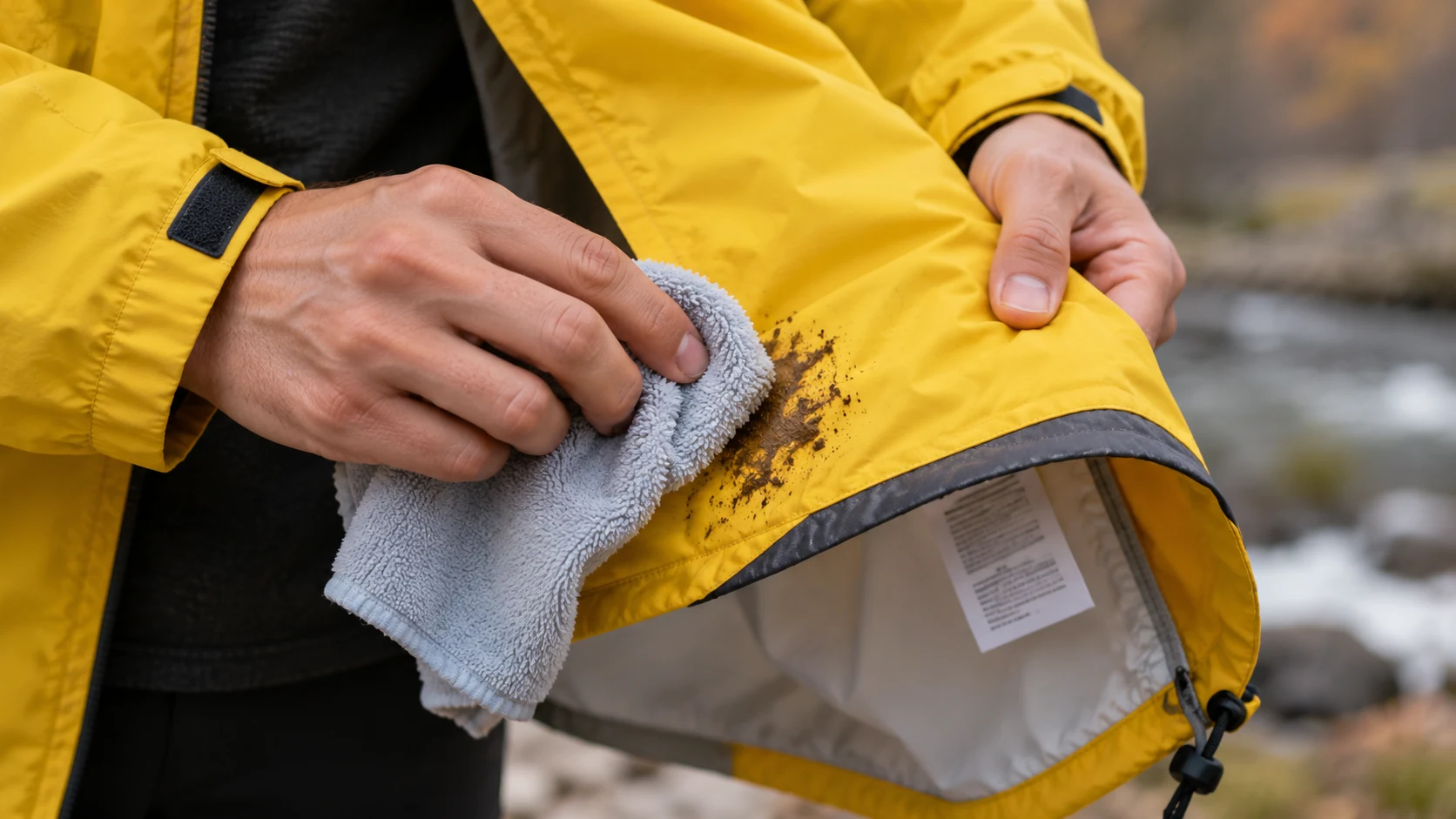
Colour, trim condition and material performance can change with use. Keep the garment clean according to its instructions, inspect for damage and follow any stated maximum cleaning cycles. A wash-cycle statement is a tested condition or use limit within its stated scope; it is not a guarantee of a fixed service life on every worksite.
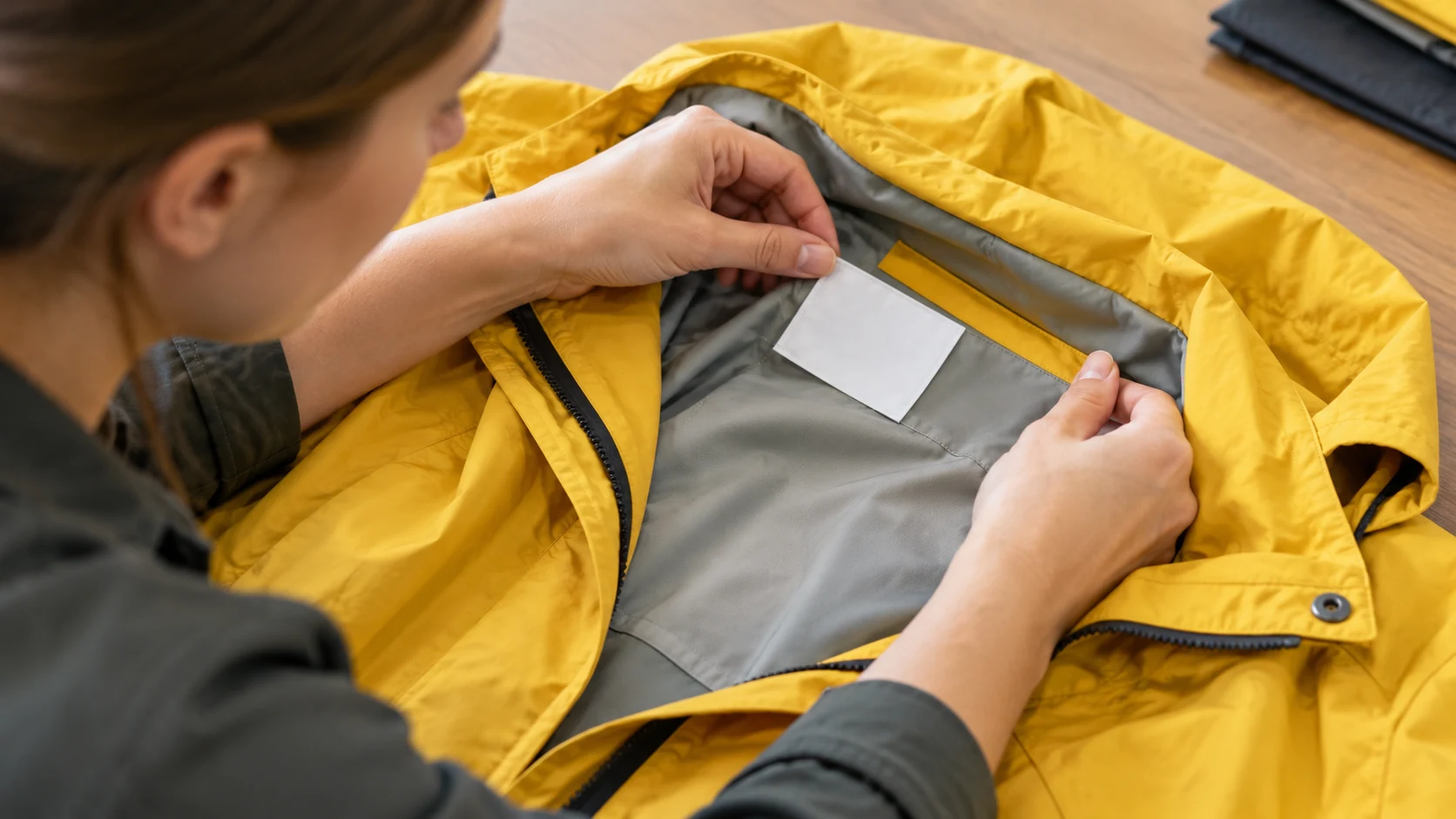
ANSI’s description of its 2026 revision emphasizes legible garment markings throughout use. If a label cannot be read, identifying the model and care requirements becomes harder. Keep purchasing records tied to garment identification, and do not use unapproved bleach, softeners, solvents or repair materials simply because they improve appearance.
Cleaning cannot reverse every form of damage. Peeling trim, torn panels, persistent contamination or failed seams require assessment against the manufacturer’s instructions. A good issue-and-return system records the reason a garment was removed from service instead of returning every washed item automatically.
Which claim requires which evidence?
| Claim | Relevant evidence | What it does not establish |
|---|---|---|
| High visibility | Exact garment documentation to the required visibility standard | Waterproofness or flame resistance |
| Protection against rain | Applicable rainwear classification and test scope | Visibility class |
| Water-resistant fabric | Named fabric test and specimen identification | Complete jacket or PPE compliance |
| Flame or arc protection | Evidence specific to the assessed hazard and complete garment | Every other protective function |
A flame resistant waterproof jacket must be assessed for the relevant thermal hazard as well as rain exposure. “Military waterproof jacket” and “tactical waterproof jacket” are not substitutes for that documentation. Neither style nor colour proves protection.
How do purchasing requirements change by workplace?
| Situation | Buyer decision | Document or check needed |
|---|---|---|
| Vehicle movement near personnel | Required conspicuity and garment configuration | Risk assessment and applicable visibility class |
| Prolonged outdoor rain exposure | Rainwear performance and work comfort | Rainwear evidence and representative fitting |
| Additional heat or electrical hazards | Compatible multi-hazard protection | Hazard-specific garment evidence |
| Regular industrial laundering | Approved cleaning and replacement process | Care limits and inspection records |
What compliance mistakes create avoidable costs?
The EU PPE Regulation establishes duties for economic operators supplying PPE in that market. Buyers should verify the product’s intended protective function and applicable conformity documentation rather than treating a decorative CE mark as evidence. Standards, regulations and a factory’s quality-system certification are different things.
Hidden costs include rejected deliveries, unsupported tender claims, replacement of unsuitable sizes and loss of traceability after decoration. Compare total procurement cost using actual order data. A low unit price has little value if the garment cannot be issued for the job. Final selection belongs within the employer’s competent safety assessment.
What should be confirmed before a bulk order?
- Write the market, job hazards, required standards and accepted editions into the brief.
- Match documents to the exact model, sizes, colour and approved configurations.
- Approve fit with the intended uniform and other protective equipment.
- Agree cleaning, inspection, repair and replacement instructions before issue.
Yuelei Sports supplies outdoor rainwear for B2B enquiries. A custom waterproof rain jacket discussion should establish whether the requested protective functions are supported for the proposed model. This article does not certify any listed product. A high visibility waterproof jacket should only carry claims substantiated by its own evidence.
Frequently asked questions
What safety standards should a high visibility waterproof jacket meet?
It depends on market and workplace requirements. EN ISO 20471 and ANSI/ISEA 107 address visibility; EN 343 addresses protective rainwear. Confirm the required editions and classifications.
Is reflective tape still effective in heavy rain and low light?
Performance depends on the material, illumination, viewing angle, contamination and condition. Do not infer a guaranteed distance or adequate garment visibility from trim alone.
How waterproof and breathable should workwear be for long shifts?
Use the task’s exposure and workload to set requirements. Review rainwear classifications alongside fit, ventilation and layers rather than selecting a universal number.
What is the difference between high-visibility and reflective work jackets?
Reflective describes a material feature. High-visibility compliance concerns the complete garment’s materials, coverage, arrangement and performance under the specified standard.
How should a work waterproof jacket fit over uniforms and PPE?
It should close correctly and allow required movements without obscuring essential visible areas or impairing other equipment. Assess the full outfit for the job.
How do I wash high-visibility waterproof workwear without damaging reflective trim?
Follow the exact garment’s care label and cleaning limits. Inspect after washing, retain identification and obtain guidance for damaged or persistently contaminated garments.
References
- ISO 20471: high-visibility clothing scope and amendments
- ANSI/ISEA 107-2026: current catalogue entry
- ANSI: explanation of the 2026 revision
- SATRA: EN 343 protective rainwear classification
- EU Regulation 2016/425 on PPE
Reliable workwear procurement connects the garment, its paperwork and the job it must perform. Contact Yuelei Sports with the required standards and intended use to establish the scope of a waterproof workwear enquiry.