 Xiamen Yuelei Sports Co., Ltd
A raincoat can look convincing in a product photograph yet leave an office shirt wet at the collar or pull awkwardly over a blazer. Equally, a dependable outdoor shell may feel too bulky for a daily train journey. The choice is not simply fashion against function. It is whether the cut, closures and fabric work together for the journey being made. For apparel buyers, that means approving an actual outfit and a finished garment, not only a colour swatch and a flattering image.
The short answer is that a fashion waterproof jacket can provide useful rain protection without an expedition appearance. Start with credible fabric and seam information, then compare hood coverage, fastenings and fit over everyday clothes. A longline or belted shape is not automatically less waterproof than a short shell, but it changes movement and where rain runs off. ISO 811:2018 concerns fabric water penetration; it cannot establish the performance of an entire coat.[1] Try the garment fastened, seated and moving before settling on the silhouette.
Can a stylish raincoat be genuinely waterproof?
Yes. Styling describes appearance; waterproof construction describes how water is resisted at the fabric, seams and openings. A matte minimalist coat can use a waterproof membrane, while a technical-looking jacket may only have a water-repellent finish. REI’s rainwear guide explains why the finish that encourages water to bead is distinct from the underlying rain barrier.[2]
Ask three separate questions: what is the fabric construction, which seams are sealed, and how are the front opening and hood protected? A statement such as “weather-ready” answers none of them. Joules distinguishes water resistance from waterproof rainwear and discusses taped seams alongside styling, making it a useful example of how consumer presentation can retain technical meaning.[3]
A fashionable waterproof jacket should therefore be assessed with its pockets closed, belt adjusted and normal layers underneath. A fabric report cannot explain whether a badly positioned pocket opening catches rain or whether a collar leaves the shirt exposed.
Is a long raincoat more practical than a short jacket?
| Cut | Where it helps | What needs checking |
|---|---|---|
| Short shell | Easy movement and compact carrying | Coverage above trousers when sitting or reaching |
| Hip-length raincoat | Everyday layering and mixed journeys | Coverage of a blazer or long sweater |
| Longline coat | More coverage over skirts and office clothing | Walking stride, steps and seated comfort |
| Belted coat | Adjustable shape at the waist | Front closure remains flat when the belt is tightened |
| Pullover style | Simple front appearance | Ease of removal and available ventilation |
Longer coverage is valuable only while it remains in the right place. An overly narrow lower section can ride up when the wearer sits, while a loose hem can be inconvenient on stairs or a bicycle. A two-way zip or vent may improve movement, but opening it also changes rain coverage. The appropriate solution depends on the journey rather than a blanket rule that longer is better.
Can a belt or fitted waist affect rain protection?
A belt does not create a waterproof seal. If tightened too much, it can pull the front fastening out of alignment and produce folds that direct runoff toward an opening. Assess the coat with the belt at a comfortable tension and the pockets containing normal everyday items. The aim is a stable, wearable shape rather than the smallest possible waist.
For production sampling, check belt loops and decorative seams as part of the construction review. Extra stitching through the weather barrier needs an appropriate sealing solution. A decorative flap or trim should not be described as protective unless its function has been established.
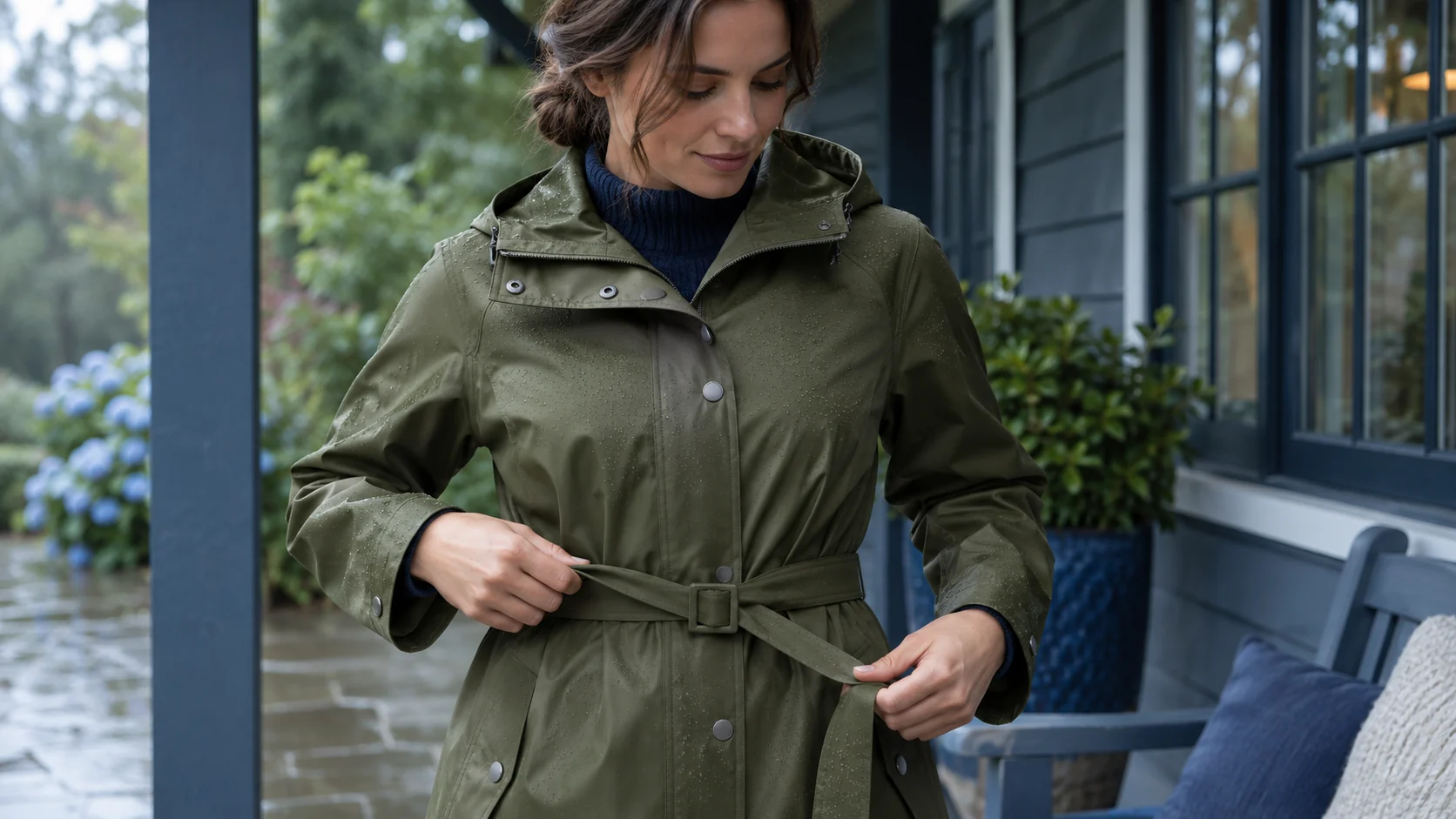
Which details make a waterproof jacket work with office clothes?
Look for shoulder room, sleeves that slide comfortably over the intended midlayer, and a collar that does not bunch under the hood. Hidden or tonal closures can create a cleaner appearance without eliminating adjustment. A hood that can be neatly stowed is convenient, but its fit when deployed matters more than its appearance when folded.
White, navy, olive and black all support different wardrobe choices. A white waterproof jacket makes marks easier to notice; a vintage waterproof jacket may need closer inspection of ageing coatings, seam tape and care information. Neither a neutral colour nor a retro cut identifies the garment’s waterproof performance.
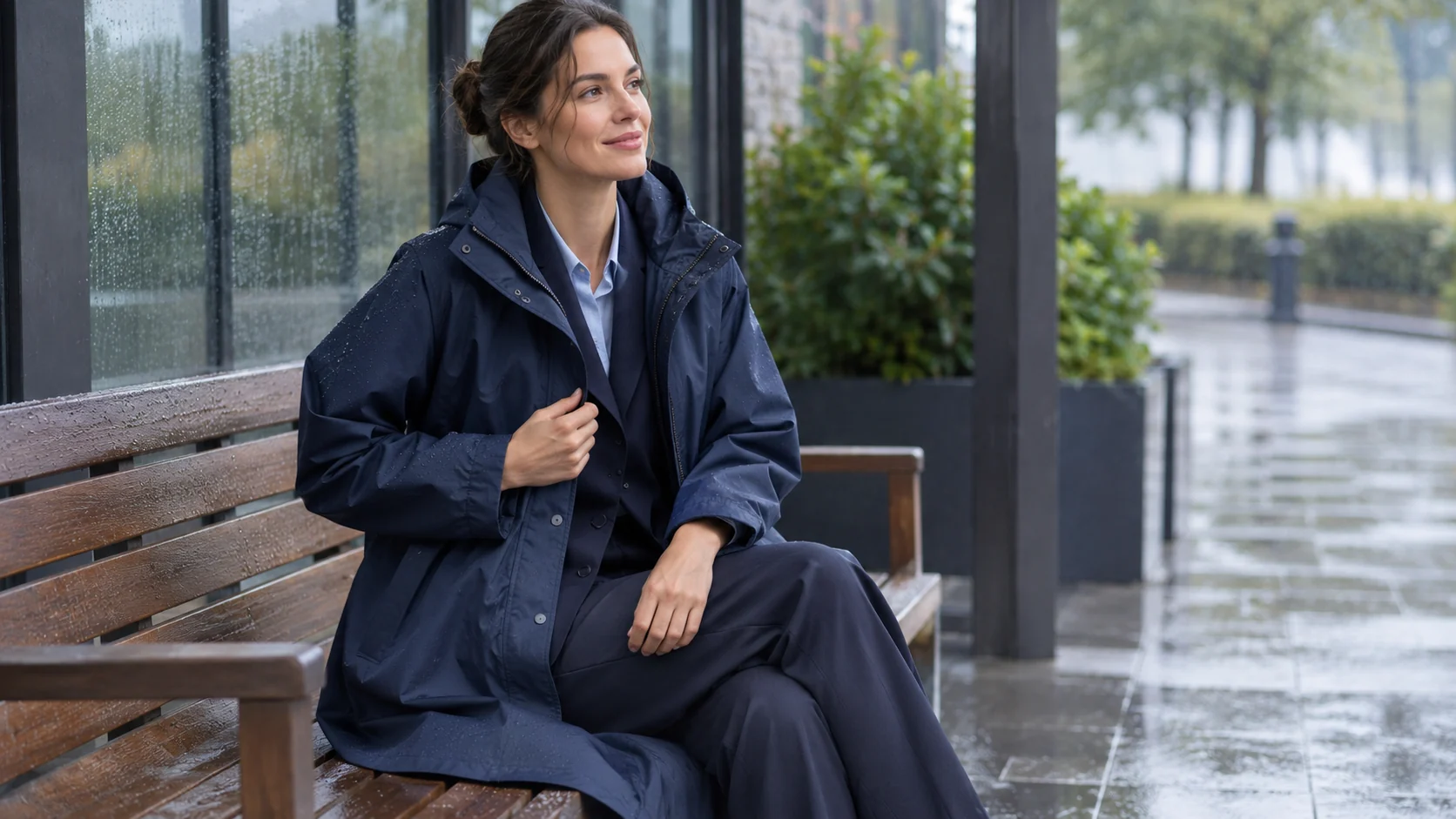
Fit the garment over the actual blazer or knitwear and sit as though travelling on a train. Check whether the lower opening pulls apart and whether the shoulders bind when reaching for a bag. For a longer trip, the separate guide to a lightweight waterproof jacket for travelling covers packing and changing layers.
What should change between commuting and outdoor use?
| Routine | Priority | Common compromise to avoid |
|---|---|---|
| Short walk and public transport | Easy removal, seated fit and manageable bulk | Insulation that becomes uncomfortable indoors |
| Long walk to work | Hood stability, ventilation and protected closures | Choosing by colour before rain construction |
| Office and weekend use | Fit across different layer combinations | A narrow cut that fits only one thin top |
| Cycling commute | Riding posture, hem clearance and suitable visibility equipment | Loose fabric near moving bicycle parts |
| Retail private-label range | Repeatable sizing, shade approval and clear care guidance | A sample that cannot be reproduced in bulk |
No single rain rating resolves these trade-offs. A test method and result are useful when attached to the fabric being ordered, but commute length, exertion and openings remain separate decisions. Where clothing is sold as protective equipment, buyers also need to establish the relevant market requirements rather than assuming an everyday raincoat’s description is sufficient.
What should a buyer include in a fashion rainwear brief?
- Describe the intended outfit underneath, not just the wearer’s usual clothing size.
- Specify the desired length, hood arrangement, pocket use and surface appearance.
- Request the test method and conditioning behind rain-protection claims.
- Confirm the sample review process, colour reference and acceptable bulk variation.
- Agree on care labelling and any market-specific composition or product requirements.
A fashion waterproof jacket range benefits from a brief that separates non-negotiable performance requirements from optional appearance choices. Yuelei Sports’ custom waterproof rain jacket is one starting point for discussing shell details. Availability of a particular belt, longline pattern or fabric must be confirmed rather than assumed from a general OEM offer.
When comparing waterproof jackets, ask for the same configuration in each quotation. Otherwise a lower price may simply reflect fewer sealed seams, a different fabric or a different lining. Those changes should be explicit before the sample is approved.
What else should buyers ask about fashionable rainwear?
Can a fashion waterproof jacket still perform well in real rain?
Yes, if the fabric, sealed seams and openings suit the intended exposure. Appearance is not a substitute for construction details or test evidence.
What makes a waterproof jacket look stylish rather than overly technical?
A simple silhouette, restrained trim and coordinated closures can help. Removing useful hood or cuff adjustments solely for appearance can make the jacket less practical.
Are longline and belted rain jackets as waterproof as short shells?
They can be, but length and belts do not establish performance. Check seam sealing, closure alignment and how the coat behaves when sitting and walking.
How do I choose a fashionable waterproof jacket for commuting?
Match it to the longest exposed part of the journey and the layers worn underneath. Check ventilation and easy removal for the indoor part of the trip.
Which colours and cuts work with everyday outfits?
Neutral colours and simple cuts usually combine easily with several outfits. The best choice is the one that fits the intended wardrobe without sacrificing movement or coverage.
How should a fashion rain jacket fit over office clothes?
It should fasten over the full outfit without tightness at the shoulders or chest. Test reaching and sitting, and check that the clothing it is meant to protect stays covered.
References
- ISO 811:2018: Resistance to water penetration.
- REI: How to Choose Rainwear.
- Joules: Raincoat Buying Guide. Public guides checked November 16, 2026.
How can style and rain protection be approved together?
A useful fashion waterproof jacket begins with the clothes and journey it must accommodate. Choose the necessary coverage and movement first, then refine the colour, surface and trim. Review fabric evidence separately from the finished garment, because a good material result does not reveal gaps at a strained front opening or a poorly adjusted hood. For brands, the important approval is a sample that works when worn and can be specified clearly for production. Yuelei Sports offers custom waterproof jackets for outdoor apparel programmes; buyers can share their intended silhouette, fabric requirements, size range and order quantities to discuss a suitable sample and quotation.