 Сямыньская спортивная компания с ограниченной ответственностью «Юэлей»
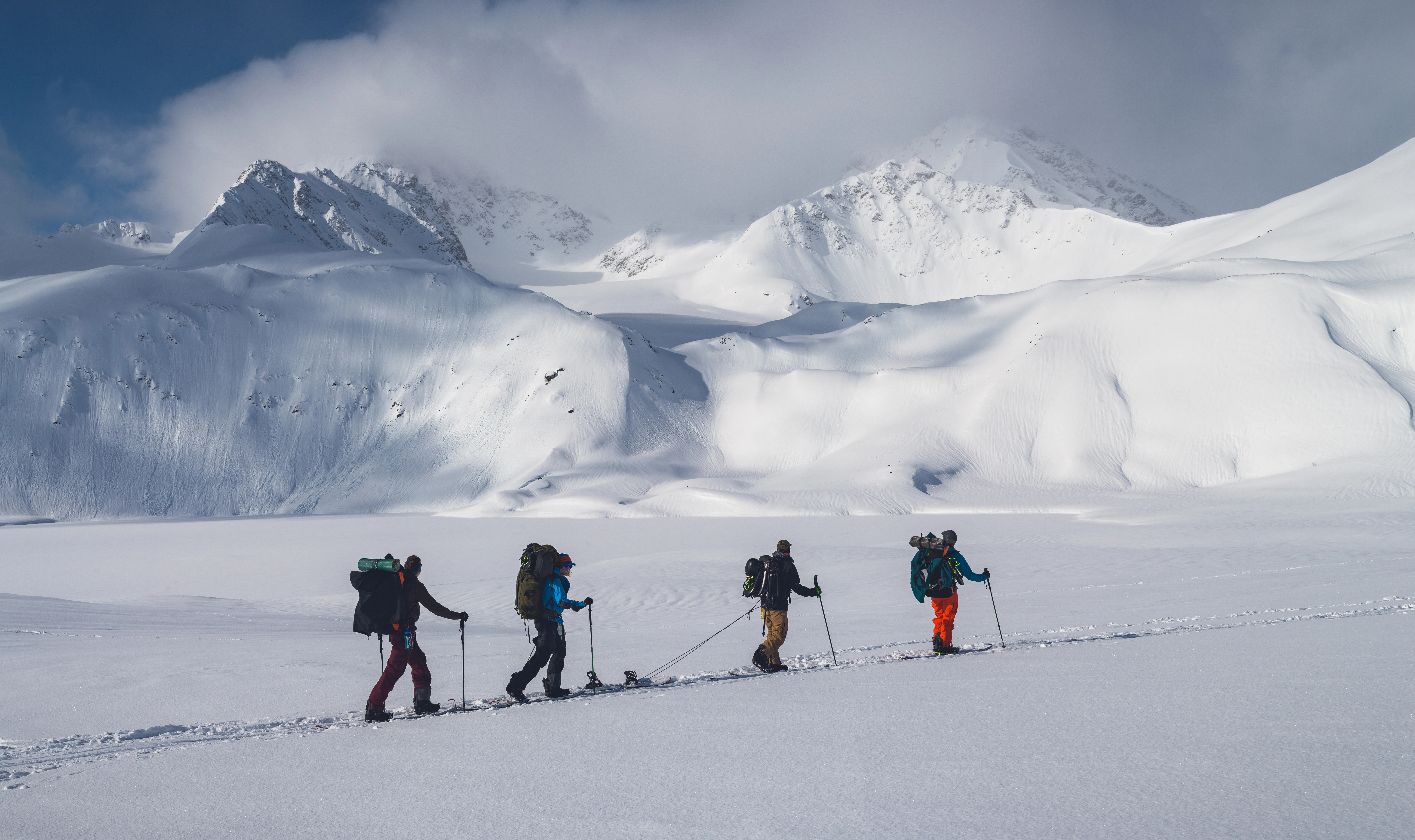
When Elena, a ski-program technical lead in Denver, fitted 24 first-time participants for a company ski day, the team copied city winter outfits and added rental jackets. Within an hour, several skiers were damp, one could not bend comfortably, and double socks made rental boots tighter rather than warmer. In this representative scenario, the clothing was not simply “bad”; selection had ignored moisture, movement, wind, and boot fit.
Summary: A reliable first time skiing clothes plan uses three functional layers and 10 practical items, not the largest possible pile of winter wear. Compare base layers through moisture management, outerwear through documented test methods such as ISO 11092, ISO 811, and ISO 4920, and fit through a movement check. Beginners can usually skip double socks, cotton streetwear, and duplicate premium outerwear until the weather, rental options, and program frequency are known.
Use four packing groups: wear on body, one dry spare set, provider-confirmed rental or resort items, and separate travel or après clothing. Each piece then has a defined job.
Build the beginner ski-day system around 10 useful items
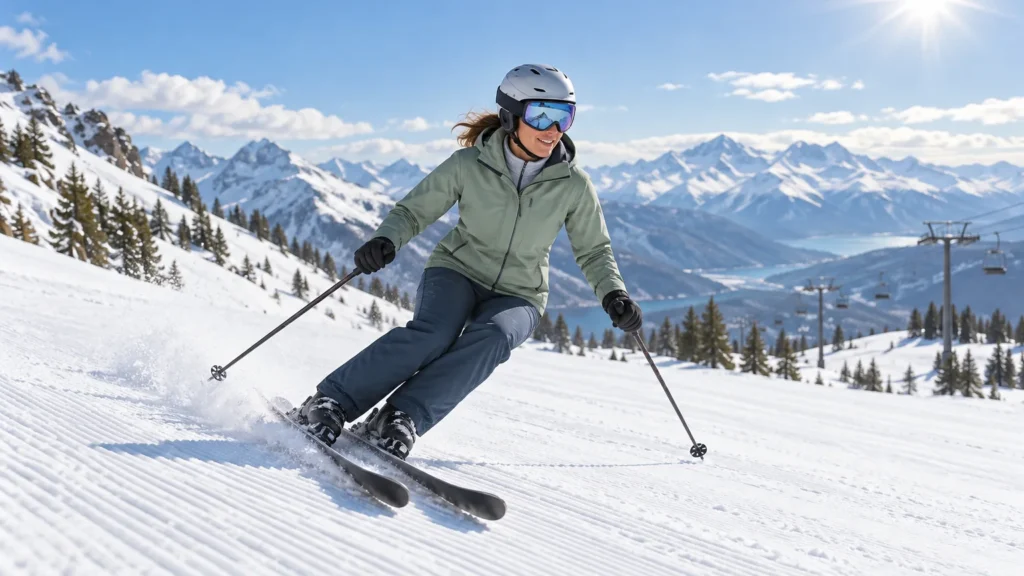
The most practical skiing clothes list treats the outfit as a system: a base layer moves moisture away from skin, a midlayer retains useful warmth, and the outer layer limits wind and precipitation. This three-layer model is adjustable during a lesson, while one heavy garment offers fewer ways to respond when exertion or weather changes. Warmth still depends on activity, wind, moisture, personal physiology, and how the complete system fits.
- Moisture-managing base-layer top. Choose merino wool or a suitable synthetic knit that sits close without restricting the shoulders.
- Base-layer bottom. Use a smooth, non-cotton layer that does not bunch behind the knee or inside the boot cuff.
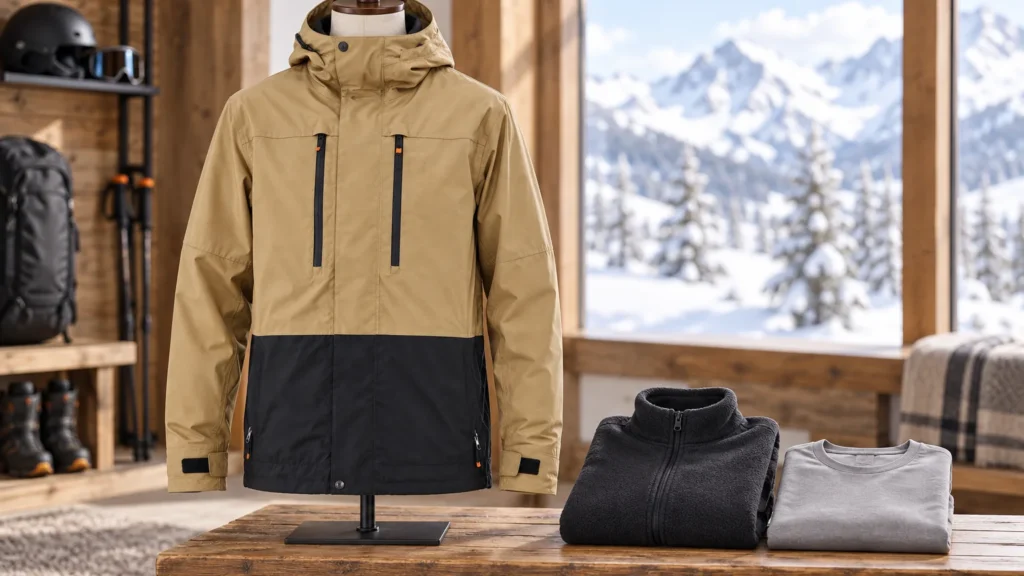
- Breathable midlayer. A fleece or light insulated jacket adds adjustable warmth without limiting arm reach.
- Weather-protective ski jacket. It should cover the torso in forward flexion, close at the cuffs, and allow layer adjustment.
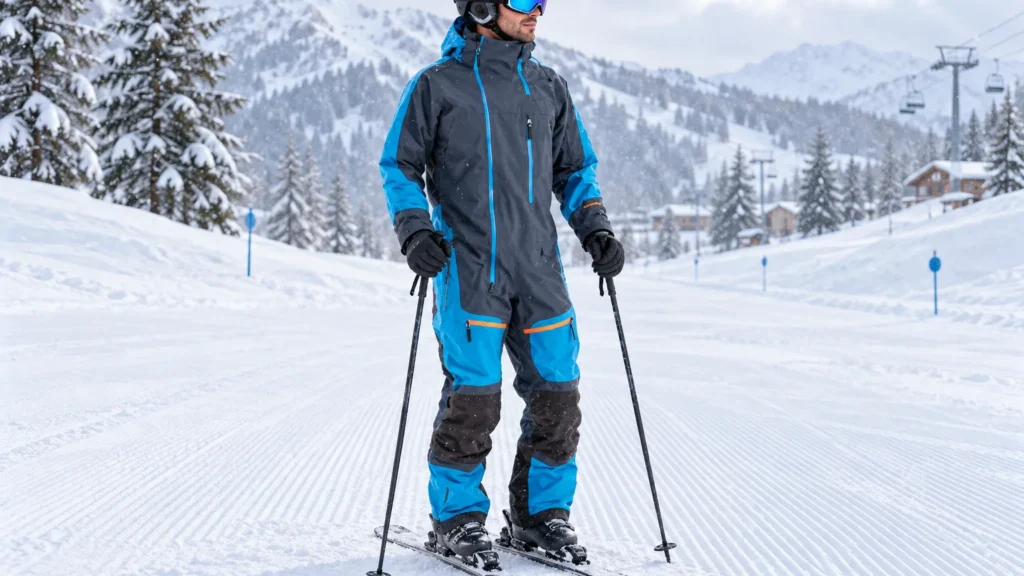
- Ski pants or bib. Look for articulated knees, seat coverage, and a cuff compatible with ski boots.
- One pair of ski socks. A smooth wool or technical-blend pair avoids the pressure and crowding created by double socks.
- Water-resistant gloves or mittens. Gloves favor dexterity; mittens reduce exposed surface area. Both need finger room.
- Low-bulk neck gaiter. A breathable gaiter closes gaps without the loose ends of a long scarf.
- Goggles with suitable visibility. They protect against wind, snow, and glare and should meet the helmet without a large gap.
- A correctly fitted ski helmet. Many beginners rent one; follow the manufacturer’s fit and replacement guidance.
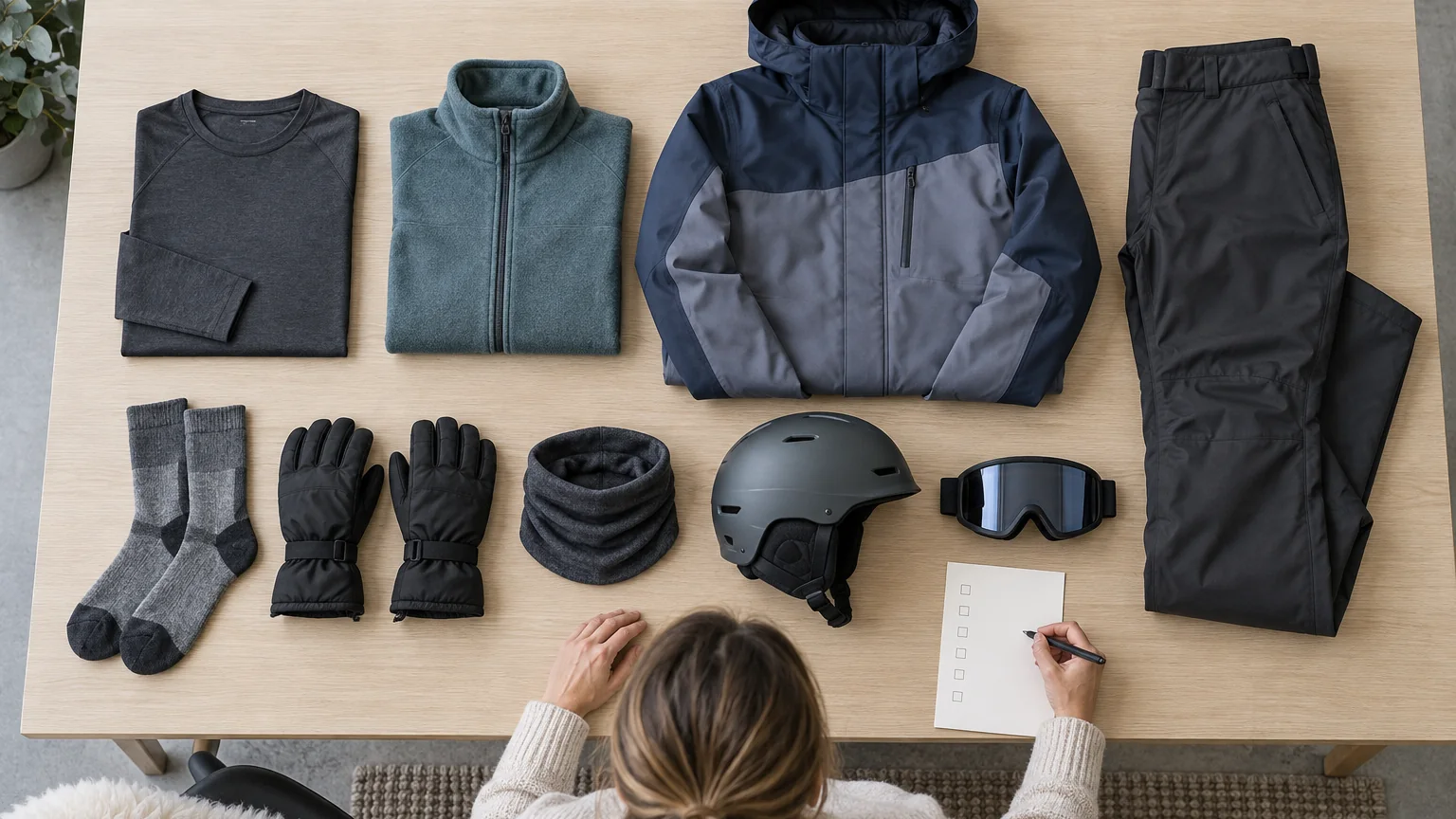
Sort every packed item into slope, dry-spare, rental, or travel use
This division also separates participant-owned next-to-skin items from shared or rented equipment.
The wear-on-body set should be staged as one complete system
Stage the 10 essentials together and perform the five-motion check before packing. Fix any jacket-hem, boot-cuff, glove, or helmet-goggle interface problem at home; do not add cotton as an unplanned underlayer.
One dry spare set solves more problems than redundant outerwear
Seal one dry base-layer top and bottom plus one dry pair of socks separately. It is a replacement set, not an instruction to double layers or socks. For longer trips, rotate clean sets by ski day instead of packing redundant outerwear.
Rental-dependent items must be confirmed with the actual provider
Confirm package inclusions, helmet and outerwear availability, sizes, fitting time, and identification or deposit rules with the provider. Ask specifically about goggles and gloves. Group operators should record the answers against participant names and sizes.
Travel and après clothing should remain outside the ski-day system
Keep warm street layers, dry casual socks, traction footwear, and the journey-home change in another bag. They are useful after skiing but are not substitutes for technical slope clothing.
Complete two timing checks instead of rebuilding the 10-item list
These checks verify readiness without repeating the clothing inventory.
The night-before check confirms fit, dryness, and reservations
- Review the forecast, wind, resort notice, route, and meeting instructions.
- Dry the system, repeat the movement check, and seal the spare set.
- Reconfirm rental inclusions, sizes, pickup, lesson, and ticket details.
- Label group-issued pieces and name the contact for fit or missing-item problems.
The morning-of check catches changed conditions and interface errors
- Recheck current weather and resort notices; adjust the midlayer or break plan.
- Confirm dryness, working closures, secure pockets, no cotton, and one sock per foot.
- After rental fitting, flex, make a fist, turn the head, and recheck equipment interfaces.
- Agree on check-ins, warm-break options, and the response to cold-stress symptoms.
Choose base-layer fabrics by moisture behavior, not thickness alone
For under clothes for skiing, cotton is a poor default because it can retain moisture and feel cold during pauses. Merino can buffer moisture and odor, while lightweight synthetic blends often dry quickly; fabric construction still matters as much as the fiber name.
ISO 11092 is a laboratory test method for measuring thermal resistance and water-vapor resistance under controlled conditions. Its results can help a buyer compare candidate fabrics, but they do not create a universal temperature rating for a garment. Procurement teams should request the test report, specimen description, conditioning method, and units rather than accepting an unsupported “breathable” label.
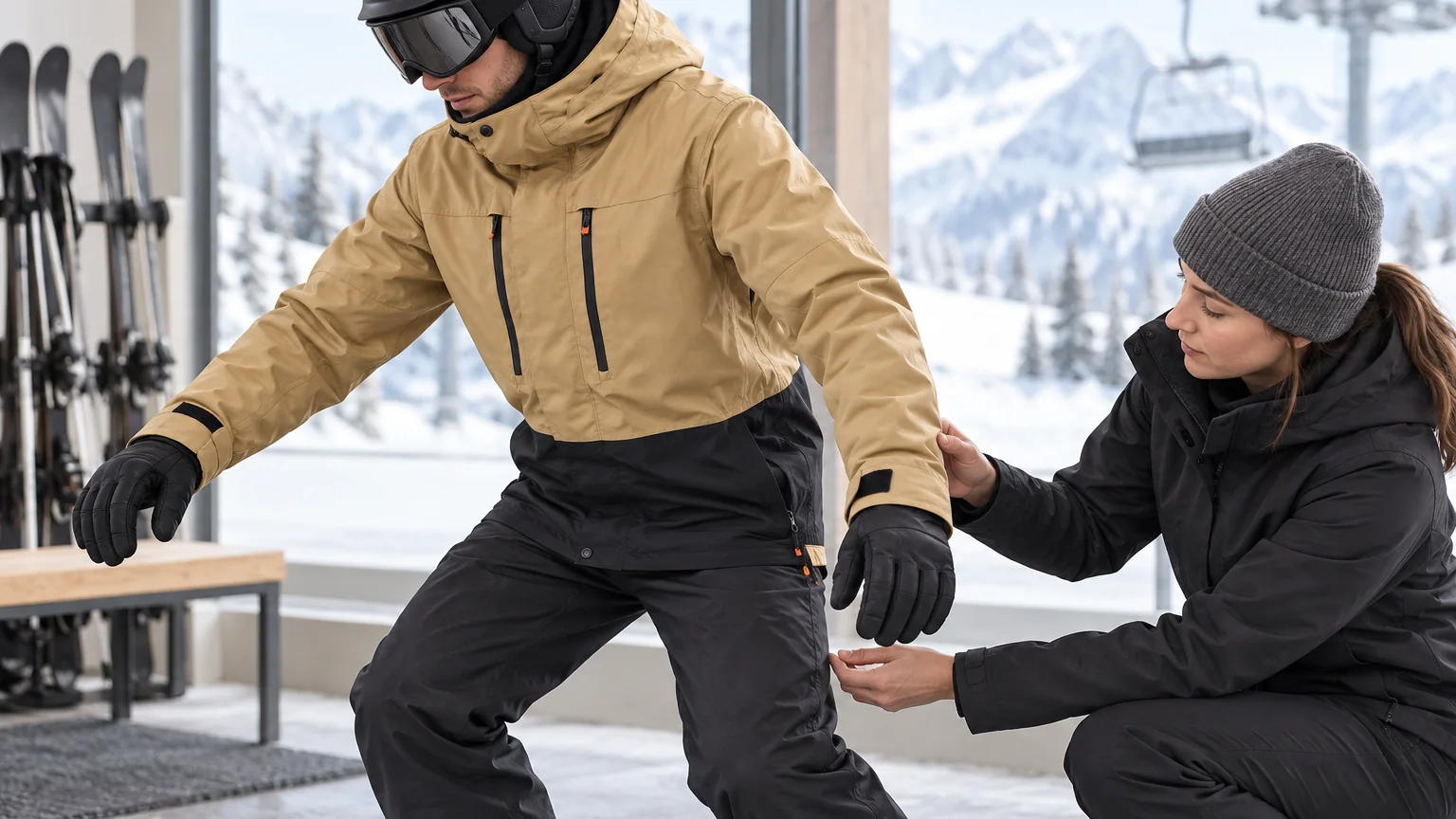
Fit is measurable in practice. A base layer should stay in place through five motions—overhead reach, rotation, deep knee bend, boot-entry stance, and seated flexion—without rolling or binding. Group programs should record key body measurements rather than rely on streetwear size alone.
Match shell or insulated outerwear to the operating conditions
A shell limits wind and precipitation while allowing variable layers underneath. It suits mixed weather and active lessons. An insulated jacket combines protection and warmth; it is simpler to issue but less adaptable during high activity or mild conditions.
ISO 811 measures resistance to water penetration by hydrostatic pressure, while ISO 4920 assesses surface wetting through a spray test. These methods answer different questions, and neither alone predicts comfort on a full ski day. Seam construction, closures, hood and cuff design, face-fabric condition, ventilation, and maintenance influence the result experienced by the wearer.
A universal comfort temperature is not credible without a validated clothing system and defined conditions. Lift exposure and active turns create different heat balances; wind, dampness, breaks, physiology, and layer compression change the outcome. Define an operating envelope and an adjustment process instead.
Protect feet, hands and neck without creating new fit problems
Extremity complaints often start at interfaces. Double socks crowd boots, folded hems create shin pressure, and tight gloves reduce space around the fingers. Check one smooth sock, boot contact, and the ability to make a full fist.
The U.S. National Institute for Occupational Safety and Health identifies wind, wetness, inadequate clothing, and exhaustion among cold-stress risk factors. That guidance is occupational rather than a ski-garment certification, but the control logic transfers: keep clothing dry, provide warm breaks, monitor conditions, and respond early to numbness, uncontrolled shivering, confusion, or loss of coordination.
Neckwear should close exposed areas without loose ends. A gaiter can be raised on a lift and lowered during exertion; a helmet-compatible balaclava may suit colder conditions. A dry spare for gloves or neckwear prevents one wet accessory from weakening the system.
Compare outerwear by value across the whole ski day
Rental availability, fitting, cleaning, drying, storage, repairs, exchanges, and expected use count all affect total cost of ownership. The table uses directional tendencies, not fabricated prices or guarantees.
| Option | Weather management | Comfort and adjustment | Compatibility | Maintenance and TCO tendency |
|---|---|---|---|---|
| Uninsulated shell plus separate midlayer | Flexible when shell construction and closures match exposure | High adjustment range across exertion levels | Requires room and interface checks for layers | Higher initial complexity; reusable across more conditions |
| Insulated ski jacket | Integrated warmth and weather protection | Simple to issue; less adaptable in mild or active periods | Must preserve mobility without compressing insulation | Fewer components; drying and repair affect downtime |
| Resort rental outerwear | Specification and condition vary by provider | Useful for one-off participants if sizes are available | Confirm helmet, glove and boot interfaces in advance | Low ownership burden; repeated rental fees can accumulate |
| Ordinary winter streetwear | Often lacks documented wetting and movement performance | Familiar, but may retain moisture or bind | Poorer cuff, boot and helmet integration | Low immediate spend; higher discomfort and replacement risk |
Let trip duration and program scale determine the buying pattern
| Application | Main cost driver | Practical decision | Avoid |
|---|---|---|---|
| Single beginner lesson | Rental fees and fitting time | Rent helmet and outerwear where reliable; own hygienic base layers and socks | Buying premium duplicates before confirming fit |
| Three-to-five-day trip | Drying, repeat use and weather variability | Use a modular shell system with dry base-layer rotation | One cotton outfit with no drying plan |
| School or corporate program | Size curve, issue speed, cleaning and returns | Pilot representative sizes and document care procedures | Ordering from streetwear sizes alone |
| Wet, windy destination | Shell construction, seams and replacement downtime | Request applicable test data and inspect critical interfaces | Treating one spray-test result as total garment proof |
Treat standards as claim evidence, not automatic product certification
ISO 11092, ISO 811, and ISO 4920 are test methods: they describe how specific thermal, water-vapor, hydrostatic-pressure, or surface-wetting properties are measured. They are not, by themselves, proof that a supplier holds a product certification. A test claim should identify the tested material or garment, method edition, laboratory, result, date, and any limitations.
EN 343 is an applicable European standard for protective clothing against rain, with performance classifications linked to resistance to water penetration and water-vapor resistance. Applicability depends on the destination market, intended use, product design, and marketing claim. Ordinary recreational ski apparel should not be presented as certified occupational PPE unless the required conformity assessment and supporting documentation actually apply.
Unsupported performance or certification claims can lead to rejected specifications, returns, and corrected listings. Connect each claim to the exact product, test scope, care instructions, and approved wording.
Select the system carefully and skip three unnecessary purchases
Yuelei Sports can support distributors and program operators evaluating first time skiing clothes through configurable outerwear. The useful first conversation covers weather, activity, size curve, layer allowance, evidence, care, and issue cycle—not a universal temperature number.
- Define use before material. Record destination, season, lesson intensity, expected precipitation, lift exposure, and rental availability.
- Approve fit as a system. Test the base, midlayer, ski jacket, pants, gloves, helmet, and boots together through the five-motion check.
- Request claim-level evidence. Match each requested performance statement to an applicable test method and the exact component tested.
- Pilot the size curve. Buyers sourcing first time skiing clothes should sample representative sizes before a bulk program order.
- Model total program cost. Include fitting labor, cleaning, drying, storage, repairs, spare stock, exchanges, and expected use count.
The three items most beginners can skip are:
- A second thick pair of socks. Extra bulk can worsen boot fit; pack one appropriate pair per ski day plus a dry replacement for after skiing.
- Cotton hoodies, jeans, or loose fashion scarves. These pieces manage moisture and equipment interfaces poorly compared with purpose-selected layers and low-bulk neckwear.
- Duplicate premium outerwear for a first visit. Rent or pilot when possible, then buy after learning the actual fit, climate, frequency, and layer preference. A documented waterproof ski jacket specification is more useful than an unverified feature list.
This approach reduces buying gear you do not need while protecting the items that affect safety, comfort, and participation quality.
These six answers resolve common first-trip packing decisions
What is the best layering system for first time skiing clothes?
The best first time skiing clothes system uses a moisture-managing base layer, an adjustable midlayer, and a weather-protective outer layer. No fixed combination is warm for everyone; activity, wind, moisture, physiology, and fit determine comfort.
What should I wear under first time skiing clothes in a beginner ski day?
Under first time skiing clothes, wear a close-fitting merino or synthetic top and bottom, then add a fleece or light insulated midlayer as conditions require. Avoid cotton and check that seams and hems do not bunch beneath boots or outerwear.
Do I need an insulated jacket or a shell for a beginner ski day?
An insulated jacket is simple for a cold, low-activity day, while a shell plus separate midlayer offers more adjustment as weather and exertion change. Check the forecast, lesson pace, rental options, and available layers before deciding.
How can I avoid buying gear you do not need while skiing?
Rent the helmet and outerwear for a first trip where dependable sizes are available, and prioritize base layers, socks, gloves, and neckwear with clear fit value. Buy repeated-use items only after confirming the conditions and interfaces that matter.
Are ski clothes and snowboard clothes interchangeable?
They can overlap when weather protection, mobility, fit, and equipment interfaces work for the activity. Snowboard garments may use a roomier cut or different reinforcement zones, so buyers should test stance, cuff placement, seat coverage, and layering rather than relying on the label.
How should ski clothing fit so it is warm but still easy to move in?
Base layers should sit close without binding, midlayers should retain loft, and outerwear should allow a deep knee bend and full arm reach without exposing the waist or pulling at the shoulders. Check the complete outfit with gloves, helmet, boots, and pockets loaded as they will be on the slope.
Verify the plan against primary standards and cold-stress guidance
- International Organization for Standardization, ISO 11092:2014, Textiles—Physiological effects—Measurement of thermal and water-vapour resistance under steady-state conditions.
- International Organization for Standardization, ISO 811:2018, Textile fabrics—Determination of resistance to water penetration—Hydrostatic pressure test.
- International Organization for Standardization, ISO 4920:2012, Textile fabrics—Determination of resistance to surface wetting (spray test).
- U.S. National Institute for Occupational Safety and Health, Cold Stress.
The durable lesson is simple: beginner comfort comes from a balanced, adjustable system, not from the thickest single garment or the longest receipt.
For a ski program, distributor range, or private-label brief, Yuelei Sports can help translate the use case into material, fit, documentation, and sampling questions. Contact the team to discuss the intended market and request product-specific information before ordering.