 Xiamen Yuelei Sports Co., Ltd
When a technical engineer in Bristol tries a rain-jacket sample over office clothes, it looks roomy enough in front of a mirror. In this illustrative fitting scenario, the first check on a bicycle tells a different story: the cuffs pull back, the rear hem rises and the hood obstructs an over-the-shoulder glance. The size label is not necessarily wrong. The garment was checked in a walking posture rather than a riding position.
Summary: A waterproof jacket for bike riding needs seated coverage, usable ventilation and unrestricted head movement. Check it in three positions: upright, leaning toward the bars and looking behind. ISO 811 can substantiate a fabric’s water resistance, but neither that result nor a high number establishes riding fit, visibility certification or comfort on a humid commute.
Cycling jackets vary because riders vary. An upright city-bike commuter in a shirt needs a different cut from a road cyclist in close-fitting kit. Cycling UK’s commuter-jacket coverage and current specialist buying guides treat practical commuting features as a distinct category. The most useful purchase starts with the actual bicycle, outfit and journey.
How should a cycling rain jacket fit on the bike?
A dropped rear hem can cover the lower back as the rider leans forward, while slightly longer sleeves help maintain wrist coverage. The front should not bunch excessively above the thighs. Check those relationships with both hands on the bars and the jacket fully fastened, rather than judging how neatly it hangs on a rail.
Use three positions during sample approval: normal riding, a more forward reach and a shoulder check in each direction. This is a practical fitting sequence, not a certification test. ISO 811 addresses fabric water resistance; it cannot establish whether a jacket restricts steering or whether its hood interferes with vision.
A waterproof jacket for bike use also needs the correct layering allowance. An aggressive road fit may pull across an office shirt or fleece. A generous walking cut may flap or gather at the front. Buyers supplying mixed users should identify those groups and trial appropriate patterns rather than expecting one size chart to solve every posture.
How much waterproofing does a commuter need?
A short ride can still involve intense rain, while a longer journey may remain mostly dry. Journey length alone cannot establish a minimum fabric rating. A result of 10,000mm is a pressure equivalent of a 10-metre water column under its stated test; it does not mean a fixed number of minutes of protection.
Ask for a traceable report using a named method, such as ISO 811, and confirm whether the result applies to new or conditioned fabric. Then examine the seams, front closure, pocket openings and cuffs. The jacket also overlaps other clothing, so exposed wrists or an open waist can let water reach the rider without a fabric failure.
Compare waterproof cycling jacket candidates as complete garments. Rear-wheel spray, wet saddle contact and water running off sleeves create practical challenges that a fabric number does not describe. Mudguards and suitable lower-body protection can reduce problems a jacket alone cannot solve.
Why can a breathable cycling jacket still feel clammy?
A rider produces heat and moisture while pedalling, especially uphill or under a backpack. A breathable barrier has limits; it cannot promise that moisture will escape as fast as every rider produces it. Exterior wetting and humid conditions also affect comfort, so a damp lining is not automatically evidence of rain penetrating the membrane.
ISO 11092:2026 measures thermal and water-vapour resistance under controlled conditions. Compare two breathability claims only when the test methods and units are compatible. A moisture-transmission figure from one procedure and a resistance value from another are not interchangeable scores.
Look for vents that remain accessible in a riding position and do not sit beneath backpack straps. Reduce unnecessary insulation before the ride becomes strenuous. Opening the front zip can release heat when conditions permit, but it also reduces rain coverage. The breathable waterproof jacket guide explains why fabric and ventilation need separate assessment.
Will the hood, cuffs and pockets work during a commute?
Hood compatibility must be checked with the actual helmet, following the helmet maker’s instructions. Some jackets are designed around an over-helmet hood; others use a close-fitting hood or no hood. A hood should not alter helmet fit or block peripheral vision. A large volume that works over one helmet may collapse forward without it.
Check two head movements while the bicycle is stationary: a glance behind each shoulder and a look down toward the controls. This suggested check concerns fit, not helmet certification. ISO 811 fabric testing does not establish compatibility with protective equipment, and a garment should not claim it without suitable evidence.
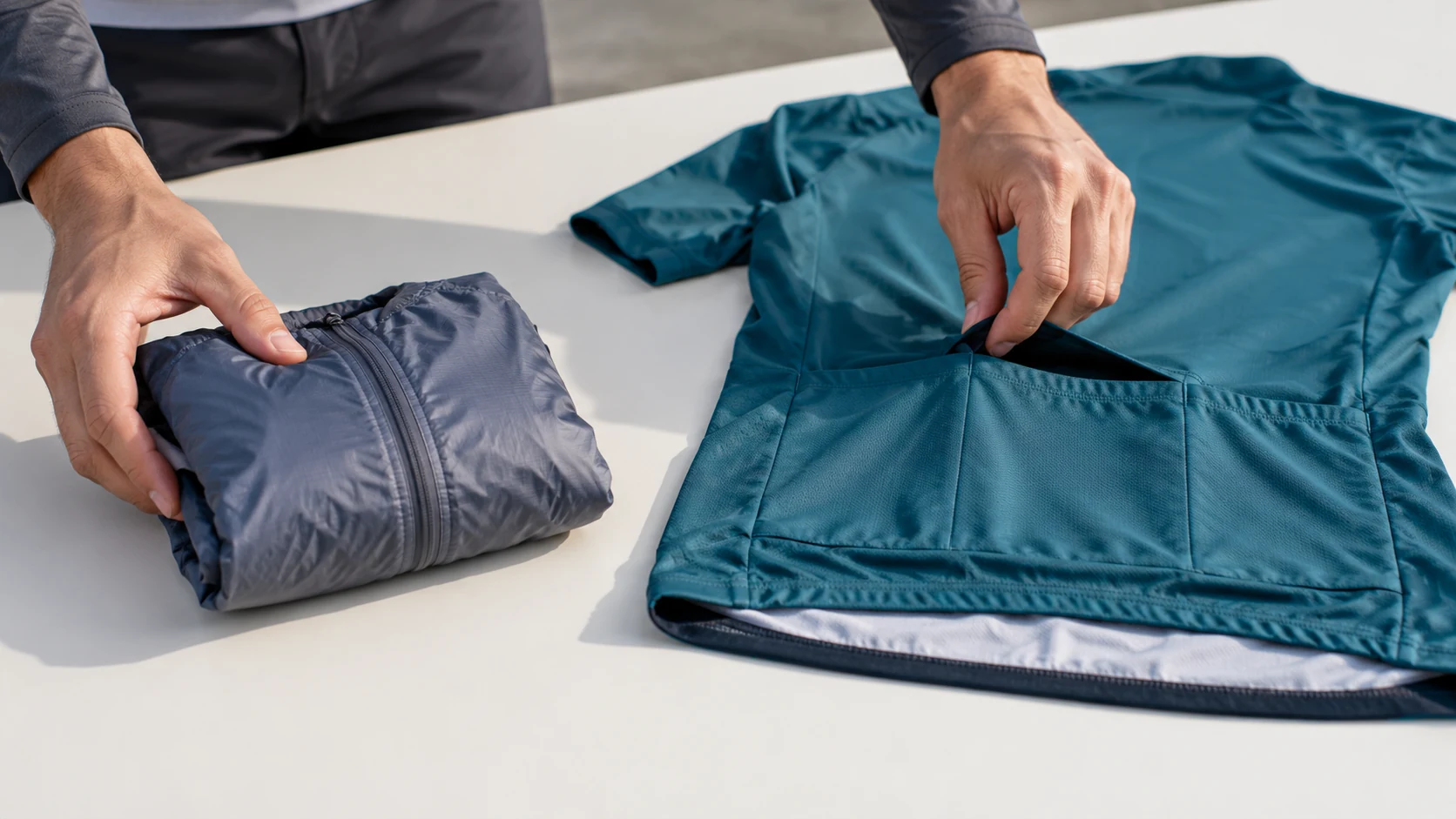
Cuffs should work with the intended gloves and allow a comfortable grip. Pocket access is useful when stopped, but riders should not need to search for a phone while moving. For a packable shell, physically place the folded sample in the intended jersey pocket or bag; “lightweight” does not establish pocket compatibility.
How does commuting rainwear compare with other jackets?
| Option | Useful characteristic | Likely compromise | Trial focus |
|---|---|---|---|
| Close-fitting road shell | Low bulk in a forward posture | Limited space over work clothing | Shoulders, sleeves and chest with layers |
| Commuting rain jacket | Coverage and everyday versatility | Packed size may be larger | Seated hem and pocket arrangement |
| General walking shell | May already fit the rider’s wardrobe | Front bunching or short rear coverage | Bike-position movement check |
| Running waterproof jacket | Often light and easy to carry | Cut may not suit a cycling posture | Wrist, back and hood coverage |
A best running waterproof jacket list is not a substitute for this trial. Activity names describe the design brief, not universal suitability. Similarly, a mountain bike waterproof jacket may prioritize a different fit, abrasion exposure and pack arrangement from a city commuting shell.
Which features matter for each commuting pattern?
| Journey | Priority | Purchasing check |
|---|---|---|
| Upright city riding in office clothes | Layering room and ordinary pocket use | Try the actual work outfit |
| Fast commute in cycling kit | Heat release and reduced bunching | Check forward posture and ventilation |
| Mixed train and bicycle travel | Easy packing and off-bike comfort | Pack and unpack the sample |
| Regular wet, dark journeys | Weather coverage and appropriate conspicuity | Review clothing alongside lights and route requirements |
Do reflective details make a jacket certified high-visibility clothing?
No. Decorative reflective piping does not establish a garment’s compliance with an occupational visibility standard. ISO 20471 concerns high-visibility clothing requirements; buyers making that claim need documentation for the complete design. Ordinary cycling apparel should not acquire a certified-PPE description because a photograph shows reflective trim.
Bright daytime colour and retroreflective material serve different lighting conditions. Retroreflection depends on illumination and viewing geometry, while dirt, coverage and wear can reduce usefulness. Clothing supplements appropriate bicycle lighting and careful riding; it does not replace them or make dark, wet conditions risk-free.
What should a distributor request before ordering?
- Specify riding posture, typical layers and whether users carry backpacks.
- Check the hood with the intended helmet without compromising its fit.
- Request compatible fabric test evidence and accurate reflective-material claims.
- Include a practical packing and care demonstration in sample approval.
Yuelei Sports offers outdoor rainwear for B2B enquiries. A lightweight waterproof shell proposal should be evaluated against these cycling requirements rather than assumed to be a specialist riding product. The cycling waterproof jacket brief should identify where an existing pattern needs adaptation.
Compare total cost through sample development, return rates, repair options and replacement availability. Spending on a workable cuff or pattern adjustment may address a recurring complaint more directly than upgrading a fabric number alone. Record the reason for each rejected sample so the next revision targets the real problem.
Frequently asked questions
What makes a waterproof jacket for cycling different from a walking rain jacket?
Typical differences include a longer rear hem, sleeves suited to reaching the bars and less front bulk. Designs vary, so a stationary on-bike fitting remains essential.
How breathable should a cycling jacket be for commuting?
There is no single comfort threshold. Match exertion, weather and layers, compare compatible laboratory methods, and assess how well the vents work during riding.
Do I need a longer back and reflective details for riding in rain?
Longer rear coverage often helps in a forward posture. Reflective details can supplement visibility, but they do not replace lights or establish a certified high-visibility class.
Which waterproof rating works for short city rides versus long rides?
Ride duration alone cannot decide it. Consider rain intensity, exposure, seams and openings alongside the tested fabric result.
How should a cycling rain jacket fit over jerseys and layers?
It should allow comfortable breathing and steering while preserving wrist and lower-back coverage. Test it with the exact layers intended for the commute.
Can a waterproof cycling jacket be packed into a jersey pocket?
Some can. Verify the actual packed sample against the pocket; thickness, size and construction affect volume even when the jacket is described as lightweight.
References
- ISO 811: water-penetration resistance
- ISO 11092: thermal and water-vapour resistance
- REI: rainwear construction and features
- Cycling UK: commuter-jacket comparison
The right commuting shell works when the rider reaches the handlebars, not just the fitting-room mirror. Contact Yuelei Sports with the riding position and clothing requirements to discuss a waterproof jacket for bike riding sample brief.